While perusing the UGA Extension website, I came across the following:
Georgia forests, located in the heart of the nation’s “wood basket,” cover some 24.8 million acres…Forests now cover 67 percent of the land area statewide.
In a land where cities continue to grow towards each other, maintaining – increasing, even – the amount of forest is a positive sign, right?
How do you define a forest? Most of us will agree that trees are a necessary component. But are they the only necessary component?
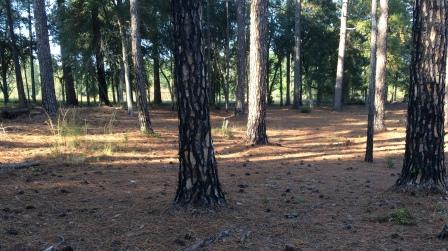
I see too many pine plantations that are little more than wood fiber croplands; it is a crop that grows over decades rather than months. In such situations, timber managers make no provisions for anything except maximizing wood fiber. Often, they will do their best to eradicate anything in the field that isn’t planted pine. After using chemicals, followed by bedding or scalping the soil with tractors, they plant seedlings so close together that in less than a decade the pine tops touch; this closure of the tree canopy makes it difficult for anything to grow beneath the pines. Green needles above, and a brown needle carpet below – all available resources go to the crop.
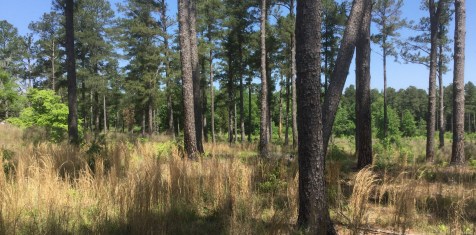
Am I saying this is wrong? No; if your top priority is to grow pines, then this is an efficient way to do it, so long as disease and beetles are kept at bay. But I don’t really think of a crop field of trees as a true pine forest. I’ve seen living pine forests, their boughs swaying in the breeze, with scores of plant species carpeting the ground beneath. Yes, and the air filled with bird song, the rustle of squirrels and rabbits, the crash of running deer. As an example, look at the photo to the right: I couldn’t count the number of different species shown in this understory, but I know I liked what I saw. Broomsedge, ragweed, partridge pea, goldenrod, wiregrass – all these and more provide seeds for birds, nesting cover, flowers for pollinators, and fuel for the fires that keep the habitat open and vibrant. The pines in this stand weren’t slacking, either. The well-thinned pines in open stands will be healthier, more resistant to insect infestation, and will increase diameter faster than more crowded stands.
Some who own their tree farms live far away from them. Others are listening to the timber buyer’s top offer. They have no use for bird song, and gain no pleasure in the land apart from a balance sheet rich in digits. But for the bird watcher, the hunter, and the curious naturalist, decades of enjoyment in their woodland is more than worth the price of a reduced payout. Proper management of a forest results in a living community of flora and fauna, peace and recreation for landowners – and yes, a source of income.

For More Information:
 Towards the Moon or To the Sun
You must be logged in to post a comment.