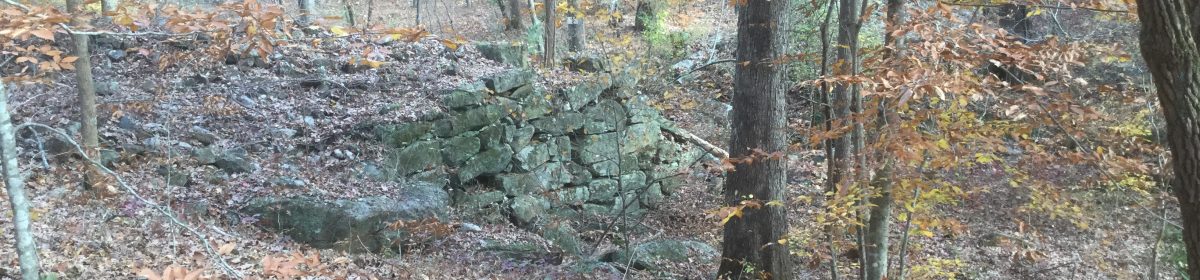
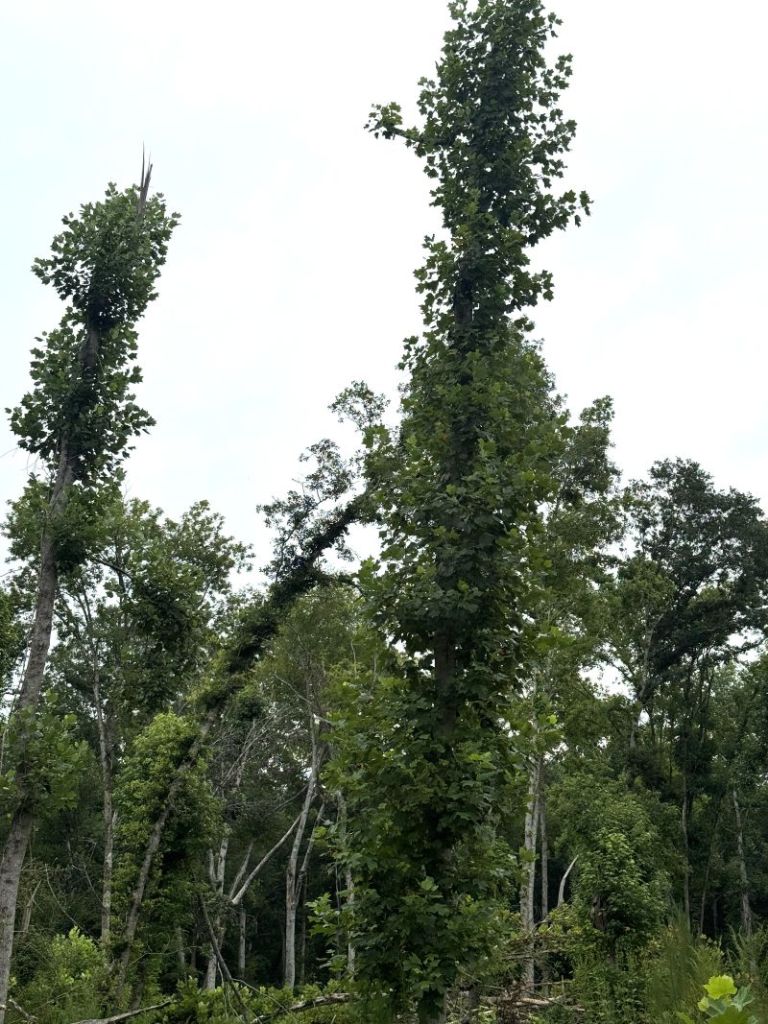
You know what an oak tree should look like, right? Trunk rising straight and limbless to the forest canopy, when it spreads its limbs to claim its share of the sunlight. Or maybe you’re thinking of a mighty monarch in Grandpa’s yard, massive limbs starting halfway up the trunk and bifurcating endlessly to form a thick, tangled crown that dominates the sky. But though you may not have noticed, you’ve probably seen tall oak trunks clothed in a close-fitting cloak of leaves. I see them on the edges of clearcuts and in subdivisions where house lots have intruded on forest spaces. Twigs bearing leaves have spontaneously appeared all up and down the tree. And this effect can be seen on many hardwoods, not just oaks, and as well as some conifers. What causes this?
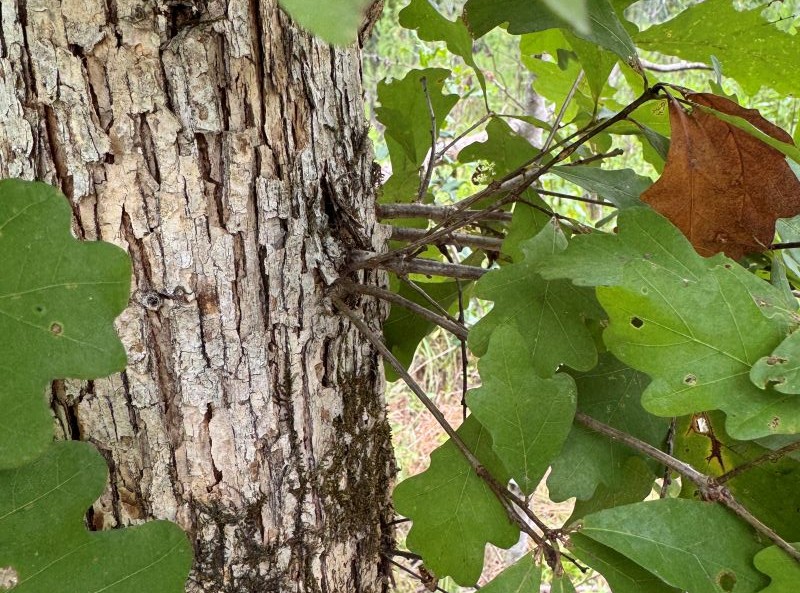
Most leaf buds lie at the end of young twigs, which themselves are found along older limbs branching from the tree’s trunk. However, there are also buds hidden under the bark, kept dormant by hormones. These are known as epicormic buds (epi=upon, kormos=log or trunk).
When a tree is under severe stress – through disease, insect infestations, or physical damage – the hormones are disrupted, letting the buds develop and grow shoots through the bark. This can also occur when direct sunlight suddenly hits the tree trunk during the growing season – such as when all the neighboring trees have been removed.
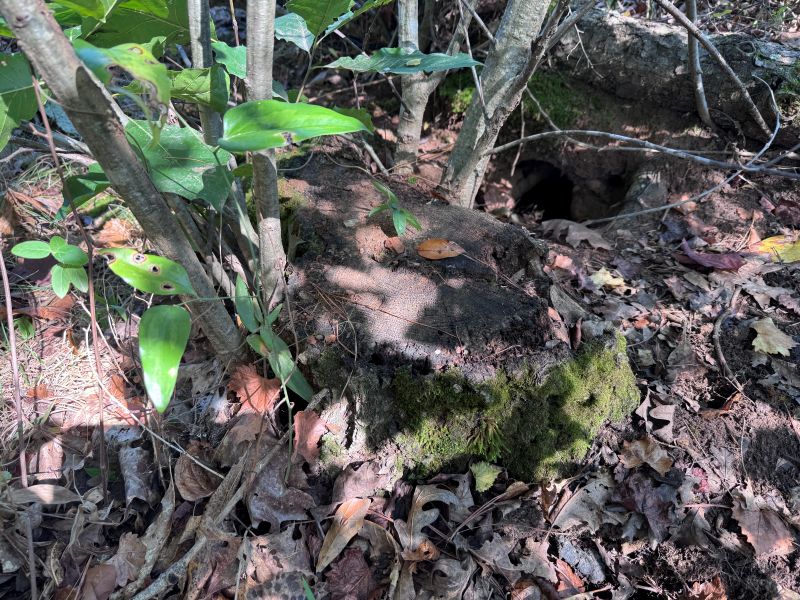
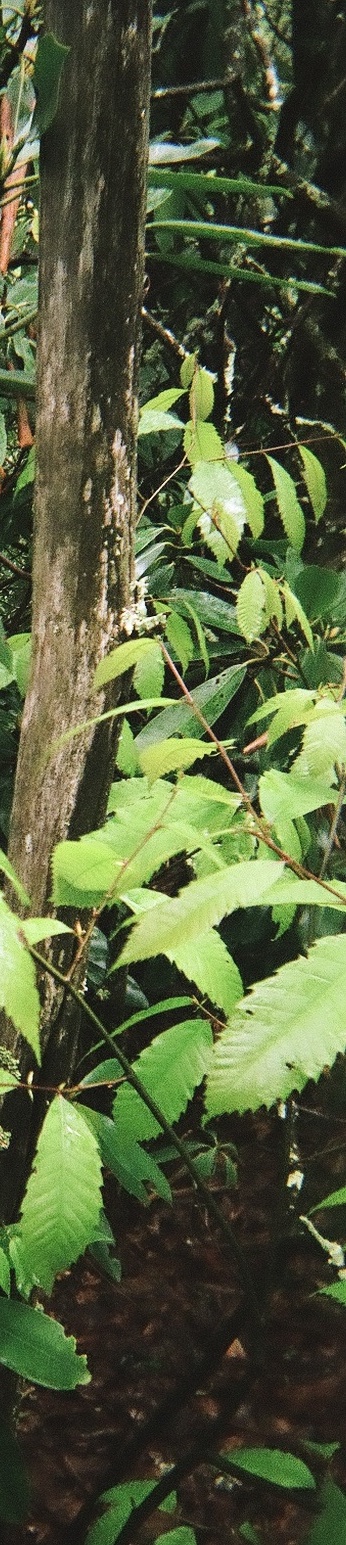
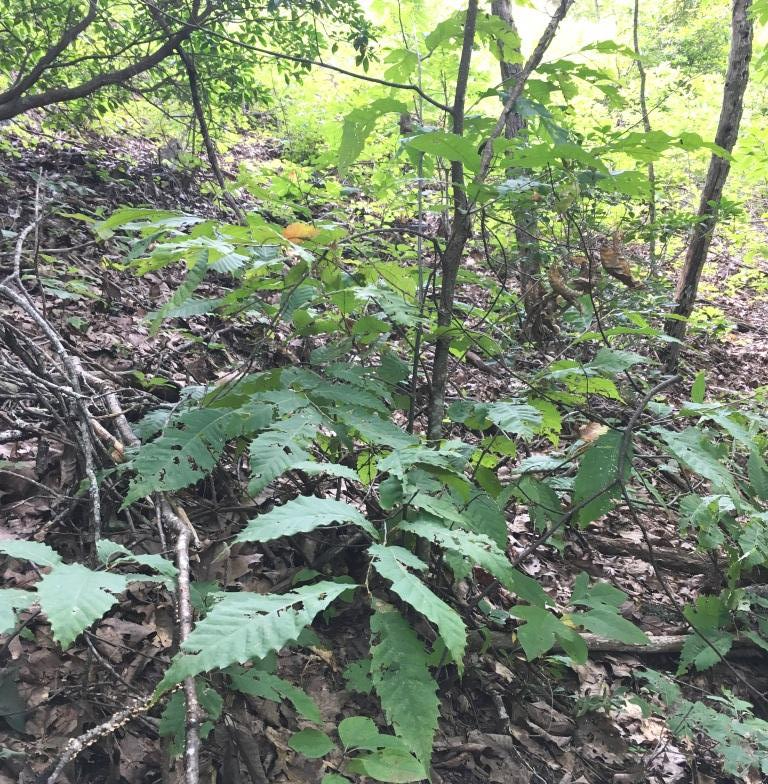
These shoots don’t just appear on the trunk. When cut down, some trees will sprout from epicormic buds around stumps; sweetgums will go farther, sending sprouts (aka “suckers”) popping up all along the roots. In landscapes where fire is common, the intense heat will kill the trunks of young trees; epicormic sprouts send stems up all around the root collar. Root suckering is the reason we still have American chestnuts in the Piedmont and mountains.
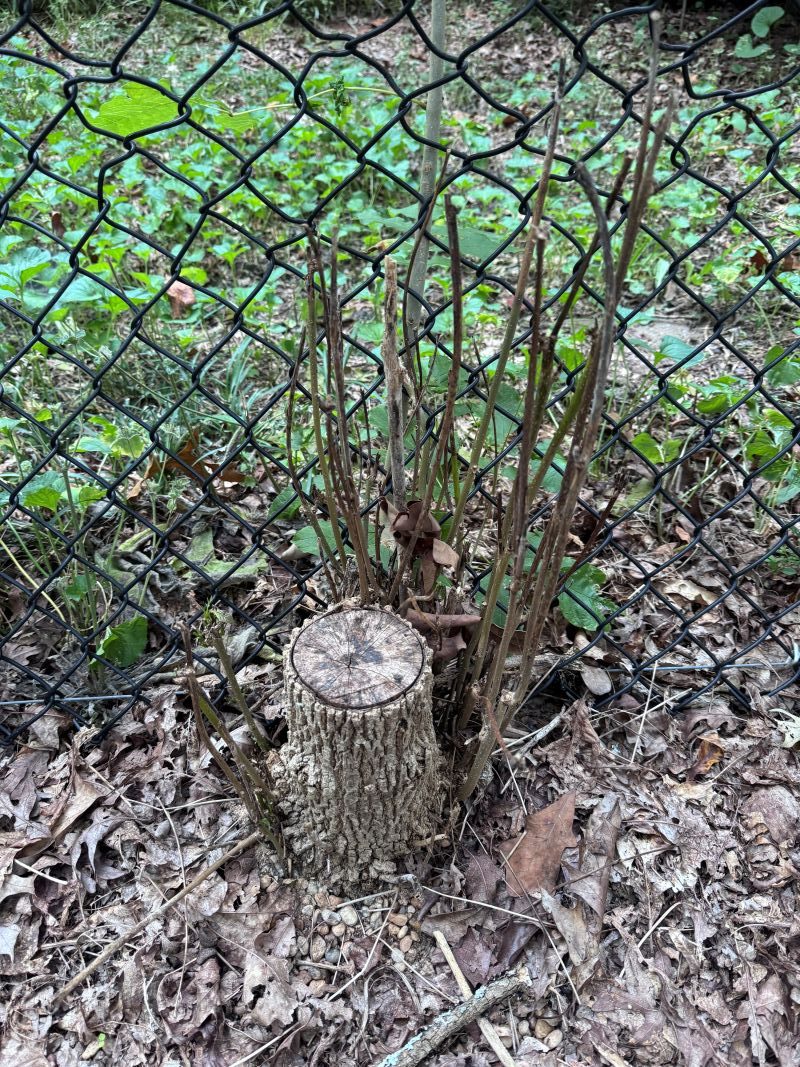
Epicormic branching can cause problems with fruit trees. The scions are grafted onto hardier but less-palatable root stocks, and if the fruit tree dies, the root stock may re-sprout without the desirable qualities of the graft (this is one reason why Bradford pears turn into Callery pears).
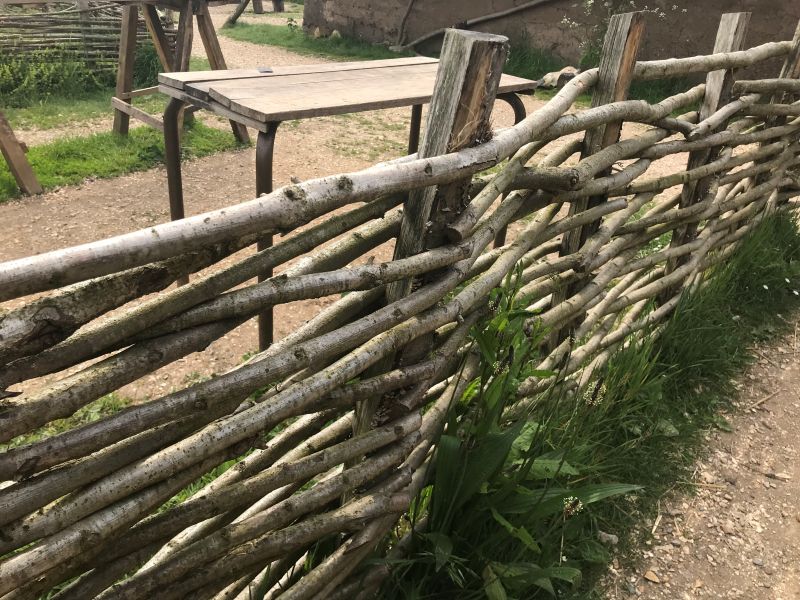
It’s not all bad, though. Humans have learned how to use these sprouts for their own benefit. Cutting a tree to deliberately create new sprouts is called coppicing. Limber young shoots can be used for waddle fences or walls, while older shoots can be used for poles for carpentry or firewood. Coppicing is even used to increase cinnamon harvest.
It’s worth noting that many animals are attracted to the tender shoots growing from stumps. Some trees are pruned above the reach of livestock to protect the harvest from browsers. This variation is called pollarding.
So, what if you don’t want your hardwoods to get shaggy? If you are in the process of clearing a lot, I’d recommend you clear it in stages over a few years; without that sudden shock of sunlight on the bark, the dormant buds are less likely to awaken. However, chances are you either don’t have that much time or have already done your clearing and are unhappy with the new aesthetic. In that case, you can prune the new branches. Again, don’t do it all at once, but cut them over several years. Also, prune only during the winter to minimize stress to the tree. Stressing the tree is what started this!


You must be logged in to post a comment.