Losing the Axe

“The central thesis of game management is this: game can be restored by the creative use of the same tools which have heretofore destroyed it—axe, plow, cow, fire and gun” — Aldo Leopold

I can’t get people to cut their timber.  And that is a problem.

I will start off with two points.  First, I am not a shill of Big Timber. Every loblolly pine plantation will go through a stage where it is utterly useless for the wildlife I seek to manage, and I endeavor to rectify that as soon in the cycle as can be managed.  Second, forestry in the Southeastern U.S. is not like in the Pacific Northwest. Loblolly pine trees grow fast.  Industrial forests are clearcut and replanted every 20 to 40 years. Aesthetics aside, clearcutting a closed-canopy pine plantation in Georgia will be more likely to benefit than harm many wildlife species, at least in the short term.

You may have heard that several Georgia lumber mills have closed in the last couple of years. Perhaps you feel, as many environmentally-minded folks do, that this is a win for the forests of the state.  In fact, it makes creating habitat for anything, from deer and bobwhites to indigo buntings and monarch butterflies, that much harder.

 All of the above critters require herbaceous groundcover – native grasses and forbs, as well as low growing shrubs or bramble thickets for cover.  That sort of groundcover can be shaded out by a young pine stand inside of a decade.  If the stand isn’t thinned, the ground will remain shaded indefinitely. 

Loblolly pine* stands are ubiquitous throughout the Piedmont. Some were planted on worn-out, eroded crop fields.  Others were converted from hardwood forests.  Most were established with an eye towards harvest and income in two or three decades.  The economics of timber were brighter in those days. 

I often work with landowners in possession of a stand of crowded pines with small crowns and stagnant growth.  For timber growers, it is a sign that those trees are in dire need of thinning – the removal of some trees to allow the remainder room to grow and resources to ward off pine beetles and diseases.  But as a wildlife biologist, the economics of wood fiber is not my purview.  Where some see a stagnating pine plantation, I see an ecological desert, where only a few hardwoods and the occasional vine add green leaves in an otherwise monotony of brown pine needles.  
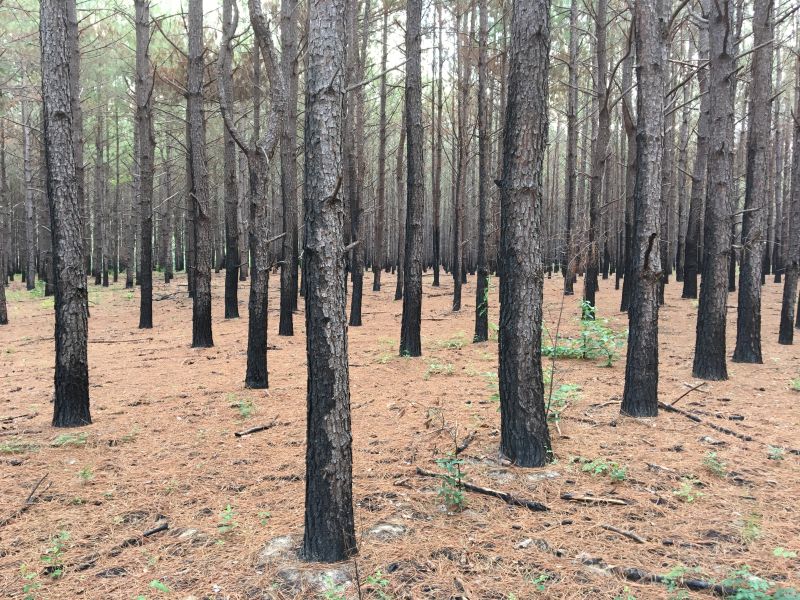
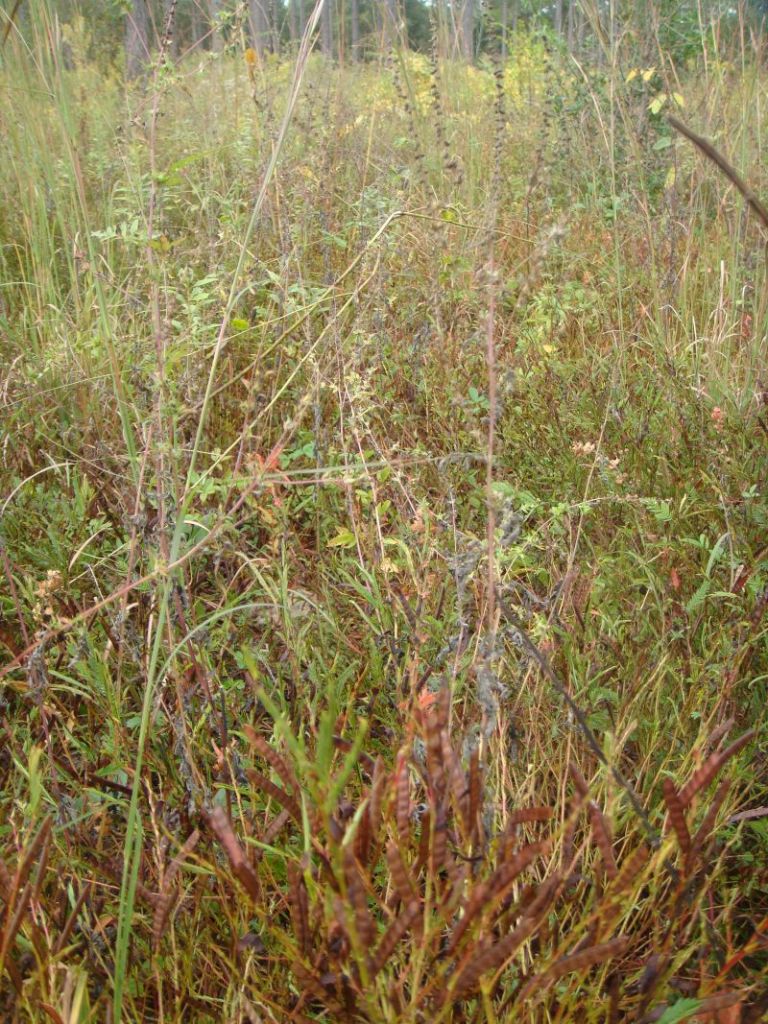
Ground cover in the stand below

And this is a major issue.  My wildlife recommendations for the vast majority of clients start with timber thinning.  Without this first step, nothing else I can suggest will make a bit of difference. Twenty years ago, a timber cut wouldn’t have been a problem.  But now? Good luck finding a reputable logging crew willing to harvest a mere third of the trees on less than 100 acres.  Closing mills and supplies of timber outstripping demand mean the remaining timber buyers can pay bottom dollar for wood, which means the loggers drive farther for less money, if they can sell at all. Paying the crew, feeding equipment gas and diesel, driving hundreds of miles to increasingly-picky mills… there is just no way for a logger to justify the effort for so little return.   This development could be catastrophic for the landowner who thinks “this stand is my retirement” or “this is Mama’s insurance policy.”  For the conservationist who wants to benefit wildlife, the work they need simply can’t get done.  A landowner may have to pay someone to cut their trees – which very few are willing to do. 
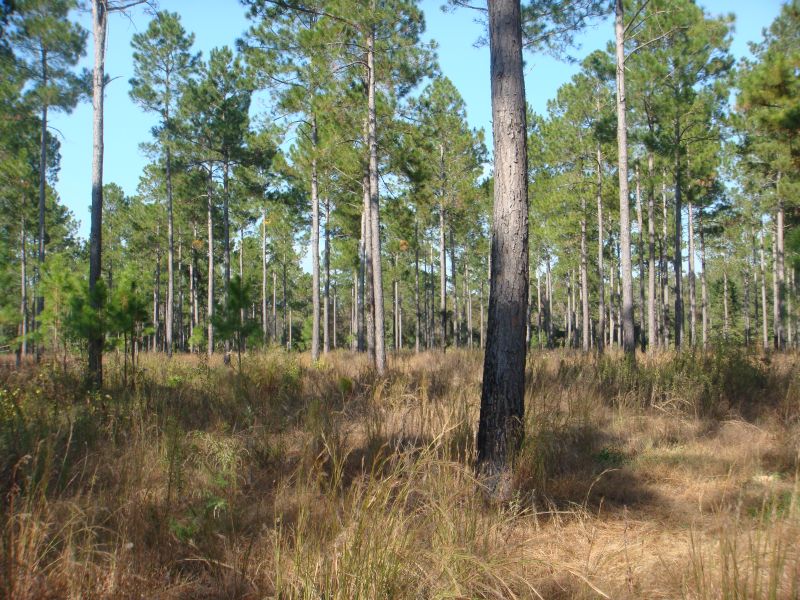
Heavily thinned, regularly burned

When facing the challenge of restoring wildlife habitat, we must have access to all available tools. In the current economic climate, a critical tool – Leopold’s “axe” – has effectively been removed. 
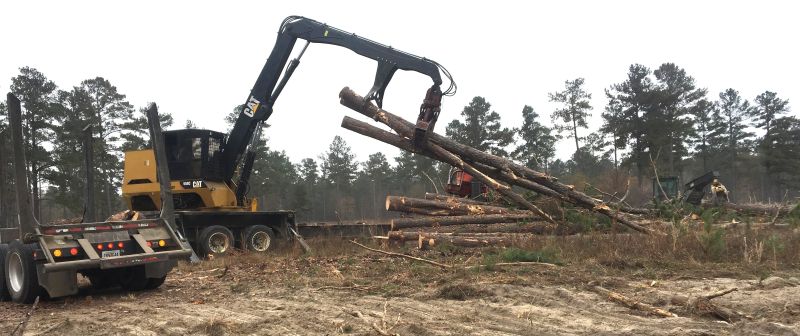
*Slash and longleaf timber in the Coastal Plain are also facing a slump in prices.

Additional Reading

“The Forest and the Trees”

Windthrown

How is a climax forest renewed?  How does it go from dense overstory canopy to grasses, forbs, and tree seedlings?  Nowadays, the chainsaw is the chief instrument of change.  Beyond human actions, the likely sources for canopy-opening are fire (from lightning) and wind.  My corner of the Piedmont met the latter last week.

It was likely a straight-line wind barreling ahead of a thunderstorm, although a small tornado was possible. It came with freight train roar and the snap and crash of century-old trees. A morning’s survey of the damage revealed windthrows and snapped tops, in singles and groups.  A few widowmakers will merit wary observation in the weeks to come. 

Here, the red oaks were more likely to be thrown, while white oaks usually snapped.  I suspect this is in part due to the root systems – while all oaks spread lateral roots beyond their canopy driplines, white oaks delve deeper into the soil, chasing water and anchoring themselves more firmly that their red kin.

Below is the most impressive root ball I found today.  Look closely on the right side.  That two-tone walking stick with the black cap on top is five feet tall.  Using that for scale, the web of roots hold a block of soil over 20 feet wide!  It’s clear that the roots extended 10 or 15 feet beyond that.

The windthrows give us an opportunity to look at the soil profile.  The leaf litter and decayed organic material mixes with mineral soil to create a rather thin topsoil layer; here, litter and topsoil measure around four inches. Below that is the clay-rich loam common to this area – stripped of rich topsoil by a century or two of poor land management.  After decades of rest, this spot has recovered a scant few inches of organic soil.

The logs will do their part, as insects and fungi convert wood to soil.  However, the falling giants create a more immediate change.  The new gaps in the canopy break the sunlight blockade which the dominant trees impose upon everything below them.  Unbroken canopy is not a hospitable place for shade-intolerant plants; apart from the hardy muscadines, there is little green to be found on our forest floor. Yearly, pine seedlings rise and die in short order, starved of the sun’s energy.  Even oak, hickory, and beech seedlings struggle to subsist on whatever only dappled or filtered light reaches them.  These hardwoods may spend many years in a shrubby state, if they don’t succumb to solar neglect.  But things change when a gap opens in the canopy.  Sun-fed trees get a sudden boost of energy and growth, reaching towards the sky. 

Where there is a gap vacated by two or three trees,  and a dozen or more seedlings pushing through the leaf litter, there will eventually be competition for that space.  Assuming no more disturbances, a decade or so will find the trees trying to outgrow each other – overtopping their neighbors and claiming the underground real estate until the victorious few take their place in the canopy.

I won’t be here to see the outcome, but I’m betting on the oak. Regardless, so long as people leave this forest alone, the gradual renewal of the climax forest will continue on every acre.

Lighter Wood

Lighter wood.  Fatwood.  Fat lighter’d.  Heart pine. The woodsman’s friend, a natural fire starter.  Burns hot, even when wet. 

What is it? 

There are a number of pine species under the umbrella of “southern yellow pine.”  They tend to be more resinous than other pines, and much more than most hardwoods.  This quality was of great value in the 18th-19th centuries and was used to produce oils, pitches, and resins for caulking planks and waterproofing ropes and canvas. So valuable were these products that they were termed “naval stores” and considered a strategic resource critical for maintaining ships of war in the Age of Sail. While wooden navies are a thing of the past, these pine-based compounds are still used in a variety of products from cleaning oils to varnish.

Log of solid fatwood

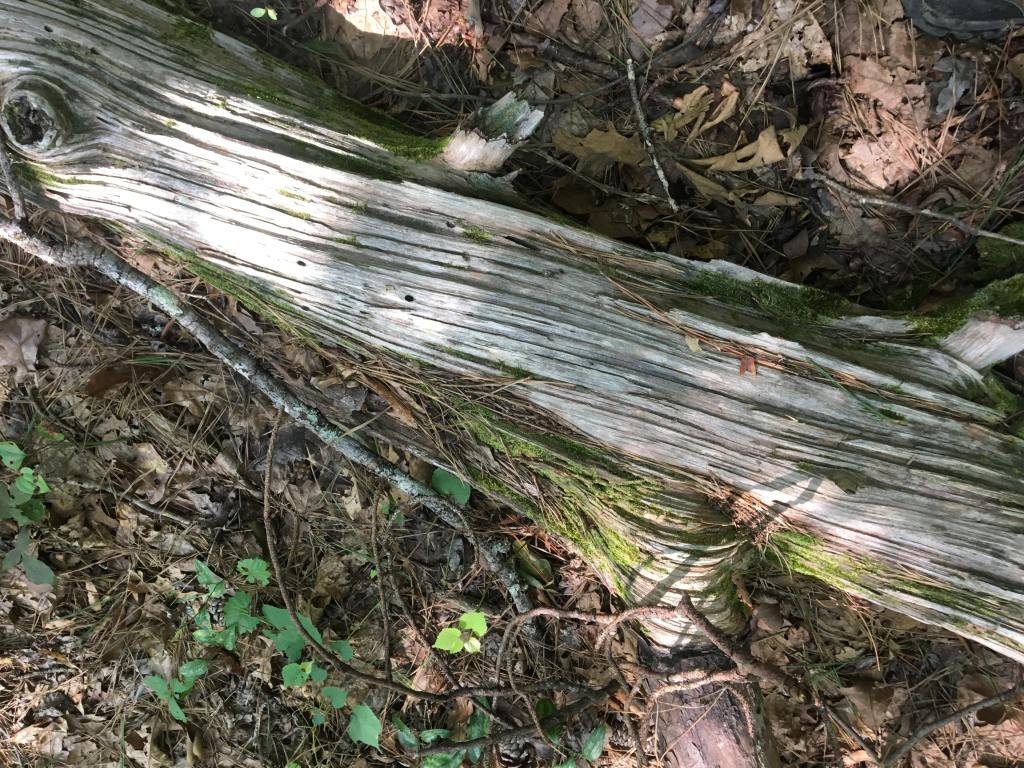
As pines grow, they add sapwood beneath the bark, expanding the girth of the tree.  The cells in the interior die, forming the heartwood of the tree.  In yellow pines, the heartwood is impregnated with the resin, making it very hard, rot-resistant, and highly flammable.  When a mature pine dies, the sapwood will decay over time, leaving the gray bones of the heartwood.  Often, the base of early limbs will remain as pine knots or “lighter knots.”  Slice open the scabrous surface, and you’ll see golds and reds of tree rings soaked in resin.  Smell the cut – that’s the scent of turpentine, and very distinctive.

Longleaf pine log– the darker wood is the heartwood

Here in Georgia, longleaf and slash pines were the best producers of lighter wood; they were largely found in the Coastal Plain.  In the Piedmont, shortleaf, while not as prolific of a sap producer, also creates fatwood.  And loblolly can now be found all over the state, although rarely is it left to grow long enough to develop lighter except in its stump.

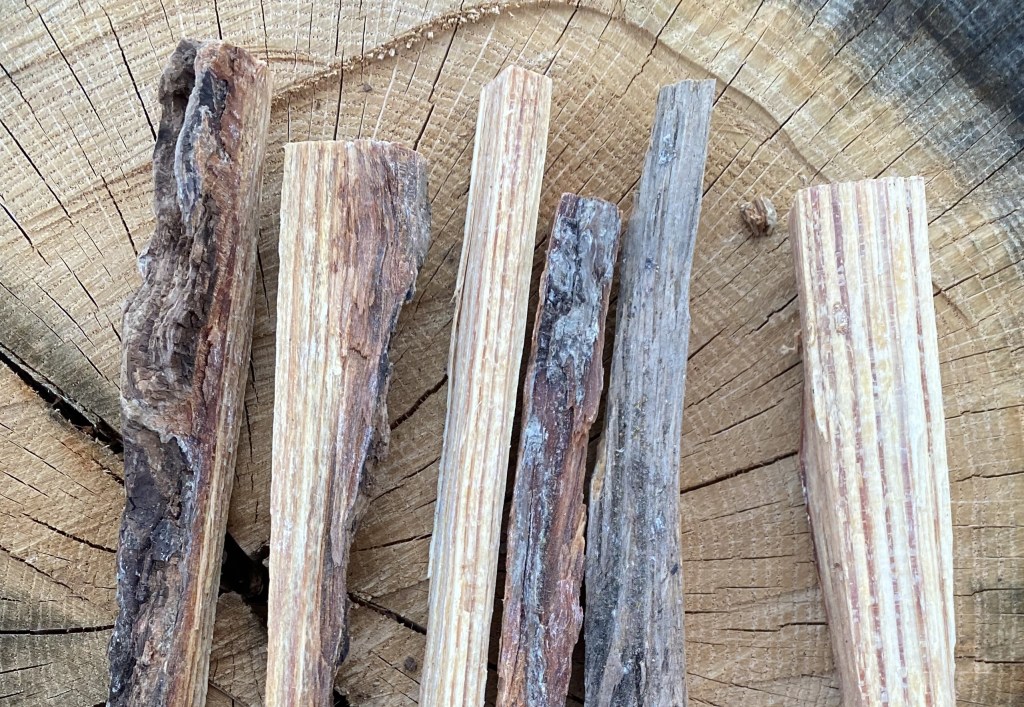
Lighter log split into sticks

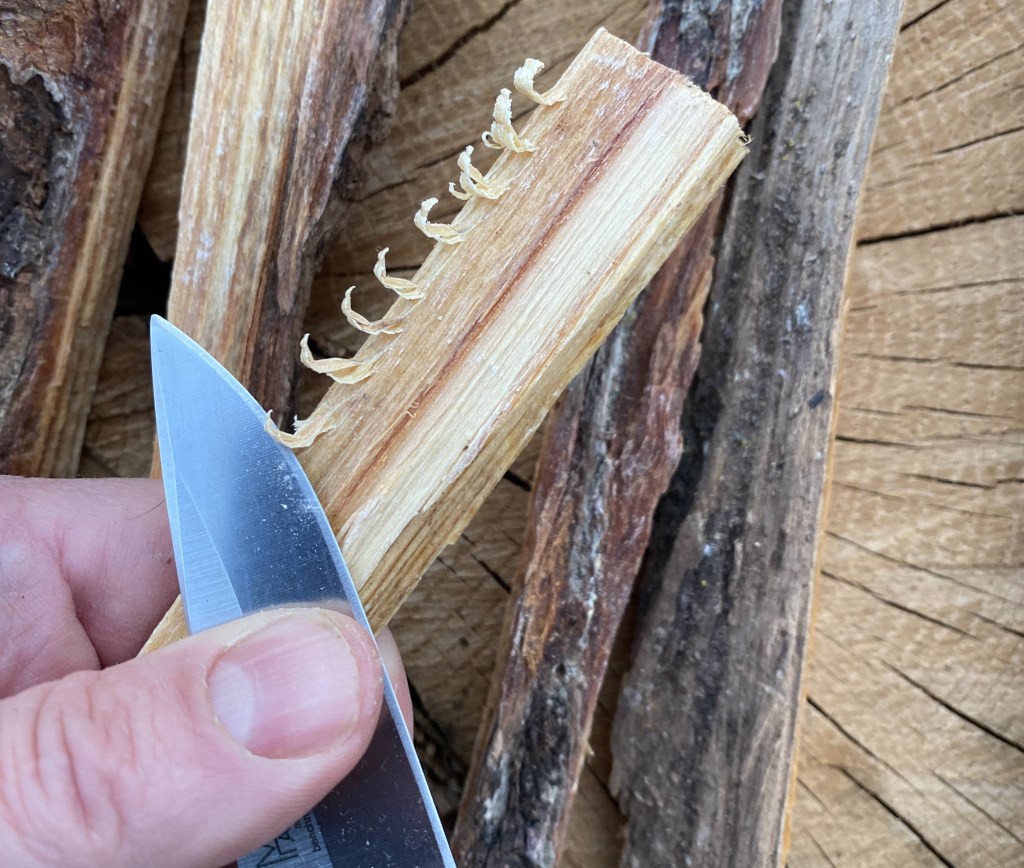
Fatwood burns hot — hot enough to set larger logs on fire.  That’s what makes it a prime kindling wood, even when damp. However, use it with caution and sparingly.  Shavings from a piece of lighter wood will be set alight by tinder and in turn burn other kindling. Larger pieces will light larger branches directly.  Fatwood is commercially available in small sticks, maybe ½” on a side.  You do not want to toss a large chunk on the fire.  You certainly don’t want to put large pieces in a wood stove – seriously, the intense heat could damage the stove.  Also, the pine resins exude thick, oily smoke when burned, so you don’t want to cook over a fire until all the lighter has burned away – unless you like using turpentine and soot for seasoning.

“Feathering” the wood to make it catch fire faster.

Lighter wood has been part of the fire kit since I was old enough to be trusted with matches.  But not everyone is familiar with it (otherwise, why would I write this?).  I’ll close out with a story from the time my Dad took some students on a field trip.  He asked one of them to find some lighter wood to start the fire.  The young man returned with an armload of punky old branches.  “Couldn’t you find any lighter wood?” he asked the student; newbie hefted the dry, rotten sticks and replied, “Well, I couldn’t find wood any lighter than this!”

Shortleaf stump