There was a video going around some years ago – an “exposé” on wind farms. Besides the issue of bird kills, the video played up the relatively short lifespan of the turbines, and the fact that the blades aren’t recyclable (which isn’t entirely accurate and will be less so in the future). It was when the program switched to touting “clean” fossil fuels that the slant became clear. The piece must have gotten a lot of airplay on right-wing media; shortly after I had watched (and written off) the show, someone rattled off its talking points to me, finishing with “so renewable energy isn’t so renewable, is it?”
No, it isn’t. The fact is, every source of energy has a cost. The costs of using fossil fuels are well known. Strip mines destroy landscapes, while underground mines destroy lungs. Burning coal leaves toxic ash and air pollution. Oil and natural gas likewise have their problems, during extraction, processing, and burning. But what about renewables?
Hydroelectric? A river valley disappears, the downstream river is diminished, fish are blockaded.
Solar? None of my biologist colleagues have a good word for solar farms; good forest habitat or farmland becomes a giant lawn, good for nothing. I visited a landowner last week whose land is developing gullies due to runoff from the adjacent solar farm – an issue he never had when the land was a forest. Solar panels on buildings or over parking lots are far better options, since by collecting radiant energy they keep the surfaces beneath from heating up. Anyone living in the South can appreciate the advantages of a canopy over their car when the weather is in the sunny 90s.
Geothermal? You have me there. However, geothermal, solar, hydroelectric, and wind all require non-renewable resources to create the equipment necessary to harness the power, as well as the facilities and networks to transfer said power from the source to the consumer.
Biofuels? First-generation biofuels such as ethanol need the same inputs as regular crops – fertilizers, diesel-run tractors, and such. More advanced processes use waste materials or algae (a definite improvement) but still have environmental costs.
Does nuclear count? The fuel is mined, the deadly waste is a pain to store, and mishaps can be catastrophic on a regional or continental scale, so I wouldn’t say so. However, given the amount of heat generated by radioactive decay, it boils water like nobody’s business, providing cheap electricity.
And when you get down to it, most of these power sources don’t provide power in themselves. They are simply there to move some form of wind or water to turn a contraption with magnets and wires in such a way as to create an electrical current.
So, sure, renewable energy has downsides, just like fossil fuels. But as mentioned in the beginning of this essay, fossil fuels poison the extractors, wildlife, land, water, and anyone who breathes. The overwhelming body of evidence, collected and analyzed by scientists across the globe, leaves no room for doubt. When you rationally compare the pluses and minuses to each, it becomes clear that non-renewable fossil fuels cost us much more in the long run. They are not, despite what the lobbies insist, “clean” fuels.
Everything we do has a cost. Most of us don’t feel that cost, and therefore we are not aware of it. I’m writing this using electricity, which is how you are reading it. I am in favor of a power grid run on renewable power. I am in favor of finding alternatives to fossil fuels. But I believe we should understand that energy is never free, and make our choices accordingly.
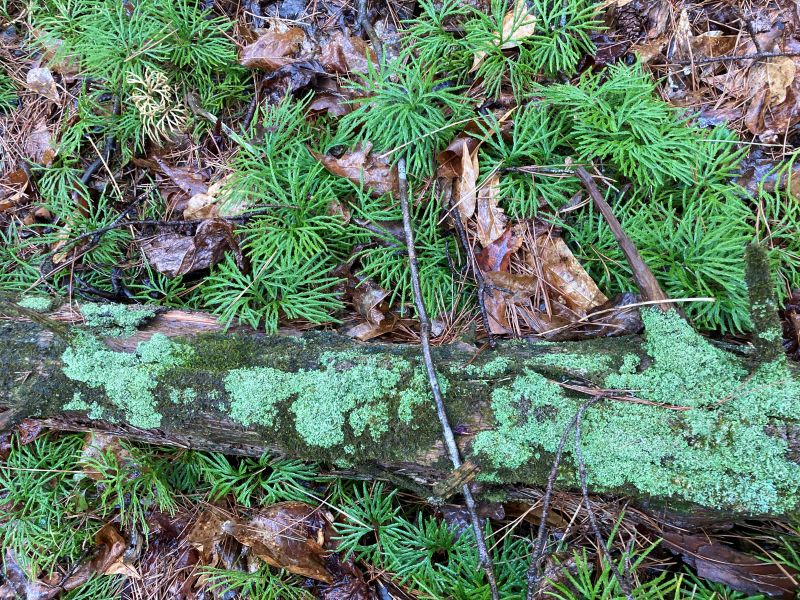
If you wander through the foothills after the leaves have fallen and the ground is dressed in shades of brown and gray, you find that a line or patch of green is liable to stand out. These tiny fan-shaped branches covered in shiny scale-like leaves stand only a few inches high, and look similar to cedar boughs; in fact, that appearance gives the plant several of its common names.
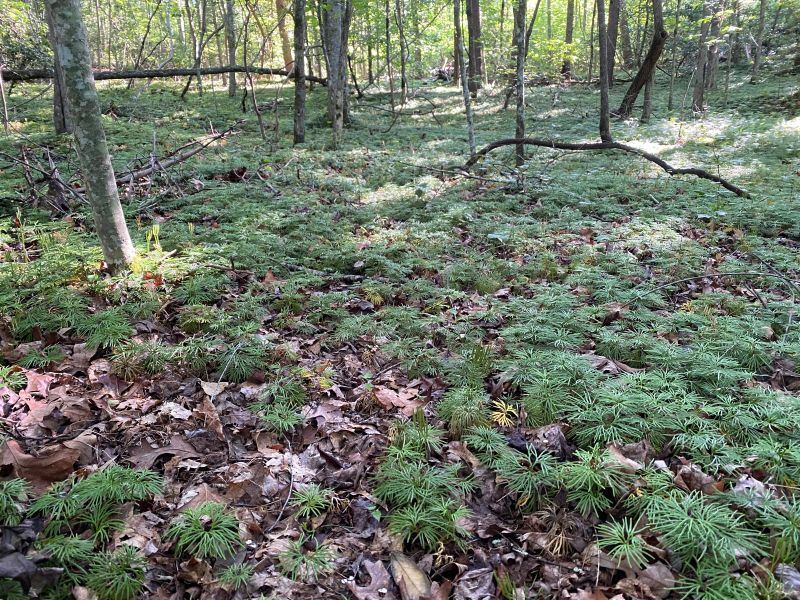
Ground cedar (Diphasiastrum digitatum), also known as running cedar, is a club moss – a type of plant more closely related to ferns than mosses. They are diminutive relatives of the extinct tree-like Lepidodendrales that grew over a hundred feet tall in forests during the Carboniferous Period (which are interesting in themselves, for reasons I’ll relate in another post), and kin to lycophytes (also called lycopods) around the world. Found in well-drained woodlands and pine forests, ground cedar spreads through runners along the soil’s surface or rhizomes just below the surface, with the fan-shaped leaves popping up every few inches.
The largest ground cedar stand I’ve seen was on private land in the northeastern corner of Georgia, where it covered perhaps a quarter of an acre. Apart from that extravagant specimen, I rarely see patches more than a few feet in diameter.
Is it useful for wildlife? I haven’t seen evidence that animals consume it, and since it produces spores rather than seeds, there are no flowers to interest pollinators. However, humans have found a number of uses for the plant. The oily spores burn brightly but too briefly to set anything alight, making it useful for magicians’ dramatics, fireworks, and 19th century flash photography. Spores were also used in baby powders, wound treatment, pill coatings, and as mordants for dyes. The plant itself was used in teas and medicinal preparations. Probably its most common use in the last few generations has been as a Christmas decoration. Being evergreen and in easy reach, it provides welcome greenery for decking the halls at a time when other foliage is brown and down.
Here’s the problem. Ground cedar grows slowly. Spores may lie dormant for many years before germinating. It requires the presence of certain species of fungi to thrive. A transplanted runner will almost certainly die (as I discovered some years ago). Every runner you pull up will take a while to regrow. Decades of being harvested commercially for holiday decorations and gardens have made ground cedar scarce, and the practice continues.
Enjoy it where it lives, but leave it there, please.
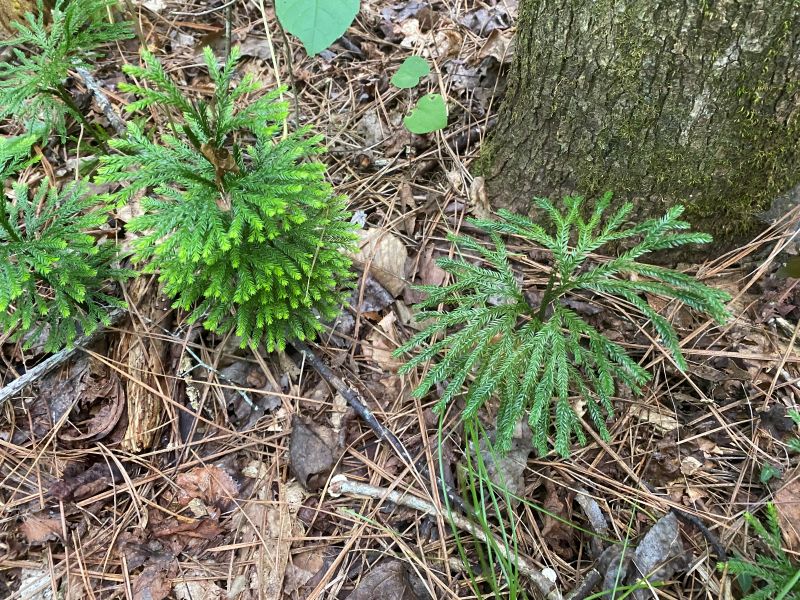
Ground cedar (right), with a relative, princess pine (Dendrolycopodium obscurum)
If you are creeped out by snakes, you’d best move along now.
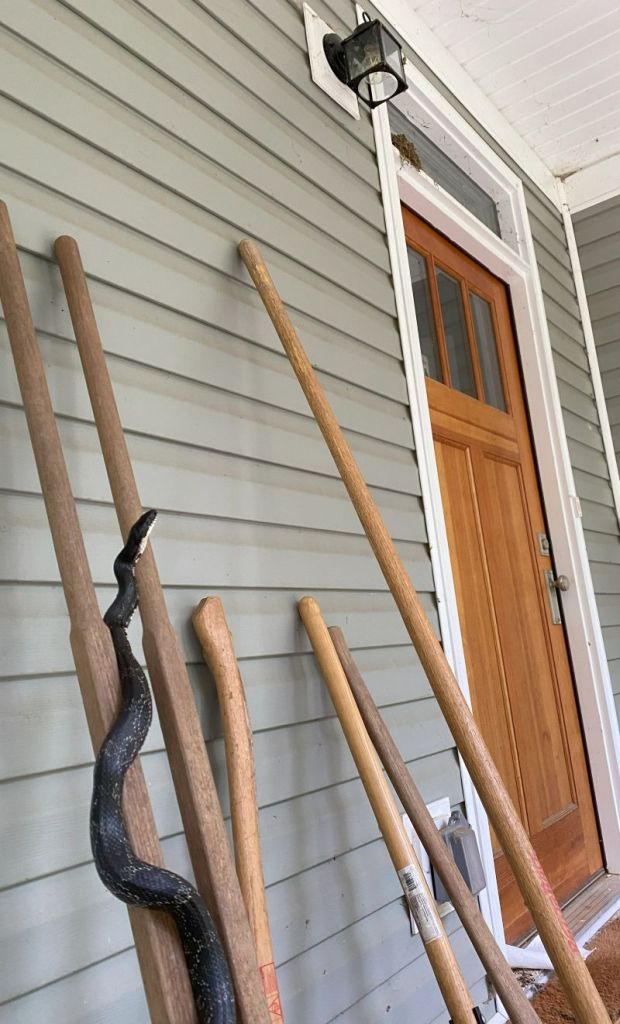
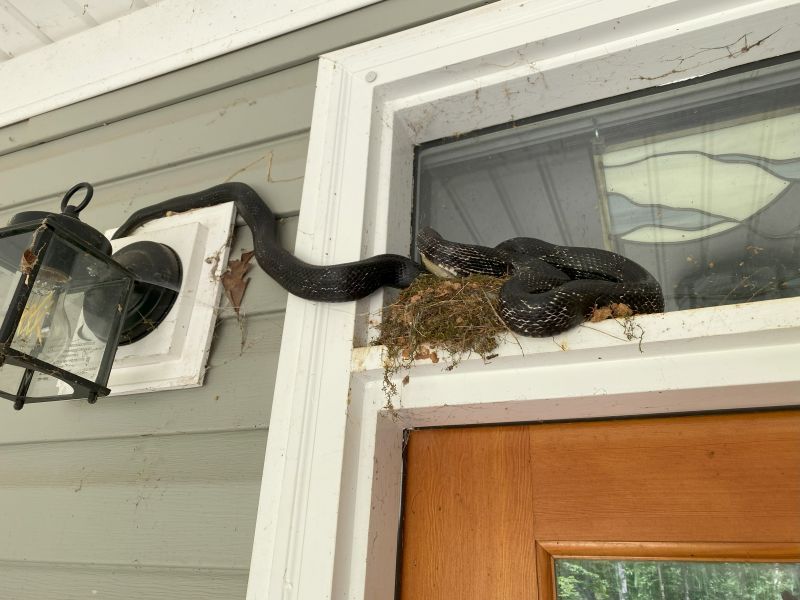
I was in the Dungeon (my basement office) when I got a text from my wife to come upstairs. She had spied a black rat snake on the porch, eyeing the bird nest above the front door. Rat snakes, which feed on eggs, birds, and small mammals, are common in Georgia. Now, I have nothing against these critters, since I don’t currently have chickens. But the nest in question, owned by a pair of eastern phoebes, has occupied the transom window all season. The nest’s proximity made me feel somewhat proprietary towards it, so I decided to intervene. Rat snakes are fairly docile, so it was easy to gather it up and deposit it in a fallowed field some 50 yards away. The snake quickly slithered away from me towards some thickets.
Less than half an hour later, I got another text. A rat snake, half again as long as the first one, was climbing the handle of a post-holer and aiming to get a meal. This one also went to the field, but immediately pointed its nose towards the house. I halted its determined progress after 20 yards and carried it 130 yards down the driveway and across the road.
How do rat snakes find their prey? They have a good sense of smell, although they use their tongues and an organ on the roof of their mouths (the Jacobson’s organ) rather than their nostrils. Perhaps more relevant in this case is their visual acuity and pattern recognition abilities. Rat snakes watch the songbird activity, and home in on the hub of the birds’ flights.
An hour after exiling the snake, I got ready to head to the store. On a hunch, I checked the front porch before leaving. The longer snake had returned, and was just beginning her ascent on the edge of the porch. A few minutes later, I was driving down the road, my arm out the window with a snake wrapped around it. I let it loose 500 yards away, and hoped it would be disoriented enough that the chicks would fledge before it found its way back.
That was yesterday evening. This morning, as I sipped coffee in the library, I eventually noticed the phoebes hopping back and forth anxiously, chipping and chirping. I was too late; one of the rat snakes was on the transom, head in the nest. With skill and persistence, the serpent had won, and I let it have the spoils. It fed and then slithered away. The birds raised a clutch earlier this year, and may have time for another nesting; otherwise, they can try again next spring.
You may be appalled at the fate of vulnerable young animals. Whether it be chicks being eaten by snakes, coyotes carrying off fawns, or bobcats snatching young rabbits, most juvenile critters live short lives. Animals produce more young than they need to replace themselves; most die before maturity, victims of predation, disease, or misadventure. We concern ourselves with individual critters, but in the natural world, individuals don’t matter in the scheme of things – only populations.
It’s a common refrain: some horticulturist or botanist sees a wonderful potential in some plant and brings it across the ocean. An effort is made to establish said plant, so that their descendants could carry out a far greater effort to de-establish it.
I can begin so many essays this way. The subject today is trifoliate orange (Citrus trifoliata or Poncirus trifoliata), also known as bitter orange, hardy orange, or (in one cultivar) Flying Dragon.
The bitter orange is a shrub which can grow to nearly 30 feet tall. What gets your attention at first sight are the long (1-2”) rigid thorns arming the twisting green stems.
While the thorns are the main feature to my eyes, it gets its name from the fruit. It is flowering now (May), and in a couple of months small (around 2 ½ inches) green fruits will appear. These ripen to orange and are both very acidic and bitter (the latter from a chemical called poncirin). I’ve read that, with proper preparation, they can be turned into a marmalade or a bittersweet condiment. To me, that’s trying to make lemonade when given lemons.
It was brought over in the mid-nineteenth century to make livestock hedges. And they certainly work for that purpose, with their 2-inch thorns! The problem, as usual, is that the possible ramifications were not thought through – namely that this hardy plant will find its way to unwelcome places. Trifoliate orange has established itself in at least 17 states.
I’ve encountered it on several properties in Georgia Piedmont, but nowhere as extensively as a tract in Jackson County which, prior to mulching, was a solid thicket of bitter orange.
Solid, impenetrable thicket
Why is this pest top of mind today? I was visiting my neighbor across the creek and came across several scattered hardy oranges. I already have callery pears, another noxious plant I have special antipathy towards, advancing on me. But then, our landscape has an overabundance of foreign species that have made themselves at home here. The more one learns, the more one finds.
I’ve been here and there in my time, making a library’s worth of memories — many of which were only possible thanks to the U.S. Department of the Interior.
I’ve lived on the Tensas River National Wildlife Refuge, where I worked alongside professionals of the Fish and Wildlife Service, researching the federally-listed Louisiana black bear while the biologists and technicians protected one of the largest remaining bottomland hardwood forests in the Mississippi Alluvial Valley. Had they been around to protect this plot of earth a century ago, the sharp rap of the majestic ivory-billed woodpecker might still echo in the deep forests of Louisiana.
I’ve walked the beaches of Cumberland Island National Seashore as one of the 300 visitors that the National Park Service allows on any given day – once as a Boy Scout, once as a research assistant. You don’t have to be rich to get on the island, and you don’t have to peer through hordes of people and past buildings and airports (looking at you, St. Simons and Jekyll) to see nature – you only have to wait your turn.
I’ve walked through National Forest lands, seeing tree-mantled mountains unfestooned with houses – unlike the privately-owned ridges, where the wealthy can buy the best views at the expense of the valley-dwellers’ own viewshed.
I’ve gazed with wonder at a wall of fossilized bones from Jurassic beasts, and petroglyphs drawn by people a thousand years ago. If Dinosaur National Monument hadn’t been protected by the U.S. government early in the last century, I expect the petroglyphs would be vandalized, the local rivers would be dammed for power and tourist reservoirs, and the dinosaur fossils would be in private galleries and unavailable for research.
I’ve walked a fraction of the Appalachian Trail, where anyone can freely hike — whether for a day’s outing or as a nature pilgrimage across 2,200 miles of mountain meadows, fens, and forests. Although maintained by countless volunteers, the footpath is overseen by the National Park Service.
I’ve driven through wide-open grassland country maintained by the Bureau of Land Management, which oversees roughly an eighth of all U.S. land.
I’ve marveled at snow-capped Denali and arid Devils Tower looming high in the sky. I’ve stood in the rainforest on the western slopes of the Olympic Mountains, and watched the waves break against the rocky Acadia shores. I’ve walked among the mineralized tree trunks of Petrified Forest and viewed the river-sculpted artistry of the Grand Canyon; delved the depths of Carlsbad and hiked the spine of the Smokies, touched steaming Hot Springs and paddled through the black water of the Okefenokee swamp.
There are places that we believe should be shared by all rather than owned by only a few. There are places we agree should be protected: from those who would destroy them from a desire to profit, from carelessness or neglect. There are federal agencies tasked with protecting and managing these places sites, and with educating the public about their significance. These agencies are not faceless entities — they’re made up of men and women doing their part to serve their protectorates with conviction and zeal. For many, this is their life’s work. For some, it is their dream job.
But their often-difficult job is made that much harder by their own government. I’ve never known a conservation agency that wasn’t underfunded and understaffed, with budgets being cut or at least failing to keep up with increasing costs. Buildings in disrepair, worn out trucks, critical habitat management practices relegated to “when we can get to it” – these fiscal difficulties are too common given the importance of the work.
But this year is so much worse. Conservation agencies haven’t been spared the destabilizing personnel cuts that compromise their ability to carry out their missions. Facilities are closing. Species monitoring programs falter. Trained and dedicated professionals are cut loose. Make no mistake, the jettisoning of personnel and the shuttering of offices and departments across the federal government are not to make a more efficient government but to serve the interests of those in power and their backers. As a biologist and an environmentalist, I just happen to be closer to the stewards of American’s natural heritage and can see where this dark road will take us.
So what can you do to help?
Write to your representatives; let them know conservation, and the professionals who foster conservation, are important to you.
Support and vote for candidates who are more favorable to conservation and less willing to sell off national treasures.
Visit National Parks, Forests, Monuments, Wildlife Refuges, National Seashores, and other lands overseen by the Department of the Interior. Make a point to see the less frequented sites; less popular doesn’t mean less interesting. While you’re there, let the employees – from managers to rangers to gift shop clerks – know you appreciate what they’re doing.
Consider volunteering, or supporting “Friends of” organizations.
I welcome other suggestions, because I am heartsick and don’t know how to turn things around.
Our nation’s wealth includes a trove of all the special places unique to this continent. Spending this wealth – selling off resources – puts money in a company’s pocket but leaves the nation’s people impoverished. These protected lands are for us to appreciate and hand down to the generations that follow. Don’t let a short-sighted regime steal them from us.
As stated in the past, fire is a key element in shaping a forest or grassland. Prairies in the west and south and longleaf savannas have been discussed previously.
Thinning and burning are well-known and critical practices for anyone wanting to manage pinelands for wildlife in general and deer and bobwhite quail in particular. But you may be surprised to learn that thinning and burning can be just as important in upland oak stands.
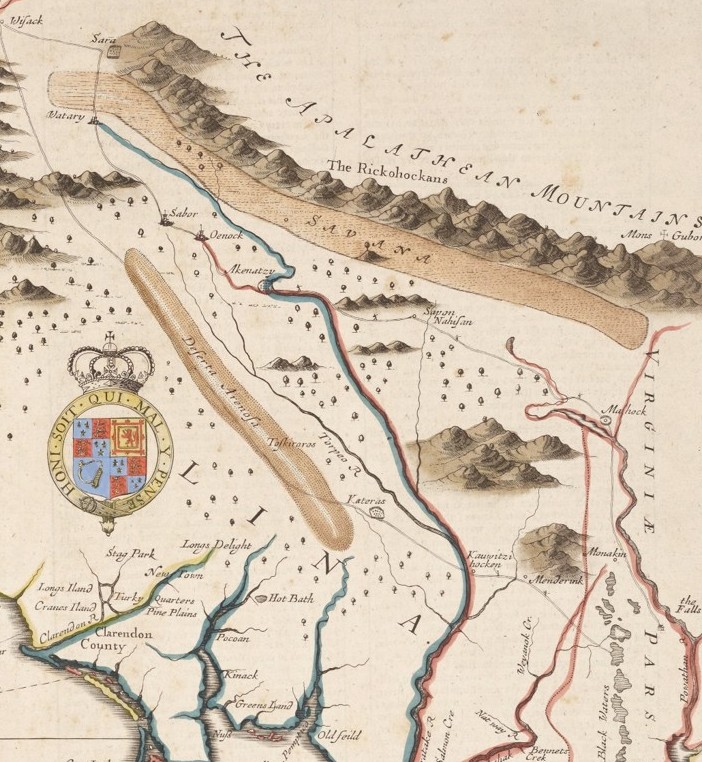
The idea of burning hardwoods — on purpose! — was unheard of in my college days. Oak savanna management seems to get more discussion among conservation communities in the Midwest, which Aldo Leopold poetically described as the battleground of a 20,000-year war between prairie and forest. But there is archeological and botanical evidence of open woodlands throughout the South before farming and development changed the landscape. We have seventeenth century accounts of savannas and open plains in the upland Carolinas, eighteenth century records of bison in Piedmont Georgia, and reports of hilly grasslands with scattered pines and oaks; naturalist William Bartram often alluded to natural strawberry fields that dyed the legs and feet of his horses in his botanical journeys through the southeast in 1776.
It is clear that fire, whether lightning-caused or set by the native population, maintained open woodlands across Georgia. Conversion of land to agriculture or other development altered the landscape before there was any opportunity for photographic evidence of its open character; subsequent abandonment of farmland and fire suppression in the 20th century resulted in the dense forests that many mistake for our land’s “natural,” precolonial state.
Map of Lederer’s travels, c.1670
Savanna marked in the Carolina Piedmont
What is a Savanna? What is a Woodland? We define whether an area is a savanna, woodland, or forest based on a measurement of the canopy closure – that is, how much of the sky is obscured by vegetation in the tree canopy when viewed from a single spot. A forest has 80% or more canopy closure, while a woodland has 30-79% canopy closure. A savanna has 10-29% canopy closure; less than 10% canopy is considered a prairie.
Hornaday’s map showing the retreat of bison from the southeast.
How is this relevant to land managers today? Although the landscape has changed considerably in the intervening time, the habitat requirements of deer, turkey, quail, and other species haven’t.
Lake Russell Wildlife Management Area, Georgia
Just like closed-canopy pine stands, mature hardwood forests lack diverse groundcover. Quail need that mix of native grasses and broadleaved forbs, but so do deer and turkeys – more so than many hunters realize. Managing part of a property as an open woodland or oak savanna will provide valuable cover and forage for deer – not to mention food for pollinators, and insects for poults and chicks. In the Piedmont, where most open lands are either cropfields or hayfields, there just isn’t much year-round native forage.
When creating an oak savanna as with creating a pine savanna, the first step involves cutting unwanted trees. Hilltops and slopes with southern and western exposures are warmer and drier than northern slopes and valleys, making them good candidates for a fire-managed woodland. If the trees are merchantable, you will have to make sure the contractor is aware that you want to leave some of the most valuable trees – oaks, and particularly white oaks. If your tract is too small or the trees are not mature enough to interest timber buyers, you can cut down or girdle unwanted stems yourself until you reach the desired density. An immediate follow-up with the appropriate herbicide will usually be necessary to control stump sprouting and seedling release.
Birdwatcher in an oak woodland, Fontenelle Forest, Nebraska
The land is always growing towards a climax forest, so frequent disturbance on the ground is key to renewing new ground cover and keeping tree saplings from filling in the open spaces. As you know, fire is one of a wildlife manager’s most important tools.
“But won’t I burn up my hardwoods?” I hear you say. It is true that some hardwoods – beeches and maples, for example – are not fire-tolerant. Others, such as most oaks and particularly post oak and blackjack oak, have thicker bark and heal quickly from injuries. The shortleaf pine, an upland native, is more fire-resistant than loblolly pine and fits in well with this savanna scenario.
Like any tool, it can produce different results depending on how it is used. Work with a forester to put together a burn plan that will help you achieve your wildlife habitat goals safely.
I remember getting off the school bus after a long day at elementary school. Ma was sitting on the front steps, waiting for me. She said that they had taken Booger, our old yellow cur, to the vet. He was sick, and they put him to sleep. I knew enough about doctors to understand about anesthesia during operations, so I wasn’t perturbed. “When will he wake up?” It was at this point that I learned about euphemisms, and about loss.
Since then, I have seen many, many dogs come and go. A few have gone on their own, suddenly and without warning. Most have been hard decisions. Maybe it’s a product of my own age and experiences, but I am always cognizant that my time with these dogs is finite. When I assume responsibility for a dog, be it a stray like Rufus or a pound pup like Hazel, I am aware that I will one day dig a hole for that friend. Three of our dogs are ten or older; seniors are still in good health, still eating well, still moving well. The voice in the back of my head whispers “one day…” Eventually, for each dog, the whisper will become “soon…”
I’m terribly sentimental when it comes to dogs. A sad story about a lost pup or bereaved old hound will bring a lump to my throat and send me rushing to find the nearest of my own dogs to pet. A suffering dog tears at my heart. But when it comes to my own hounds, as hard as it gets, I’m always there until the end. I can’t abide the cowards who leave their pets alone at the vet’s – or worse, take their senior dogs to a shelter or dump them on the side of the road when the animal’s infirmity becomes inconvenient.
I love my dogs more than I love most people.
And grief is the price of love.
“Having a dog will bless you with many of the happiest days of your life, and one of the worst.” –Unk.
Additional:
“The Good Death”, an essay by a veterinarian about the hardest decision the pet owner has to make. Should be required reading for any owner.
In the autumn of 1914, armies gathered, pushed, and blocked, in an effort to outflank each other. Instead, they ran into the sea. The forces were more lethal than in previous wars, producing withering rates of fire against which no amount of bravery could prevail. Standing invited death, so the men dug into the earth in order to move about with some amount of safety. Thus began the Great War, or as we would unfortunately come to call it: World War One.
For years, the armies pounded the trenches, occasionally charging across the deadly ground at great cost attempting to drive to foe back a mile or so. During this time, humanity at its most inhumane leveraged the power of chemistry, engineering, and the might of industry to create weapons that rendered the individual soldier nearly powerless to control his fate. Artillery could reach over the horizon to render the exposed man into pink mist, collapse dugouts and smother, or pummel with concussion until soldiers went punch-drunk or mad. Poison gasses could burn lungs, eyes, and exposed skin, and might persist in trenches or shell holes to blind or kill the unwary. Machine guns could send a stream of death hundreds of yards, showering bullets upon victims as they struggled to navigate the tangles of barbed wire on the churned fields of No Man’s Land. In its deadliest day, France suffered 27,000 killed, while over 19,000 Britons fell in their worst day. The war also saw the birth of tanks and fighting aeroplanes, which would only reach their deadly potential during the next world war.
This dehumanizing meatgrinder continued until the last survivor of the Triple Alliance, Germany, began to falter. The “Hundred Days” saw the men leaving the trenches they resided in for years, pushing the German army back. The butcher’s bill for this phase of the war is beyond comprehension: nearly two million dead or wounded. Consider that the current number of active-duty US military personnel, all branches, is just over two million.
November 11th, 1918. German delegates meet with the opposing military leaders in a train car in the middle of a forest, and bullied into signing a cease fire – the Armistice of Compiègne – at 5:45 in the morning. All fighting was to cease at 11:00 that morning, and with a few tragic exceptions it did.
The end of the War to End All Wars. This is where the story usually ends, all neatly tied up, fade to black, roll credits. However, an armistice is not peace, but rather a cessation of fighting for a period of time. In reality, warships remained on blockade stations and troops stayed on frontline guard for months after, while diplomats hashed out the terms of a formal peace treaty. Perhaps a quarter million German civilians died in the months between the Armistice and the peace treaty. Soldiers and civilians alike succumbed to diseases, including the so-called Spanish Flu which would kill tens of millions.
Once the ink dried on the Treaty of Versailles in June 1919, troops slowly returned to their home countries. But the impact on society went far beyond the territorial shifts or financial burdens from crippling war debts. Many millions had died; many more carried the physical and mental damage resulting from industrialized modern warfare. Some towns lost all of their fighting-aged men. The shock to societies worldwide as families lost siblings, fathers, husbands, sisters, wives, and children to the Great War can be guessed at by those have experienced such a loss personally, but at this scale the shared trauma is beyond imagination. Naturally, certain times and places would become focal points for remembering, reflecting, and grieving anew. The date and time of the Armistice became one such point in time; the Cenotaph in London and similar memorials around the world served as the places. From November 1919, many nations chose November 11 to hold Armistice Day commemorations honoring the fallen and celebrating the cause of world peace. With the onset of a new global war, Britain and the Commonwealth moved the commemoration to the nearest Sunday, reframing it as Remembrance Day (though Armistice Day is still recognized).
“The Treaty was all a great pity. We shall have to do the same thing all over again in 25 years at three times the cost.” –Lloyd George
In the United States, a similar movement to honor all veterans – living and dead – grew out of the Second World War. In 1954, Armistice Day became Veterans Day. Unlike some holidays, which are observed on Monday or Friday to extend a weekend, Veterans Day is always the 11th (although it did reside on the 4th Monday of October for a few years in the 1970s). Veterans Day is a federal holiday; apart from U.S. government workers, whether it is a holiday or not is up to individual companies, agencies or states. The nearest weekend is a time for parades and commemorations in many communities.
You smug-faced crowds with kindling eye/Who cheer when soldier lads march by,/Sneak home and pray you’ll never know/The hell where youth and laughter go. –Siegfried Sassoon, “Suicide in the Trenches”
I have my own commemoration, first enacted when there were still some veterans of the Great War living. Every year on the morning of November 11, I read poetry from the Great War or accounts from the soldiers. I listen to a playlist ranging from Arthur Fields singing “Over There” to three by Eric Bogle: “No Man’s Land,” “And the Band Played Waltzing Matilda,” and “The Gift of Years,” with a few relevant poems interspersed. Every year, on the eleventh hour of the eleventh day of the eleventh month, I pause for a silent toast to the strains of “The Last Post” and “Taps.”
I do not forget the men and women in uniform, now and in the past. But I commemorate Armistice Day for the sorrow of war and the hope for peace. May that hope not always be in vain.
They shall grow not old, as we that are left grow old:/Age shall not weary them, nor the years condemn./At the going down of the sun and in the morning/We will remember them. —Laurence Binyon, “For the Fallen”
The first of September marks a staggeringly grim anniversary in the annals of our relationship with the natural world. One hundred and ten years ago, the last passenger pigeon died in a cage in an Ohio zoo. The extinction of any species is a solemn moment, but the reduction of the most abundant bird species in North America to a mere memory is an infamy that lies unquestionably on our heads.
The passenger pigeon (Ectopistes migratorius) was a medium-sized bird, and longer than other native American pigeons. Males were slate blue, with “metallic iridescence of bronze, green, and purple” on the neck; females were similar but duller in color. The bird was fast – estimated to reach over 60 miles per hour – and for this was nicknamed “the blue meteor”. I found one reference to the etymology of the name: “passenger” being a corruption of the French passager, which means either “swiftly passing” or “voyager” (I don’t speak 17th century French). They had a considerable range, being found east of the Rocky Mountains but most commonly in the hardwood forests of eastern United States, eating nuts, berries, seeds, and insects.
But what made this bird stand out from other pigeons – and indeed other birds – was population size. The passenger pigeon was without doubt the most abundant bird in North America, by various estimates numbering between three and five billion individuals at their peak; — accounting for between 25 and 40 percent of the total land bird population of the United States.
Extant records describing copious flocks of pigeons date back to the 16th century. In the mid-17th century, a visitor to New England described a flight of pigeons that “had neither beginning nor ending, length, or breadth, and so thick I could see no sun.” Ornithologist Alexander Wilson described an encounter with a flock in Kentucky in the early 1800s: “I was suddenly struck with astonishment at a loud rushing roar, succeeded by instant darkness, which, on the first moment, I took for a tornado, about to overwhelm the house and everything around in destruction.” His companions assured him it was only a flock of pigeons.
In 1813, naturalist and artist James Audubon described a 55-mile journey under a cloud of pigeons so thick that “the light of noonday was obscured as by an eclipse…The pigeons were still passing in undiminished numbers and continued to do so for three days in succession.”
Greenberg quotes a newspaper article about a flock passing through Columbus Ohio in 1855: “As the watchers stared, the hum increased to a mighty throbbing. Now everyone was out of the houses and stores, looking apprehensively at the growing cloud, which was blotting out the rays of the sun. Children screamed and ran for home. Women gathered their long skirts and hurried for the shelter of stores. Horses bolted. A few peopled mumbled frightened words about the approach of the millennium, and several dropped on their knees and prayed…And then the dark cloud was over the city…Day was turned to dusk. The thunder of wings made shouting necessary for human communication.” The flock took two hours to entirely pass. There are numerous similar anecdotes, but I trust you get the point.
Such mass migrations were bound to have an effect on the local ecosystem. A forest providing a roost for hundreds of thousands of pigeons would show certainly show it, in the form of broken branches (for the birds would sit on top of each other until limbs cracked under the weight) and a thick layer of white droppings. The latter would provide nutrients to the soil, and fallen limbs and trees opened the canopy, allowing sunlight on the ground to encourage new growth.
The birds also helped determine the composition of a forest. White oaks drop their acorns in the autumn and they germinate rapidly or else rot. Red oak acorns contain higher levels of tannins which make the nuts more bitter and also resistant to rot – thus, available on the ground for a longer period of time, and a more accessible target for mighty flocks of pigeons which scour the ground for food. Ecologists hypothesize that passenger pigeon foraging resulted in white oaks being dominant in eastern oak forests prior to the 20th century. The birds’ extinction, coupled with the higher value of white oak in various industries, has contributed to the rise of red oaks in our deciduous forests.
Of course, all that pigeon flesh attracted predators both feathered and furred. But the local foxes and hawks could eat only so many pigeons in the few days or weeks that a flock settled in one area before moving on, meaning the danger to an individual pigeon was infinitesimal. Even the native peoples with their tools and strategies to collect, adults, eggs, and squabs had a negligible effect on a nesting colony.
And yet, they have not blackened the sky anywhere in a century and a half. We are remarkably efficient when we can get something out of it. The pigeons weren’t exterminated out of hate; they were killed because people would pay to have them for supper.
Sure, European settlers and their naturalized descendants altered the landscape, clearing the forests that fed the migrating multitudes. But efficient tools and the determination to harvest pigeons were a greater factor. Guns and nets are more effective than clubs. Trees were chopped down to get eggs, nestlings and stunned birds; sulfur would be burned under forest canopies to gas roosting birds. What wasn’t used locally would be packed into barrels and shipped to urban centers. Birds which were captured alive could be used at trap shooting competitions or as “stool pigeons” – captives who called in wild birds to be netted or shot.
Starting in the mid-19th century, two innovations, the railroad and the telegraph, spelled the pigeon’s doom. A roosting or nesting area could be reported by wire all over the country; pigeon hunters rode trains to the location, and their kills could then be transported farther and faster.
The decade of 1870 was likely the final precipice before the fall of the species became inevitable. The last great nestings occurred during this time. Perhaps the most famous exemplar was in Petosky, Michigan in the spring of 1878. When word went out that sky-blotting numbers of pigeons were congregating in the forests of three counties near the shore of Lake Michigan, hunters and netters converged from as far away at Texas and Virginia. The local economy boomed as hotels, stores, transportation companies and opportunistic citizens earned their share of the pigeoners’ profits. Agents of the law tried to enforce what meager protections were on the books, with limited results. There is no way to accurately account for the harvest that spring and summer. A daily average of 50,000 is mentioned. One source estimated that over 1.5 million birds were shipped out by rail alone. Another gave a figure of over a billion pigeons going to market. Whatever the actual figure, large nestings dropped off sharply after this. Even then, every report of a spring gathering brought pigeoners more determined to gather all the birds they could. By this point, pigeons were easily scared off their nests by human harassment, abandoning eggs and squabs and reducing the species reproduction to nearly nil.
From there, flocks scattered. Most of our records approaching the turn of the century involve someone seeing one or two individuals, maybe a dozen – an encounter which usually ended with a dead bird and the survivors scattering. Every state has its “last spotted” report during this time (A note of interest for Georgians: Schorger says the last record in our state was a young male, shot near Augusta in 1893. The skin was kept at the University of Georgia until destroyed in a fire.).
A female was shot in March 1900 in Ohio and mounted using buttons in place of glass eyes (thus the nickname “Buttons” for this specimen). Buttons is displayed under glass in the Ohio History Museum in Columbus.
The last wild passenger pigeon which still exists as a mount was a male taken in Illinois in March 1901. It remains in Millikin University in Decatur, Illinois.
The very last collected wild passenger pigeon was a male shot on the 3rd of April, 1902 in Indiana. The bird was one of a pair. The young shooter had never seen one before, and took the newspaper-wrapped remains to the local pharmacist for identification. The professional, perhaps realizing how historic this find was, taxidermied the bird. The shooter later sold the mount, which a few years later was inadvertently ruined through poor storage and thrown away.
Chances are good the actual last wild kill ended up in a stewpot and went unmarked in the scientific literature. There were a few reports in later years of pigeon flocks over the next decade, but likely most were actually mourning doves. Authorities publicized monetary awards for verifiable sightings of birds or nests, but none were claimed, and by 1912 the scientific community largely gave up. No longer protected from predation by overwhelming numbers, the birds and their nests were easy targets for nonhuman predators. Somewhere, in the first decade of the 20th century, the last wild passenger pigeon died alone.
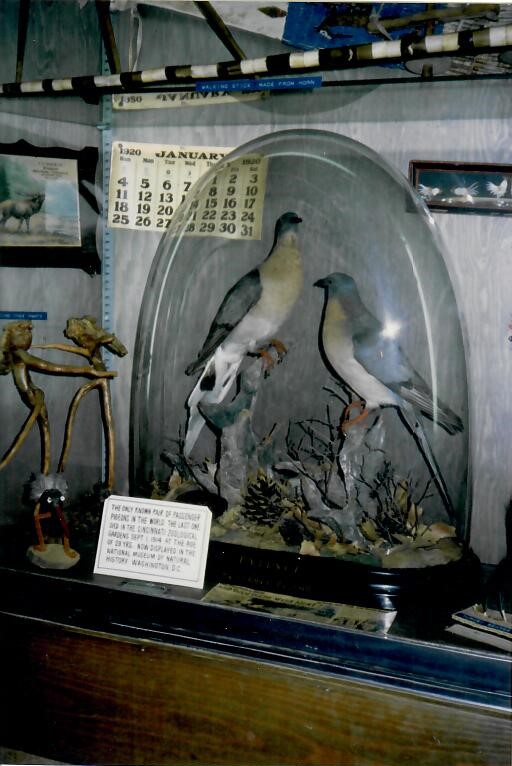
But that wasn’t the end of the story. No wild passenger pigeon would ever again stir the air beneath its wings, but there were yet captive remnants. In 1900 individuals maintained three small captive flocks. The end of 1907 saw one remaining – at the Cincinnati Zoological Gardens (although Joel Greenberg posits “that the last passenger pigeon might not have died in a modern zoo but in a ramshackle barn where a faltering old man tried to preserve a living connection to his youth.”). By 1909, the collection had dwindled to a single aged pair – named George and Martha. The male died in July of 1910, leaving Martha as the last representative of her sky-darkening species. She spent four years utterly alone, quiet and crippled: an endling in a cage, gawked at by zoo visitors. At 1 PM on September 1, 1914, she was discovered on the cage floor, lifeless.
It is probable that the passenger pigeon was in a steady decline since at least the 17th century due to habitat destruction and increased hunting. However, there is little doubt that the species was in a precipitous dive from the mid-1800s, and a death spiral by 1890. No one can deny that our drive and ingenuity, mingled with our desire for money, brought a prolific creature to extinction. As a memorial plaque in Wyalusing State Park, Wisconsin, states, “The species became extinct through the avarice and thoughtlessness of man.”
From billions to naught in a century; when profit is at stake, we can be damned efficient.
Additional Resources
There have been a number of volumes written about the passenger pigeon; here are three I consulted for this essay.
The Passenger Pigeon: Its Natural History and Extinction (1955) by A.W. Schorger. This meticulous ornithologist wrote the definitive work on passenger pigeons. Written for the scholar naturalist.
A Feathered River Across the Sky: The Passenger Pigeon’s Flight to Extinction (2014) by Joel Greenberg. Draws heavily from Schorger among others, and adds later information not available in the 1955 work. Dense with info yet readable.
A Message from Martha: The Extinction of the Passenger Pigeon and its Relevance Today (2014) by Mark Avery. Probably the most readable of the three, but not my favorite. Chapter 4 is a travelogue of his visits to several places key to the history of the bird’s decline; given my interest specifically in the birds, I failed to see the relevance of what the author had for breakfast or his opinion on racism in the American hotel industry. Still, synthesizes in a more digestible way the pigeon’s demise, other species’ endangerment, and our involvement in these fates.
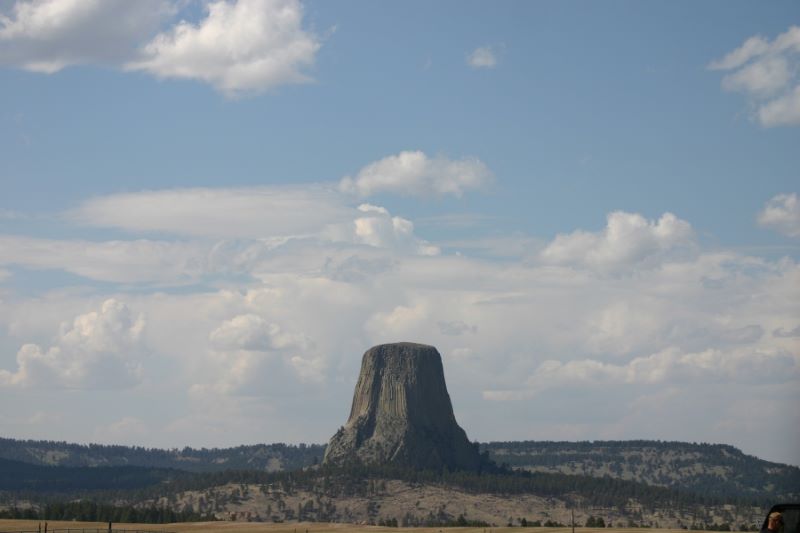
In one corner of the sparsely-peopled state of Wyoming, a long road leads you through the Black Hills to a singularly impressive sight. Blue with distance, a dark stone column stands stark against the sky, towering over its surroundings. It has as many names as there were cultures to encounter it, based on its appearance (“Tree Rock”) or the legends associated with its creation (“Bear’s Lodge”); the current stewards of the place, the National Park Service (NPS), use the name Devils Tower.
As a child, my first awareness of this magnificent butte came in 1977 with the release of Close Encounters of the Third Kind. My appreciation for the site grew in later years as I learned more about the geology of the place. Tens of millions of years ago, magma intruded through sedimentary formations; cooling, the igneous rock fractured into geometric columns. In the intervening epochs, erosion bared and shaped the structure to what it is today. There are several similar structures — the Missouri Buttes — a few miles away, but none are as striking as this lone pillar.
When my family journeyed westward this spring, I put it on the list of “Things I’d Like to See.” Even by western travel standards (where the goal of a day’s drive was a motel rather than a point of interest), it was out of the way, but there was enough interest among the fam that it made it on the itinerary: a five hour drive north, followed by an hour-long backtrack to Gillette for the night.
By mid-afternoon on the appointed day, we caught a first a brief glimpse of the pillar of Devils Tower, many miles away. Over the next half hour, it graced us with a few more teasing views, gradually growing in size with each glimpse. Then we entered the valley of the Belle Fourche River, where the butte loomed far above us from our spot in the line at the park entrance. I waited with growing impatience as we followed the park road around and up – and had to wait until someone freed up a parking space so we could continue to the visitors center. Finally parked, we were ready to follow the 1.3 mile trail around the base of the 860 ft butte.
One could accuse me of coup-counting — laying eyes on a celebrated place or view merely for bragging rights. I hope that was not the case, but I can say that, from the very first moment I beheld the tower, I felt a sense of awe. To provide contrast: some years ago when I visited Stonehenge, I was impressed on an intellectual level – the effort to conceive of and then build this enigmatic stone structure certainly fires the imagination. But Devils Tower is on a different scale entirely. Sixty million years of erosion unearthed the tower, which is a sacred site for over two dozen tribes. It is just…massive. Sheer. Over a tenth of a mile in the air. Composed of fused columns that gave rise to the stories of giant bears clawing at the stone.
So many details, so much to hear and see. I took over a hundred photos of the butte, from all angles, including a climber in a painstaking descent, vultures wheeling around the summit, and the remains of a ladder put in place over a century ago.
The ponderosa pines clustering around the base showed signs of fire. I read the interpretive sign talking about the NPS using periodic prescribed burning to simulate lightning fires. Good on them! Another sign said the top of the tower is about the size of a football field, and includes sagebrush, grass, and cactus, as well as, somehow, rodents and snakes. The signage was excellent, explaining (for those who would stop to read) the natural and cultural history, and the Park Service’s role in maintaining the U.S’s first national monument.
Of course, many breezed by the signs. not everyone felt reverence for the site. There were some stereotypical loud Americans, prattlers and coup-counters. Halfway through the circuit, some middle-aged women passed by, complaining about the rigors of walking the uneven, unpaved trail. On the other end of the spectrum, a native man and woman passed by us silently, solemnly, purposefully. Although attempts to change the name of the monument to something closer to a Native moniker have failed, the NPS doesn’t provide climbing permits for the butte during June, out of respect for ceremonies held during that month.
A few hours was not enough time to fully experience a place, but in this case it was enough to awe.

















 Towards the Moon or To the Sun
You must be logged in to post a comment.