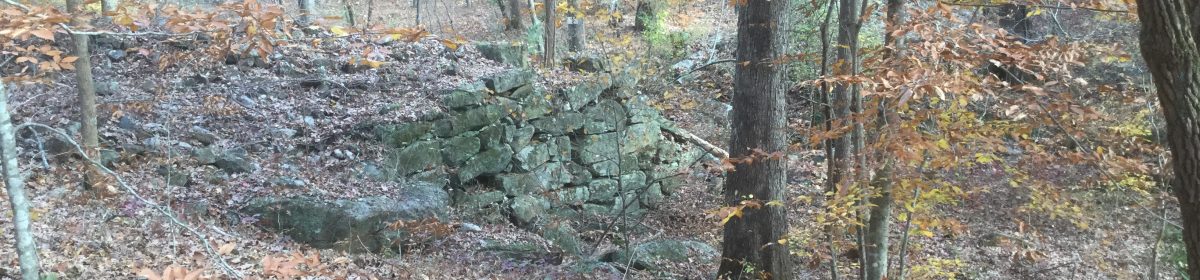
How is a climax forest renewed? How does it go from dense overstory canopy to grasses, forbs, and tree seedlings? Nowadays, the chainsaw is the chief instrument of change. Beyond human actions, the likely sources for canopy-opening are fire (from lightning) and wind. My corner of the Piedmont met the latter last week.
It was likely a straight-line wind barreling ahead of a thunderstorm, although a small tornado was possible. It came with freight train roar and the snap and crash of century-old trees. A morning’s survey of the damage revealed windthrows and snapped tops, in singles and groups. A few widowmakers will merit wary observation in the weeks to come.

Here, the red oaks were more likely to be thrown, while white oaks usually snapped. I suspect this is in part due to the root systems – while all oaks spread lateral roots beyond their canopy driplines, white oaks delve deeper into the soil, chasing water and anchoring themselves more firmly that their red kin.
Below is the most impressive root ball I found today. Look closely on the right side. That two-tone walking stick with the black cap on top is five feet tall. Using that for scale, the web of roots hold a block of soil over 20 feet wide! It’s clear that the roots extended 10 or 15 feet beyond that.

The windthrows give us an opportunity to look at the soil profile. The leaf litter and decayed organic material mixes with mineral soil to create a rather thin topsoil layer; here, litter and topsoil measure around four inches. Below that is the clay-rich loam common to this area – stripped of rich topsoil by a century or two of poor land management. After decades of rest, this spot has recovered a scant few inches of organic soil.


The logs will do their part, as insects and fungi convert wood to soil. However, the falling giants create a more immediate change. The new gaps in the canopy break the sunlight blockade which the dominant trees impose upon everything below them. Unbroken canopy is not a hospitable place for shade-intolerant plants; apart from the hardy muscadines, there is little green to be found on our forest floor. Yearly, pine seedlings rise and die in short order, starved of the sun’s energy. Even oak, hickory, and beech seedlings struggle to subsist on whatever only dappled or filtered light reaches them. These hardwoods may spend many years in a shrubby state, if they don’t succumb to solar neglect. But things change when a gap opens in the canopy. Sun-fed trees get a sudden boost of energy and growth, reaching towards the sky.
Where there is a gap vacated by two or three trees, and a dozen or more seedlings pushing through the leaf litter, there will eventually be competition for that space. Assuming no more disturbances, a decade or so will find the trees trying to outgrow each other – overtopping their neighbors and claiming the underground real estate until the victorious few take their place in the canopy.

I won’t be here to see the outcome, but I’m betting on the oak. Regardless, so long as people leave this forest alone, the gradual renewal of the climax forest will continue on every acre.


 Towards the Moon or To the Sun
You must be logged in to post a comment.