Can We Guard the Guardians?

I’ve been here and there in my time, making a library’s worth of memories — many of which were only possible thanks to the U.S. Department of the Interior.

I’ve lived on the Tensas River National Wildlife Refuge, where I worked alongside professionals of the Fish and Wildlife Service, researching the federally-listed Louisiana black bear while the biologists and technicians protected one of the largest remaining bottomland hardwood forests in the Mississippi Alluvial Valley.  Had they been around to protect this plot of earth a century ago, the sharp rap of the majestic ivory-billed woodpecker might still echo in the deep forests of Louisiana.

I’ve walked the beaches of Cumberland Island National Seashore as one of the 300 visitors that the National Park Service allows on any given day – once as a Boy Scout, once as a research assistant. You don’t have to be rich to get on the island, and you don’t have to peer through hordes of people and past buildings and airports (looking at you, St. Simons and Jekyll) to see nature – you only have to wait your turn.

I’ve walked through National Forest lands, seeing tree-mantled mountains unfestooned with houses – unlike the privately-owned ridges, where the wealthy can buy the best views at the expense of the valley-dwellers’ own viewshed.

I’ve gazed with wonder at a wall of fossilized bones from Jurassic beasts, and petroglyphs drawn by people a thousand years ago.  If Dinosaur National Monument hadn’t been protected by the U.S. government early in the last century, I expect the petroglyphs would be vandalized, the local rivers would be dammed for power and tourist reservoirs, and the dinosaur fossils would be in private galleries and unavailable for research.

I’ve walked a fraction of the Appalachian Trail, where anyone can freely hike — whether for a day’s outing or as a nature pilgrimage across 2,200 miles of mountain meadows, fens, and forests.  Although maintained by countless volunteers, the footpath is overseen by the National Park Service.

I’ve driven through wide-open grassland country maintained by the Bureau of Land Management, which oversees roughly an eighth of all U.S. land.
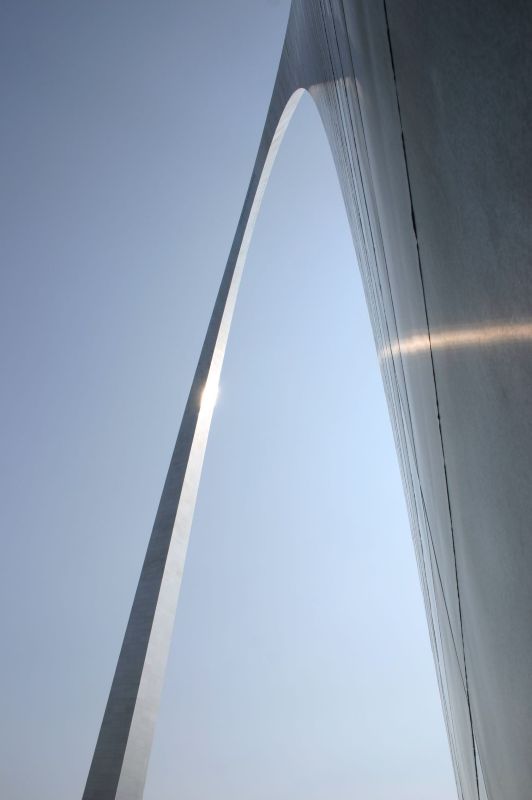
I’ve marveled at snow-capped Denali and arid Devils Tower looming high in the sky.  I’ve stood in the rainforest on the western slopes of the Olympic Mountains, and watched the waves break against the rocky Acadia shores. I’ve walked among the mineralized tree trunks of Petrified Forest and viewed the river-sculpted artistry of the Grand Canyon; delved the depths of Carlsbad and hiked the spine of the Smokies, touched steaming Hot Springs and paddled through the black water of the Okefenokee swamp.

There are places that we believe should be shared by all rather than owned by only a few.  There are places we agree should be protected: from those who would destroy them from a desire to profit, from carelessness or neglect.  There are federal agencies tasked with protecting and managing these places sites, and with educating the public about their significance.  These agencies are not faceless entities — they’re made up of men and women doing their part to serve their protectorates with conviction and zeal.  For many, this is their life’s work.  For some, it is their dream job.
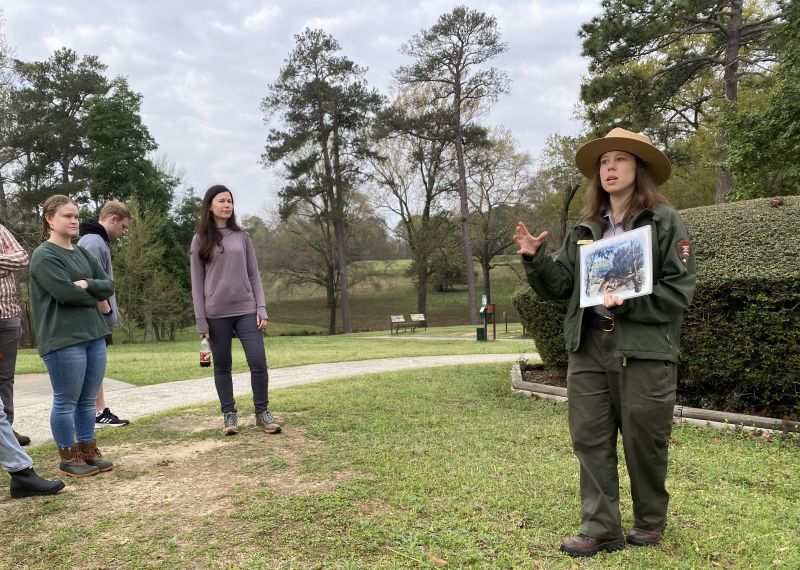
But their often-difficult job is made that much harder by their own government. I’ve never known a conservation agency that wasn’t underfunded and understaffed, with budgets being cut or at least failing to keep up with increasing costs. Buildings in disrepair, worn out trucks, critical habitat management practices relegated to “when we can get to it” – these fiscal difficulties are too common given the importance of the work.

But this year is so much worse. Conservation agencies haven’t been spared the destabilizing personnel cuts that compromise their ability to carry out their missions. Facilities are closing.  Species monitoring programs falter.  Trained and dedicated professionals are cut loose.  Make no mistake, the jettisoning of personnel and the shuttering of offices and departments across the federal government are not to make a more efficient government but to serve the interests of those in power and their backers.  As a biologist and an environmentalist, I just happen to be closer to the stewards of American’s natural heritage and can see where this dark road will take us.

So what can you do to help?

  • Write to your representatives; let them know conservation, and the professionals who foster conservation, are important to you.
  • Support and vote for candidates who are more favorable to conservation and less willing to sell off national treasures.
  • Visit National Parks, Forests, Monuments, Wildlife Refuges, National Seashores, and other lands overseen by the Department of the Interior.  Make a point to see the less frequented sites; less popular doesn’t mean less interesting.  While you’re there, let the employees – from managers to rangers to gift shop clerks – know you appreciate what they’re doing.
  • Consider volunteering, or supporting “Friends of” organizations. 

I welcome other suggestions, because I am heartsick and don’t know how to turn things around.

Our nation’s wealth includes a trove of all the special places unique to this continent. Spending this wealth – selling off resources – puts money in a company’s pocket but leaves the nation’s people impoverished. These protected lands are for us to appreciate and hand down to the generations that follow.  Don’t let a short-sighted regime steal them from us. 

A Place for Fox, Hound, or Human Being

Development.  For some, the word promises increased opportunity and convenience – jobs at the new factory, or a new grocery store half the distance of the old one. For others, it signifies loss and an unwelcome change to the landscape. 

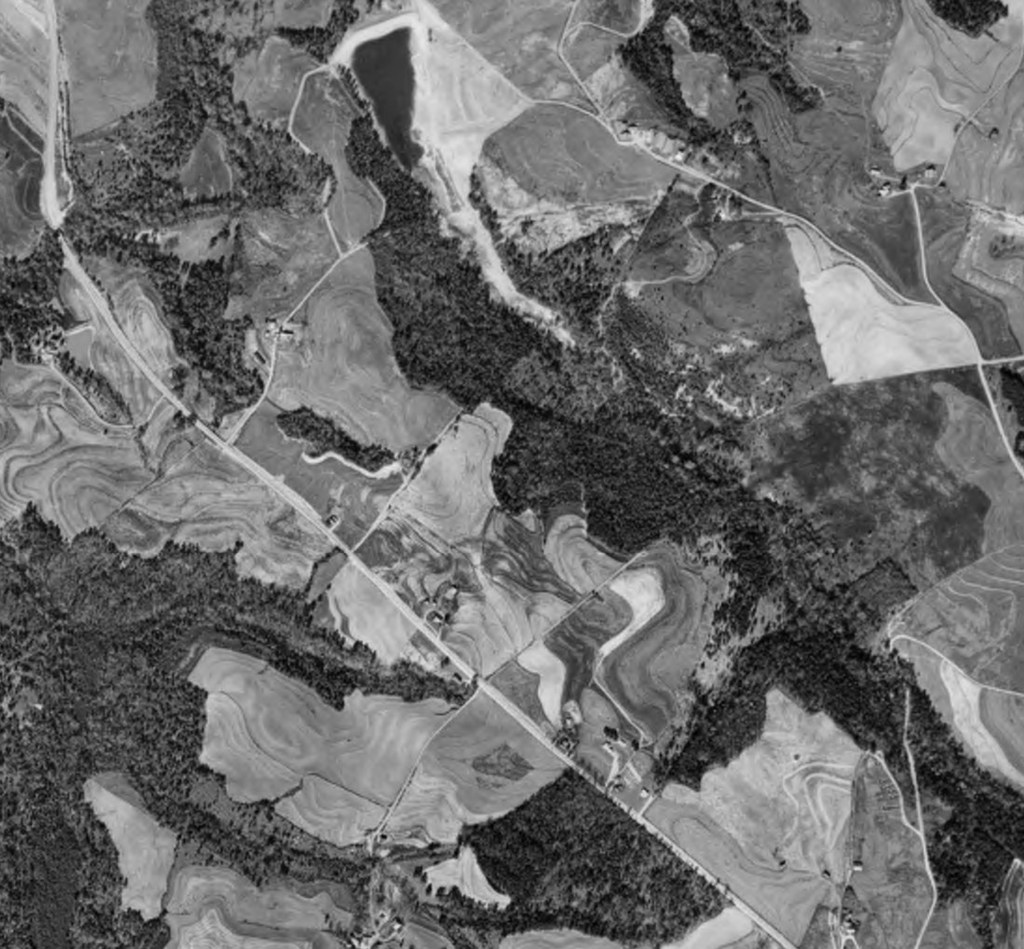
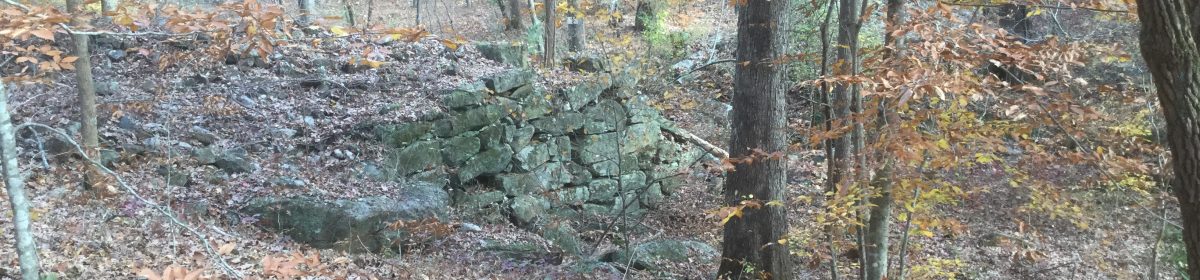
I grew up in a fairly rural area: a landscape of  pastures, cropfields, and pine plantations.  Great white oaks, red oaks, hickories and beeches mantled the hillsides and bottomlands where agriculture wasn’t practical. I know these forests were second-growth; most of the landscape was altered by land worked, paupered, and abandoned outside of living memory.  Small communities vanished over time, leaving fields to lie fallow and return to forest. Aerial photos attests that the woods I wandered in the 70’s and 80’s were open agricultural lands just a handful of decades prior.   Piles of bricks obscured by leaf mould, rusted wire curling off gnarled fenceposts, old wells capped by rotten boards, and fragments of barrels at forgotten still sites attest to homes and lives long vanished.

You may be familiar with the movie The Fox and the Hound.  In typical Disney fashion, the film has very little in common with the source material.  Written in the 1960s, the novel The Fox and the Hound illustrates the rise and eventual dominion of human development in a valley.  At the beginning of the novel, the valley contains quiet, bear-haunted woods, small farms, and a lone, empty highway.  As the story continues, the human population grows, fueling encroaching development in the story’s background. By novel’s end the forests are replaced by houses, motors have exiled the quiet, and the air is filled with the stench of factory smoke and diesel fumes.  The transformation is subtle and largely in the background, but in the final chapter the message comes to the fore. The heartbreaking book ends with the words, “…and in this miserable, fouled land there was no longer any place for fox, hound, or human being.”

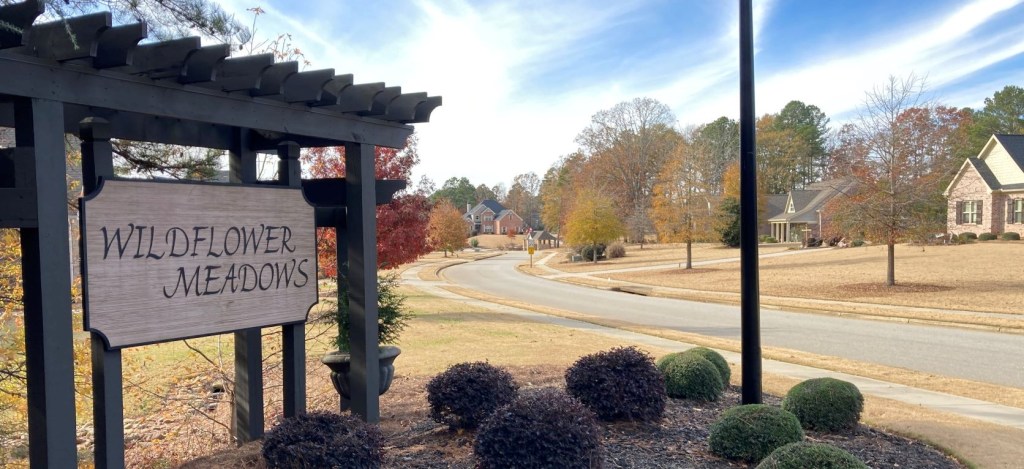
A subdivision name or memorial to what was lost?

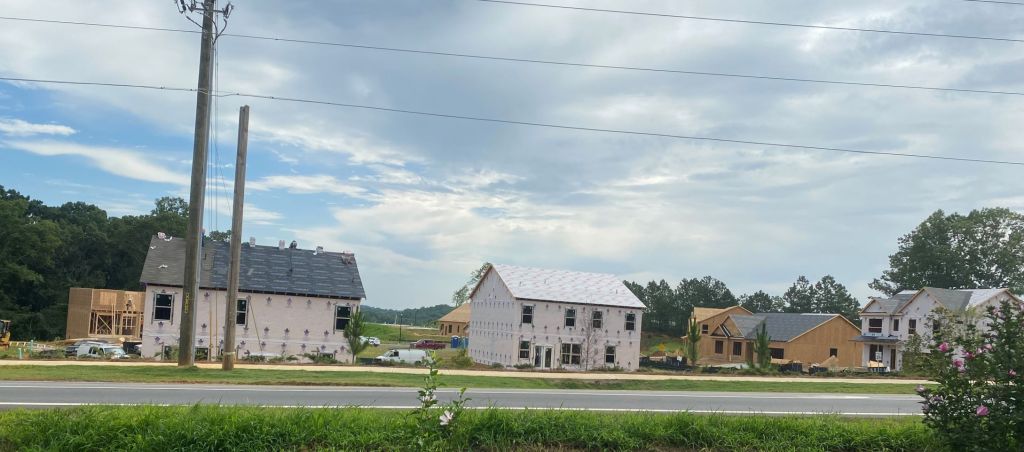
My own landscape’s change has been neither so rapid (the book encompasses the lifespan of an improbably venerable fox) nor so complete, but it is much altered from my childhood.  As a teen sitting in the deepest part of our woods on a cold November Saturday, I could guess if the university was playing a home game by the volume of traffic noise on the highway 1.5 miles away.  Traffic was barely audible most days, but pilgrims trekking to see the Bulldogs would raise the volume to a steady rumble.  The two-lane is now a four-lane, and the noise is both clear and constant regardless of the day.  Soybean fields that fattened our deer are now planted pines over-ripe for harvest.  Pastures on the hill have sprouted dozens of homes on turfgrassed acre-lots, and the formerly-graveled road fronting our land is both paved and lined with houses on twelve-acre wooded tracts.  

Near Watkinsville, 1955
Same, 1980. Fewer fields, a few more buildings
Same, 2021. Housing developments galore.

But the majority of people who live here now are “from somewhere else,” and neither know nor care about local history.  They are looking for land that is pretty, or at least pretty cheap compared to properties closer into town.  Their last names aren’t on the tombstones at the century-old Baptist church. My family only set down roots here in the 1960s, but with the county population quadrupling in that time, few could consider us newcomers.

I’ve never known bears on our land, but I remember where I saw my final covey of bobwhite quail on the farm.  I remember the deer stand where I encountered our last fox squirrel. Both encounters were over three decades ago, and I have no expectation of these critters ever returning.

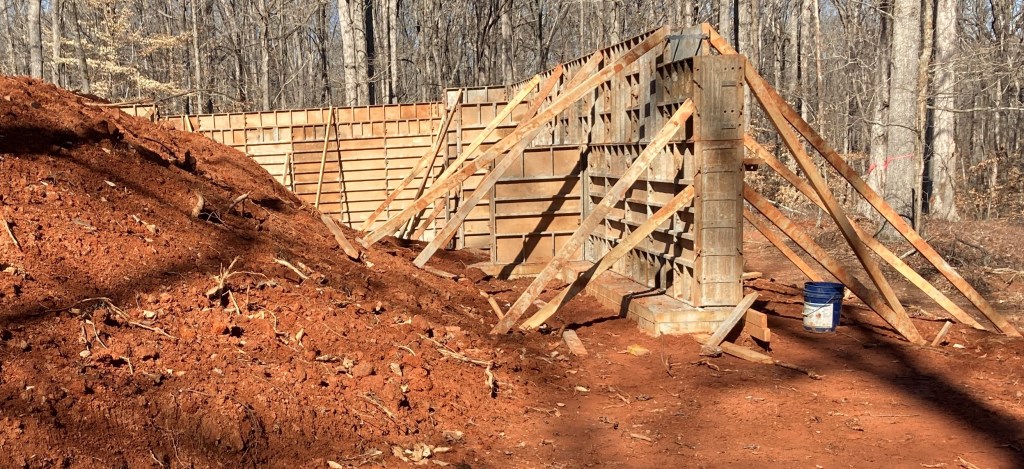
It is not without a sense of irony and perhaps a touch of shame that I have cleared a patch of forest and planted a house in the heart of the family property, land which reclaimed the last homestead over a century ago. But I carved out one acre for a house to guard many acres immediately surrounding it. This is where I’ve always wanted to be, and here I hope to protect this patch of woods for as long as I can.

In his world of Middle Earth, J.R.R. Tolkien referred to “The Long Defeat,” where the world is in a gradual but inevitable decline; the slide towards ruin may be slowed but never arrested or reversed by the small victories that the heroes strive for.  To the ecologically-minded, it seems to be the path we chose as we struggle against the forces of hungry economies and burgeoning populations. To those who don’t want their corner of the world to alter from the memories of youth, every clearcut, new house site or NO TRESPASSING sign strikes a blow for the forces of progress as they march along the path of “The Long Defeat.”

Last month I saw a flash of movement beside the road — the first red fox I’ve seen on the farm in years. Encounters like this give me hope that we are not as far into decline as I feared.  A fool’s hope maybe, but I’ll take the small victory.

Additional:

Tyranny of Small Decisions

The Fox and the Hound (Wikipedia)

COVID’s Fifth Column

I must say, a submicroscopic agent is proving to be more efficient than any army, navy, or air force our country has ever faced.

The Axis powers of World War II couldn’t kill Americans nearly as fast as this virus.  It took them 44 months to kill 405,000 Americans.  In a little over 18 months, COVID-19 has taken the lives of 662,000 Americans.  The virus will soon kill more Americans than all of the combined militaries ever arrayed against the U.S. (not counting the Civil War).  This coronavirus is quite an efficient killer. 

It doesn’t deserve all the credit, though.  It has had considerable help from fifth columnists – celebrities, politicians, radio hosts, and social media influencers – who spread lies about vaccines or about the medical professionals who have tried to stem the tide of this disease.

Politicians were, and continue to be, powerful agents of the fifth column.  From Trump – who downplayed the threat from the beginning and throughout, even after he himself fell ill – to DeSantis’ efforts to keep schools from requiring masks in the classrooms, those with authority can sabotage a nation’s defensive capability. 

But ordinary citizens can do their part at undermining their communities as well. Anyone can get a social media account and write text or shoot a commentary video on their phones.  They can add their voices to the echo chambers, fan the flames of petulance, and sow the seeds of doubt in ground fertile for such a weed.  Enough popularity may earn them a radio spot or a sponsorship for more videos, and thus more credibility for their incredible opinions. 

I see reports from the front lines: from hospital workers I know who struggle to go to work swathed in protective gear, working long shifts because so many of their coworkers are sick, or dead, or have killed themselves.  These workers, no matter what department they worked in previously, are pressed to care for the sick, hold the hands of the dying, bag the dead.  Beds line the hallways, stretchers and cots lie where they can fit.  I know a fellow who can’t book a surgery for his cancer because the hospital is filled with COVID patients. 

And yet.  I also know people who feel a mask is an offense against their dignity, even an offense against their God. So many people around me believe wearing a mask or getting a shot is an individual choice, and that they have no responsibility to their community. They believe the vaccine is somehow not worth the risk, or (what the hell?) contains tracking devices. 

I don’t listen to radio talk shows as a rule, but while surfing channels last week I heard a host defending the use of ivermectin – you know, the dewormer commonly used by veterinarians.  He sounded quite exasperated, in the “Why is the Left still going on about this?” sort of way.  Not that the Left doesn’t have their fringe conspiracy nuts as well.  The virus doesn’t care which end of the political spectrum you cling to, though; it only wants a foothold in your body.

Several talk show hosts have gotten sick or died, their systems overrun by the virus.  Some have gone on record saying they wished they took it seriously and gotten the vaccine.  But there are plenty of other voices to take their places, to drown them out.

I know this new fifth column isn’t deliberately working for the disease.  I mean, the disease will kill them as quickly as anyone else.  No, they have their own agendas: votes, ratings, adulation, fear of da gummit, or whatever.  But at the end of the day, they still serve a virus.