I met Dr. Walter Cook over three decades ago. In his Forest Engineering course, I learned how to (among other things) properly lay out a trail in the woods; in Forest Recreation, he taught me why these trails were important. He was an important mentor for my Eagle project, which involved constructing a stretch of trail at Sandy Creek Park in Athens.
I reconnected with my professor at his 90th birthday celebration. Fittingly, it was in a park pavilion. During the gathering, nature-lovers lauded his tireless work in developing, coordinating, and building trails and paths on over 130 projects across both private and public lands.
Last week, I went to lunch with Dr. Cook to catch up. He has read this blog, and agreed to share some of his thoughts here. This is the first of his essays which I post with his permission.
The Richest Man in the World
By Dr. Walter Cook
Who among us has not occasionally wished to be rich? As Tevye sang in Fiddler on the Roof, “If I were a Rich Man…” he would no longer have to work. Some people have other reasons for wanting to be rich – to have a big car (or maybe two), to have a big house (or maybe two), to travel the world, to send their children to the best university, or merely not to worry about their monthly bills. Many times in the literature of myth, characters who have unlimited riches are depicted as having large chests overflowing with jewels, surrounded by the utmost beauty of colorful paintings, with everything touched by gold.
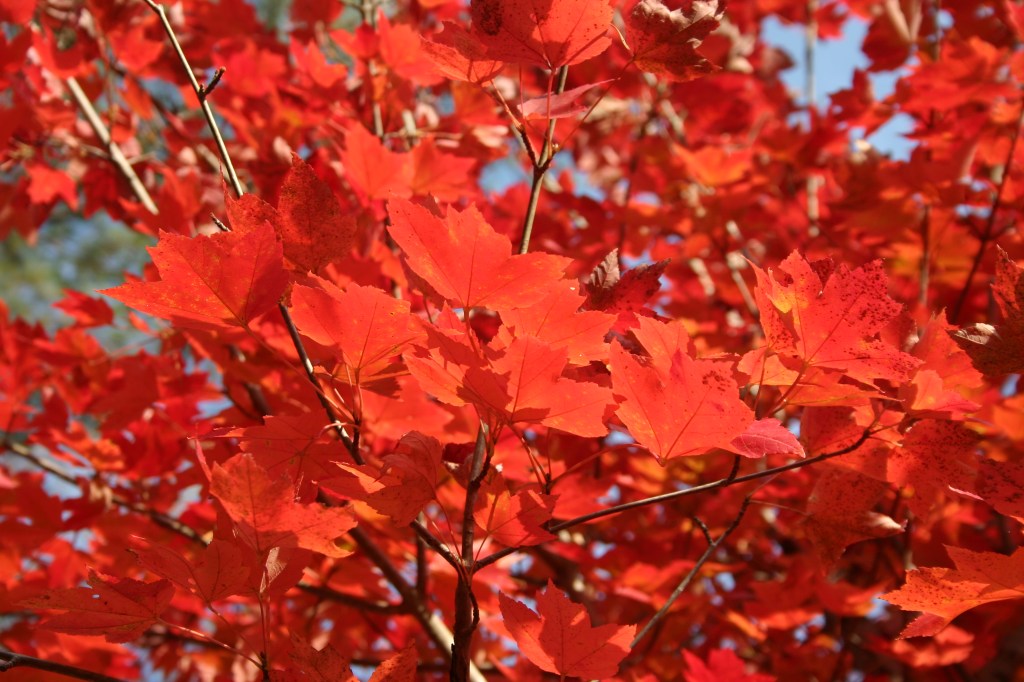
On a fall day several years ago, I discovered that I, too, was rich – not in the sense of Tevye’s longings, not in the sense of a carefree life, but rich in the sense of a mythical king. As I was walking down the Middle Oconee River (near my hometown of Athens, Georgia) I enjoyed the many colorful red and sugar maples, dogwoods, blackgums, and poison ivy along the river’s levee. Many leaves had fallen, and I recalled that when I was a young boy, I would gather a half dozen of the prettiest leaves as I walked home from school to bring home to share their beauty with my mother. But as I looked at the leaves lying ankle-deep on the ground, I realized it would be impossible to choose the six best leaves – there were so many! How could anyone make such a choice. They were like jewels, even better than jewels, for no jewel could match the dazzling spectrum of colors in even one leaf, much less all the leaves. And, as I looked up at the trees that had produced these super jewels, they were like paintings, only far surpassing any human-made work of art.
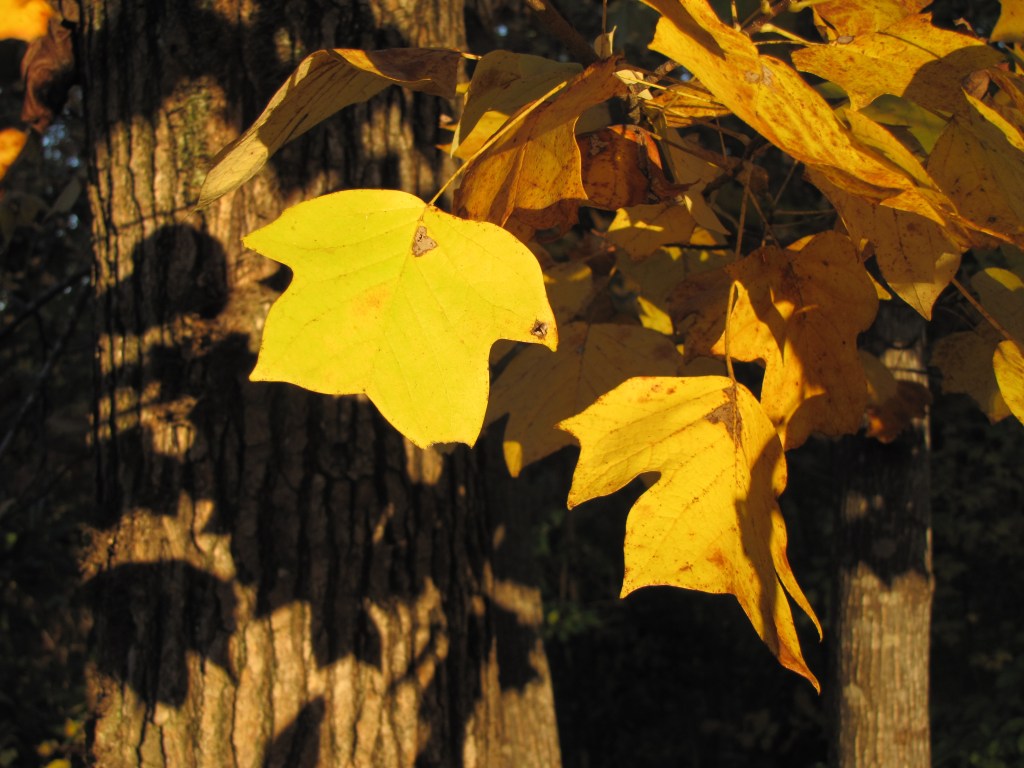
So, there I was, ankle-deep in the world’s most beautiful jewels, surrounded by superb works of art, and all the while being entertained by the music of songbirds. What more could one possibly wish for? I was a rich man, and I didn’t even have to work for it. Tevye would have liked that.
[Since that long ago day in 1993, I have walked in a lot of forests, along many riverbanks, and in other interesting environments. In the past few years, I have enjoyed exploring the back country while flagging new trails in the Jocassee Gorges in South Carolina. Compared with the quiet beauty of the Oconee River in Georgia, the scenery in Jocassee is simply spectacular. The tremendous cliffs (not all cliffs are in state parks!), the numerous waterfalls, the natural gardens of wildflowers, and the views of endless mountains rolling to infinity, all certainly qualify as beautiful.]
But don’t be fooled!! The nice thing about nature is you don’t have to wait until fall or go to a special place to enjoy its beauty. Nature is, almost by definition, beautiful. We rightly enjoy the special shows of fall colors, spring and summer flowers, winter ice and snow, and the beautiful landscape of the Southern Appalachians. But even without these spectaculars, nature – the undisturbed environment – is beautiful. All we need to enjoy it is to open our minds to its presence. Then we can all be as rich as a mythical king.
 Towards the Moon or To the Sun
You must be logged in to post a comment.