As mentioned in the previous post, I was in Omaha a week ago. After conducting my business, I planned to treat myself by visiting Neale Woods to see the slice of tallgrass prairie the naturalists at Fontenelle Forest were restoring. Upon arrival, I was momentarily disappointed to discover that the grassland and much of the woods had been put to the torch only a couple of weeks earlier.
I say momentarily disappointed, but I’d add a naturalist’s delight. This was an opportunity to get a better look at the efforts to recover a corner of prairie from a century and a half of neglect.

The prairies and oak savannas of the Midwest, like the pine savannas of the Southeast, are by their nature constantly under threat from ecological succession. Shrubs and trees push towards the interior in a never ending campaign, threatening to block the sunlight from all vegetation laying closer to the ground. Fire – from lightning and anthropogenic sources – was always the prairie’s greatest weapon of defense and conquest in what Aldo Leopold termed the “prairie war” between grassland and forest. When the sodbusters began plowing the dark prairie soil to grow crops, they also banished fire from the uncropped land – for fire endangered buildings and livestock, not to mention the trees that offered their wood to the settlers and later to industry. And so it was that many oak savannas, through deliberate fire exclusion and general neglect, grew thick canopies — stealing sunlight from the grasses and forbs that needed it.
The prairie lost all the land that could be farmed. Without its ally, fire, it surrendered the rest to the forest. Even the oak savannas, a neutral ground of sorts where grasses and trees coexisted, reverted to forest as less fire-tolerant tree species crowded in to create closed-canopy forests. Of the 50 million acres of oak savanna existing in the middle reaches of the United States and southern Canada prior to European settlement, only around 30,000 acres remain in scattered pockets.
However, the pendulum is shifting back a fraction. In recent decades, knowledge of the elements and interactions of this hybrid of prairie and woodland community have been joined with a will to preserve or recreate said hybrid.

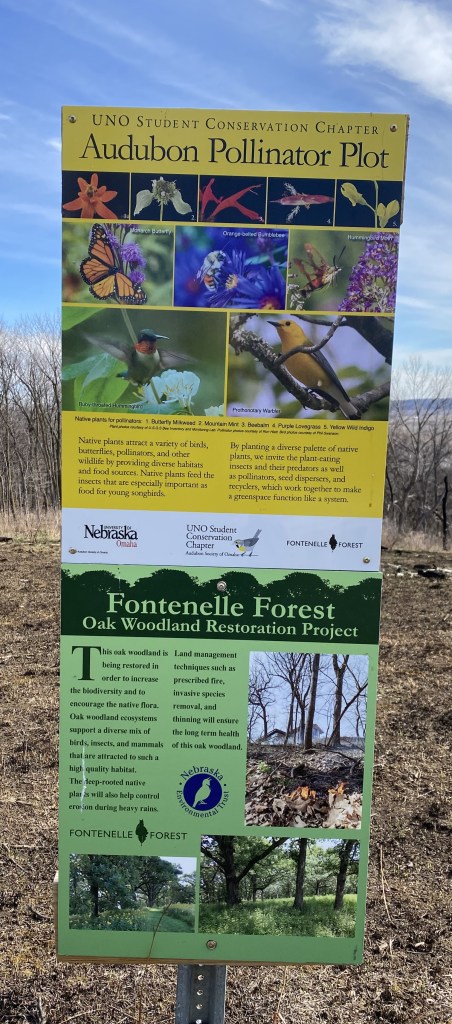
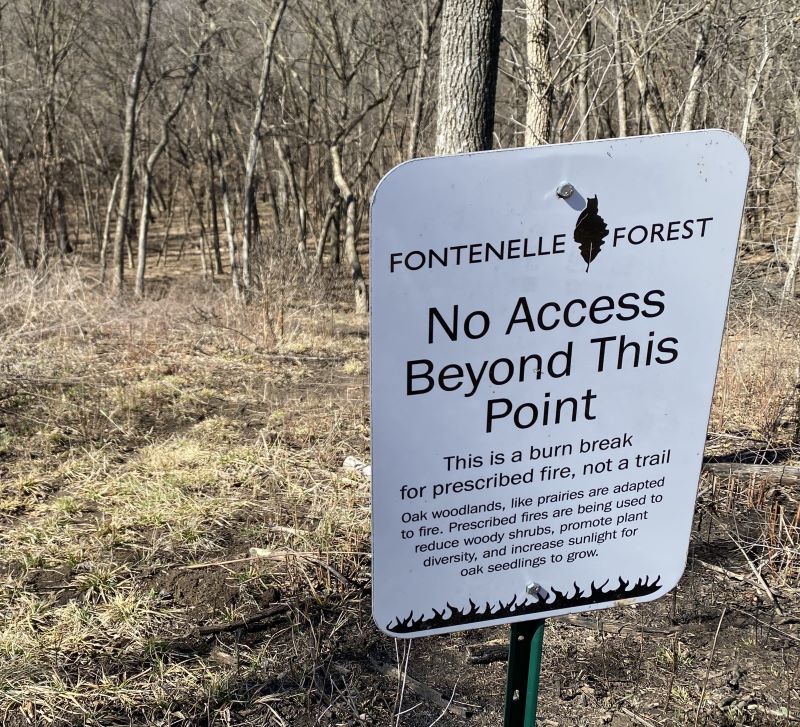
In Neale Woods, it began with the setting aside of loess hills ill-suited for farming. Then came the restocking of prairie plants in openings in the tree canopy. Now as I looked around, I saw evidence of the continuing efforts to create an open oak savanna. Low stumps, which would have been hidden by tall grass but were easily seen in the ash, showed the ecologist’s direct interventions against individual trees. Larger trunks, though still standing, were neatly girdled – not indiscriminately, only individuals or small clusters, just at the margins of existing openings. And of course, there was prescribed fire, free to do its work within the confines of subtle firebreaks. It burned away leaf litter, scarifying forb seeds and exposing bare soil for the next generation of ground cover. Some tree seedlings died, others were topkilled. Fire found chinks in the bark armor of some older trees, burning deeper wounds.

Sounds catastrophic, perhaps. But for the flora and fauna adapted to fire long before the axe or plow made their marks, fire is a part of life – a trial to be periodically overcome but which leaves the survivors in better shape. The larger bur oaks are nearly impervious to the low-running grass fires and were scarcely troubled; they will have less competition for roots and perhaps for sky. The mountain mint and bloodroot, the beebalm and bluestems will grow vigorously. Wildlife, including the rabbit whose droppings I saw by the trail or the wild turkeys that I watched foraging for baked acorns and roasted insects, make use of the invigorated ground cover. Nectar-feeders, from monarch butterflies to longhorn bees, will fill the air come summer, as will the songbirds who arrive to feed in the humming air above the prairie. The blackened crowns of the native grasses were already sprouting green sprigs, promising a return to tall grasses waving in the summer wind.
I commend the biologists and their supporters who are bringing back the oak-grassland savanna in this corner of Nebraska. In the war between forest and prairie, these conservationists have sided with the grasses.
Additional Information:
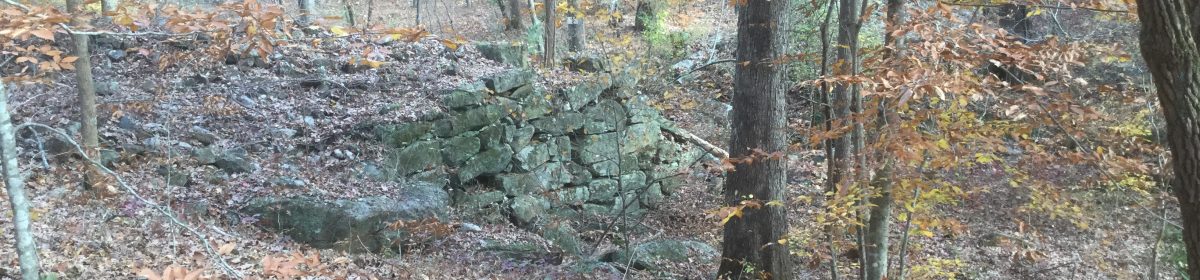
A view of Neale Woods in October
A brief view during the growing season.
Fontenelle Forest, stewards of Neale Woods.




 Towards the Moon or To the Sun
You must be logged in to post a comment.