Oak Savannas: Rediscovering an Old Idea

As stated in the past, fire is a key element in shaping a forest or grassland.  Prairies in the west and south and longleaf savannas have been discussed previously.

Thinning and burning are well-known and critical practices for anyone wanting to manage pinelands for wildlife in general and deer and bobwhite quail in particular.  But you may be surprised to learn that thinning and burning can be just as important in upland oak stands.

The idea of burning hardwoods — on purpose! — was unheard of in my college days.  Oak savanna management seems to get more discussion among conservation communities in the Midwest, which Aldo Leopold poetically described as the battleground of a 20,000-year war between prairie and forest.  But there is archeological and botanical evidence of open woodlands throughout the South before farming and development changed the landscape.  We have seventeenth century accounts of savannas and open plains in the upland Carolinas, eighteenth century records of bison in Piedmont Georgia, and reports of hilly grasslands with scattered pines and oaks; naturalist William Bartram often alluded to natural strawberry fields that dyed the legs and feet of his horses in his botanical journeys through the southeast in 1776. 

It is clear that fire, whether lightning-caused or set by the native population, maintained open woodlands across Georgia.  Conversion of land to agriculture or other development altered the landscape before there was any opportunity for photographic evidence of its open character; subsequent abandonment of farmland and fire suppression in the 20th century resulted in the dense forests that many mistake for our land’s “natural,” precolonial state.

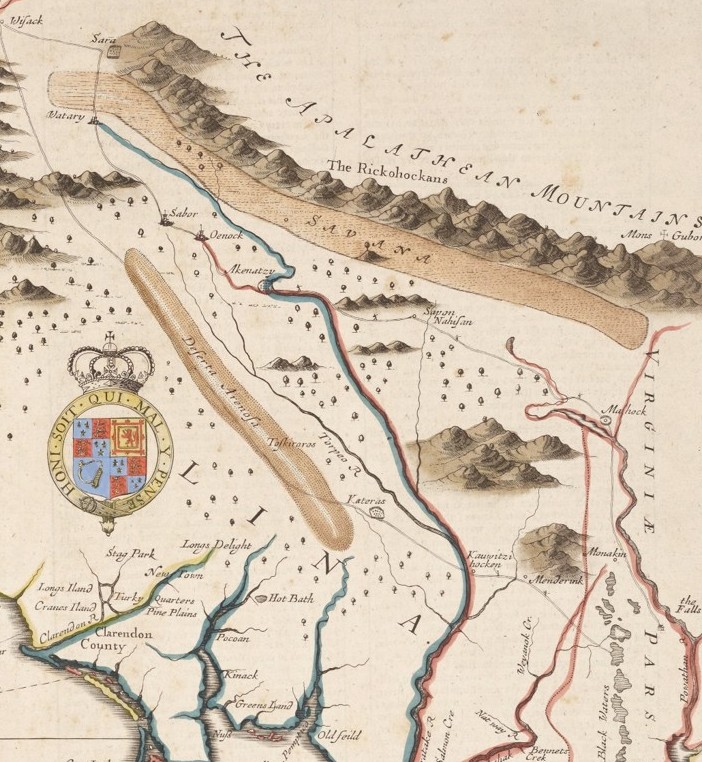
Map of Lederer’s travels, c.1670
Savanna marked in the Carolina Piedmont
What is a Savanna?  What is a Woodland? We define whether an area is a savanna, woodland, or forest based on a measurement of the canopy closure – that is, how much of the sky is obscured by vegetation in the tree canopy when viewed from a single spot.  A forest has 80% or more canopy closure, while a woodland has 30-79% canopy closure.  A savanna has 10-29% canopy closure; less than 10% canopy is considered a prairie.
Hornaday’s map showing the retreat of bison from the southeast.

How is this relevant to land managers today?  Although the landscape has changed considerably in the intervening time, the habitat requirements of deer, turkey, quail, and other species haven’t.

Lake Russell Wildlife Management Area, Georgia

Just like closed-canopy pine stands, mature hardwood forests lack diverse groundcover. Quail need that mix of native grasses and broadleaved forbs, but so do deer and turkeys – more so than many hunters realize.  Managing part of a property as an open woodland or oak savanna will provide valuable cover and forage for deer – not to mention food for pollinators, and insects for poults and chicks.  In the Piedmont, where most open lands are either cropfields or hayfields, there just isn’t much year-round native forage. 

When creating an oak savanna as with creating a pine savanna, the first step involves cutting unwanted trees.  Hilltops and slopes with southern and western exposures are warmer and drier than northern slopes and valleys, making them good candidates for a fire-managed woodland.  If the trees are merchantable, you will have to make sure the contractor is aware that you want to leave some of the most valuable trees – oaks, and particularly white oaks.  If your tract is too small or the trees are not mature enough to interest timber buyers, you can cut down or girdle unwanted stems yourself until you reach the desired density.  An immediate follow-up with the appropriate herbicide will usually be necessary to control stump sprouting and seedling release. 

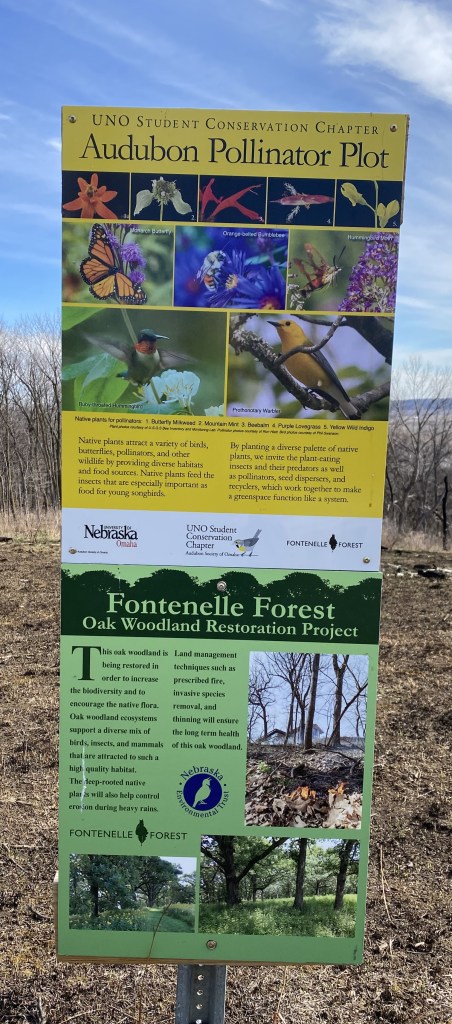
Birdwatcher in an oak woodland, Fontenelle Forest, Nebraska

The land is always growing towards a climax forest, so frequent disturbance on the ground is key to renewing new ground cover and keeping tree saplings from filling in the open spaces.   As you know, fire is one of a wildlife manager’s most important tools.

“But won’t I burn up my hardwoods?” I hear you say.  It is true that some hardwoods – beeches and maples, for example – are not fire-tolerant.  Others, such as most oaks and particularly post oak and blackjack oak, have thicker bark and heal quickly from injuries.  The shortleaf pine, an upland native, is more fire-resistant than loblolly pine and fits in well with this savanna scenario.   

Like any tool, it can produce different results depending on how it is used. Work with a forester to put together a burn plan that will help you achieve your wildlife habitat goals safely.

Additional Resources

Ecology and Management of Oak Woodlands and Savannahs (a pdf)

Fire in Eastern Oak Forests — a Primer (pdf)

Georgia Department of Natural Resources’ page on fire in the many ecoregions of the state.

The Piedmont’s Lost Prairie

Southeastern Grassland Institute

Siding With The Grasses

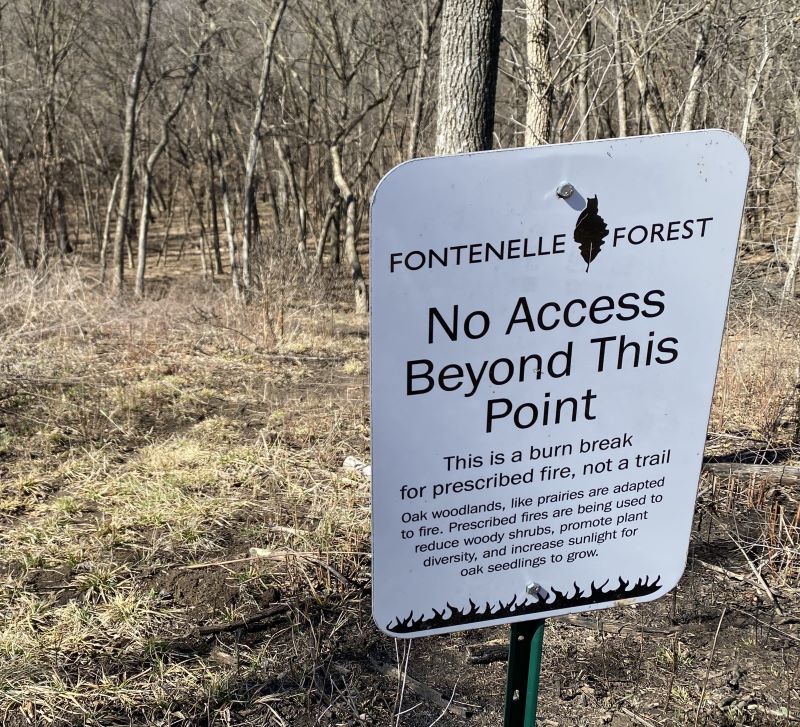
As mentioned in the previous post, I was in Omaha a week ago.  After conducting my business, I planned to treat myself by visiting Neale Woods to see the slice of tallgrass prairie the naturalists at Fontenelle Forest were restoring.  Upon arrival, I was momentarily disappointed to discover that the grassland and much of the woods had been put to the torch only a couple of weeks earlier.

I say momentarily disappointed, but I’d add a naturalist’s delight.  This was an opportunity to get a better look at the efforts to recover a corner of prairie from a century and a half of neglect.

The prairies and oak savannas of the Midwest, like the pine savannas of the Southeast, are by their nature constantly under threat from ecological succession.  Shrubs and trees push towards the interior in a never ending campaign, threatening to block the sunlight from all vegetation laying closer to the ground.  Fire – from lightning and anthropogenic sources – was always the prairie’s greatest weapon of defense and conquest in what Aldo Leopold termed the “prairie war” between grassland and forest.  When the sodbusters began plowing the dark prairie soil to grow crops, they also banished fire from the uncropped land – for fire endangered buildings and livestock, not to mention the trees that offered their wood to the settlers and later to industry.  And so it was that many oak savannas, through deliberate fire exclusion and general neglect, grew thick canopies — stealing sunlight from the grasses and forbs that needed it. 

The prairie lost all the land that could be farmed.  Without its ally, fire, it surrendered the rest to the forest.   Even the oak savannas, a neutral ground of sorts where grasses and trees coexisted, reverted to forest as less fire-tolerant tree species crowded in to create closed-canopy forests. Of the 50 million acres of oak savanna existing in the middle reaches of the United States and southern Canada prior to European settlement, only around 30,000 acres remain in scattered pockets.

However, the pendulum is shifting back a fraction. In recent decades, knowledge of the elements and interactions of this hybrid of prairie and woodland community have been joined with a will to preserve or recreate said hybrid. 

In Neale Woods, it began with the setting aside of loess hills ill-suited for farming. Then came the restocking of prairie plants in openings in the tree canopy.  Now as I looked around, I saw evidence of the continuing efforts to create an open oak savanna.  Low stumps, which would have been hidden by tall grass but were easily seen in the ash, showed the ecologist’s direct interventions against individual trees.  Larger trunks, though still standing, were neatly girdled – not indiscriminately, only individuals or small clusters, just at the margins of existing openings.  And of course, there was prescribed fire, free to do its work within the confines of subtle firebreaks.  It burned away leaf litter, scarifying forb seeds and exposing bare soil for the next generation of ground cover.  Some tree seedlings died, others were topkilled.  Fire found chinks in the bark armor of some older trees, burning deeper wounds. 

Girdled trees

Sounds catastrophic, perhaps.  But for the flora and fauna adapted to fire long before the axe or plow made their marks, fire is a part of life – a trial to be periodically overcome but which leaves the survivors in better shape.  The larger bur oaks are nearly impervious to the low-running grass fires and were scarcely troubled; they will have less competition for roots and perhaps for sky.  The mountain mint and bloodroot, the beebalm and bluestems will grow vigorously.  Wildlife, including the rabbit whose droppings I saw by the trail or the wild turkeys that I watched foraging for baked acorns and roasted insects, make use of the invigorated ground cover.  Nectar-feeders, from monarch butterflies to longhorn bees, will fill the air come summer, as will the songbirds who arrive to feed in the humming air above the prairie.  The blackened crowns of the native grasses were already sprouting green sprigs, promising a return to tall grasses waving in the summer wind.

I commend the biologists and their supporters who are bringing back the oak-grassland savanna in this corner of Nebraska.  In the war between forest and prairie, these conservationists have sided with the grasses.

Additional Information:

News report on this fire

A view of Neale Woods in October

A brief view during the growing season.

Fontenelle Forest, stewards of Neale Woods.