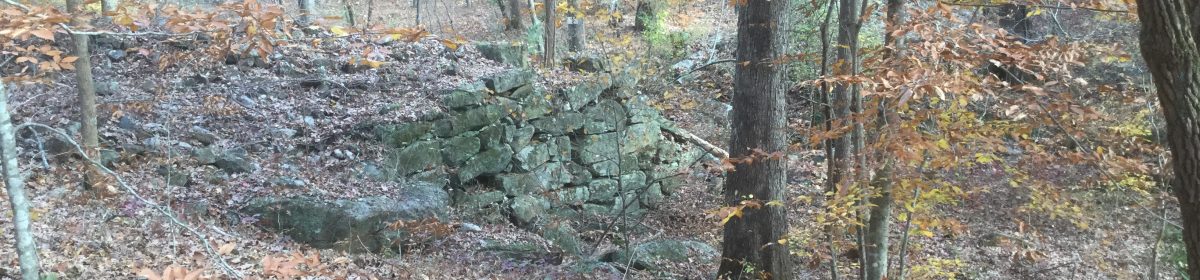
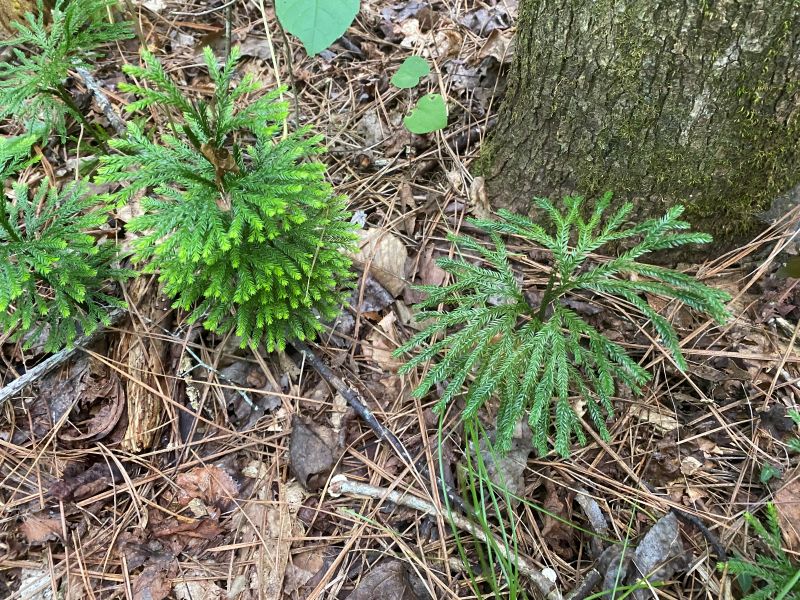
If you wander through the foothills after the leaves have fallen and the ground is dressed in shades of brown and gray, you find that a line or patch of green is liable to stand out. These tiny fan-shaped branches covered in shiny scale-like leaves stand only a few inches high, and look similar to cedar boughs; in fact, that appearance gives the plant several of its common names.
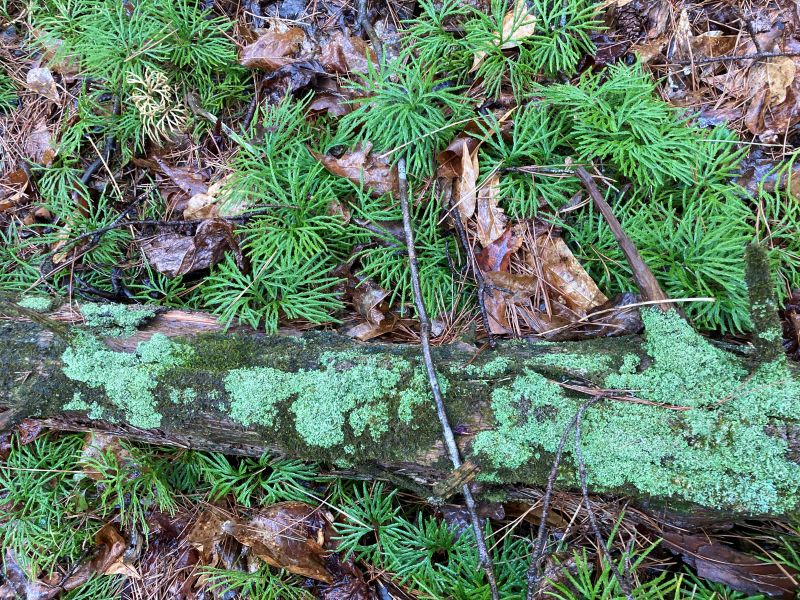
Ground cedar (Diphasiastrum digitatum), also known as running cedar, is a club moss – a type of plant more closely related to ferns than mosses. They are diminutive relatives of the extinct tree-like Lepidodendrales that grew over a hundred feet tall in forests during the Carboniferous Period (which are interesting in themselves, for reasons I’ll relate in another post), and kin to lycophytes (also called lycopods) around the world. Found in well-drained woodlands and pine forests, ground cedar spreads through runners along the soil’s surface or rhizomes just below the surface, with the fan-shaped leaves popping up every few inches.
The largest ground cedar stand I’ve seen was on private land in the northeastern corner of Georgia, where it covered perhaps a quarter of an acre. Apart from that extravagant specimen, I rarely see patches more than a few feet in diameter.
Is it useful for wildlife? I haven’t seen evidence that animals consume it, and since it produces spores rather than seeds, there are no flowers to interest pollinators. However, humans have found a number of uses for the plant. The oily spores burn brightly but too briefly to set anything alight, making it useful for magicians’ dramatics, fireworks, and 19th century flash photography. Spores were also used in baby powders, wound treatment, pill coatings, and as mordants for dyes. The plant itself was used in teas and medicinal preparations. Probably its most common use in the last few generations has been as a Christmas decoration. Being evergreen and in easy reach, it provides welcome greenery for decking the halls at a time when other foliage is brown and down.
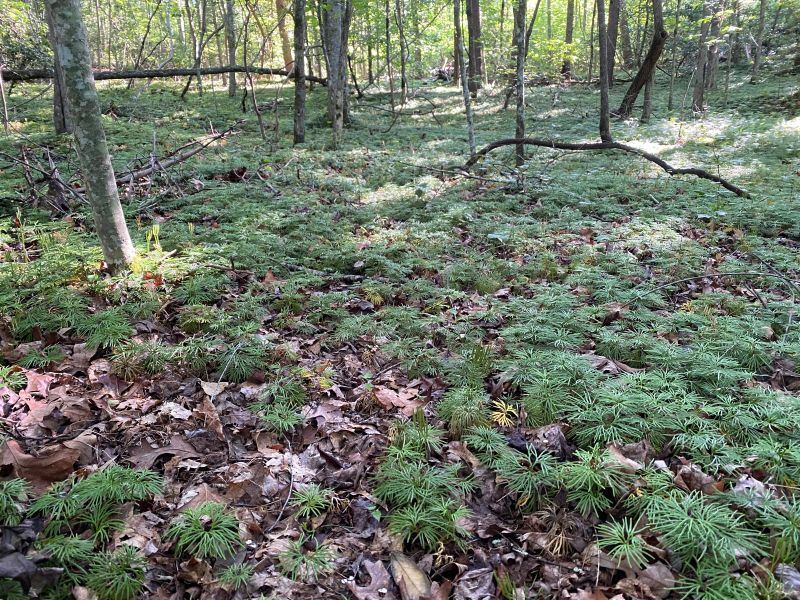
Here’s the problem. Ground cedar grows slowly. Spores may lie dormant for many years before germinating. It requires the presence of certain species of fungi to thrive. A transplanted runner will almost certainly die (as I discovered some years ago). Every runner you pull up will take a while to regrow. Decades of being harvested commercially for holiday decorations and gardens have made ground cedar scarce, and the practice continues.
Enjoy it where it lives, but leave it there, please.
 Towards the Moon or To the Sun
Good Sir, Greetings.
Informative and somewhat lyrical, as always. And again, as always, welly writ.
It is good to see you continue with your poetry.
Best, g
LikeLike