Heroes and Sumbitches

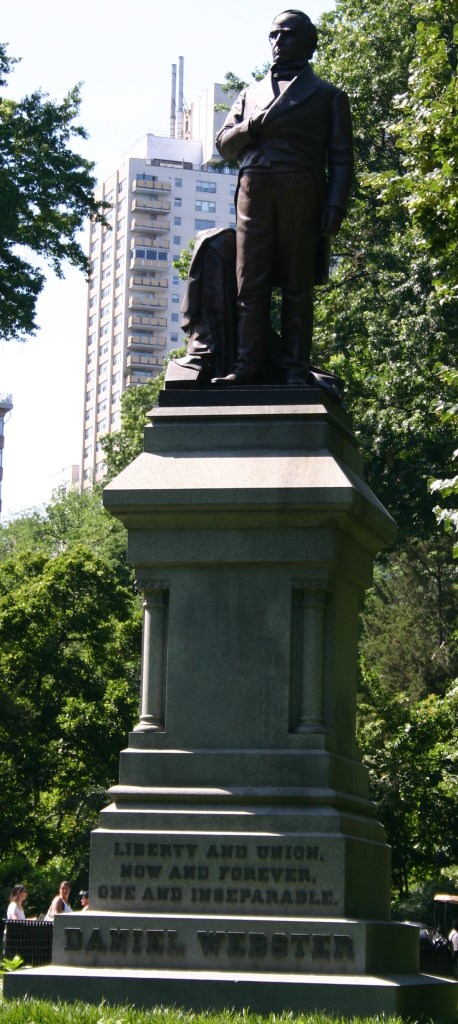
Much is being said about the removal of statues honoring figures of the Confederacy.  In the summer of 2017, a rally to preserve a statue of R.E. Lee brought out the very worst people, shocking many who didn’t seem to realize that Nazis and racial purists and their ilk were so prevalent or so willing to “Make America 1930s Germany.”

Why on earth am I writing this now, with Trump gone but his cult fighting on, and other fronts of the culture wars claiming lives and dividing the country?  Actually, I wrote this in August 2017.  And after some thought, I quietly shelved it.  It just seemed too divisive a topic to broach – a discussion about statues, history and perspective could be seen as throwing gas on social media’s bonfire.  Maybe there’s enough space for people to gauge my intention without assumptions.

 The Lens of History

People and events of the past should be viewed through two lenses: the contemporary and the modern.  You look at a subject in the context of the times, though the eyes of those who were there, ideally through multiple points of view.  Then you look again through the filter of your own time. 

A man can be a hero to his friends and a villain to his foes, and somewhere in between from point of view.  A moderate human being can look cruel across the centuries;  the past’s extremist becomes our visionary. 

Ain’t About You, Jayne

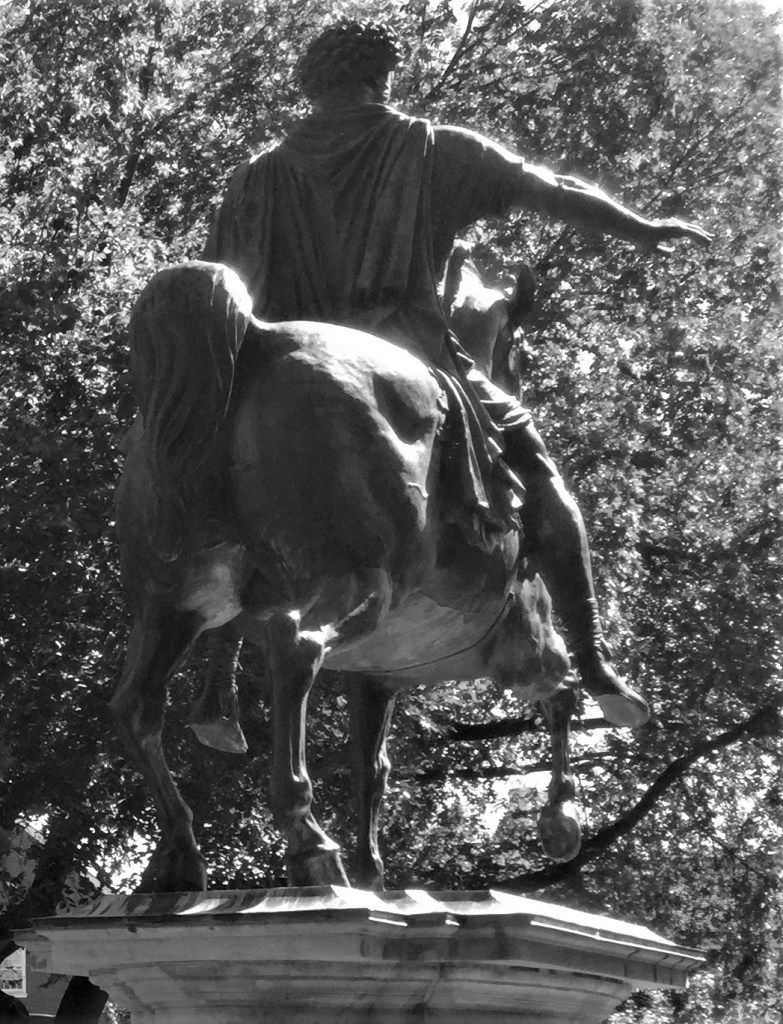
Statues say more about the people raising them than about the folks whose likenesses are fixed in bronze or marble. Joss Wedon said it well (through the voice of Malcolm Reynolds): “It’s my estimation that every man ever got a statue made of him was one kind of a sumbitch or ‘nother.  Ain’t about you Jayne. It’s about what they need.”

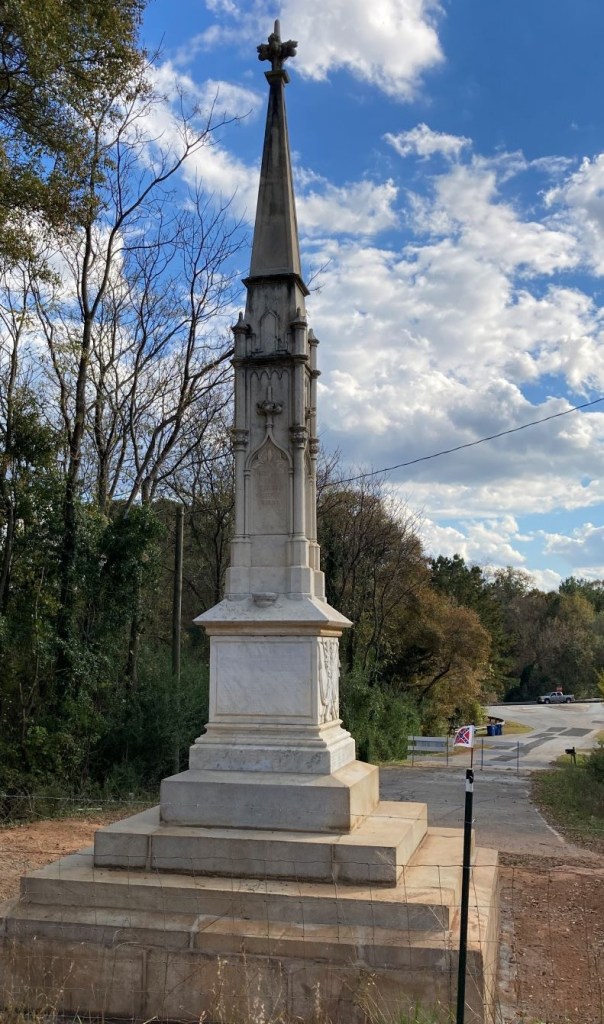
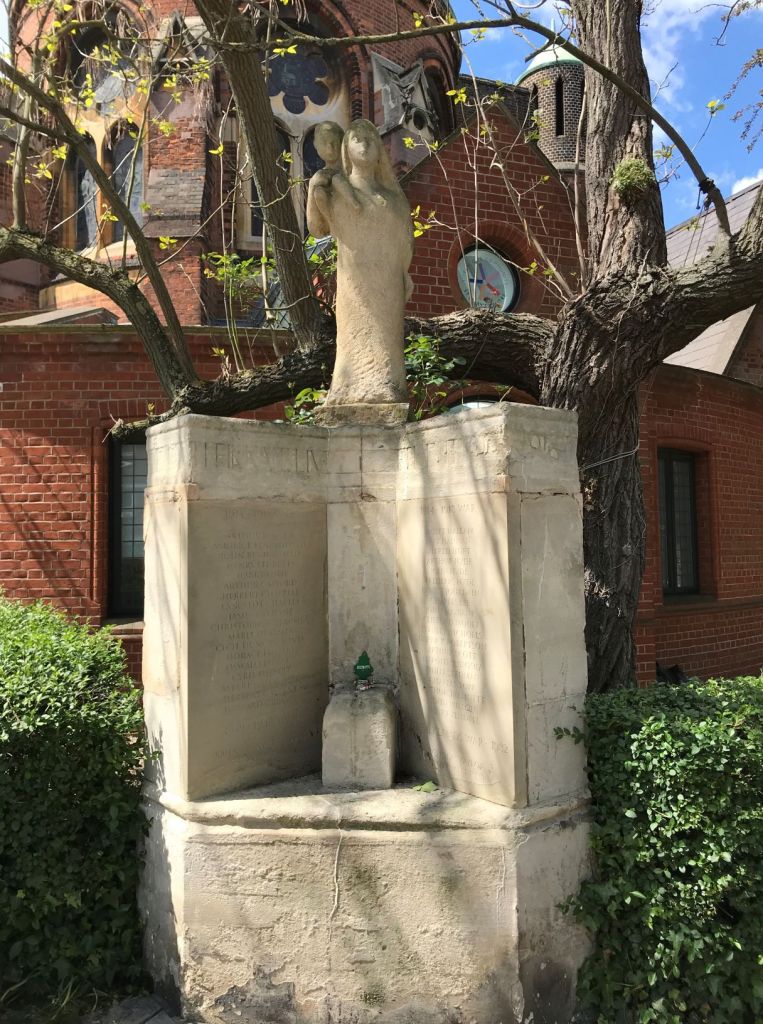
Athens Confederate Memorial, removed to the outskirts of town

That’s very true.  Take the epicenter of the  Charlottesville flashpoint: Robert E. Lee .  He was a man.  He thought things and did things as men do.  He was more famous than many. Generations of people made his memory into what they wanted: a wise general, honorable to a fault, devoted to duty, beloved by his men and quick to set the example for reconciliation.  To those whose elders recounted tales of privation, sacrifice, subjugation and the upturning of the social order, he was an icon, a secular saint in the pantheon of the Lost Cause.  Now, a century and a half after the war, a new generation is reframing him with a modern lens, to suit their modern needs: a traitor, a racist, a demented graybeard and patron saint of slavery.  These iconoclasts would have him reviled and then forgotten.   Neither vision truly represents the man, though he may resemble elements of both.

Application of Power

I spent 20 years in a small town where over 40% of the residents live in poverty; in a park, a group of citizens erected a bronze statue of Old Fella, a stray dog.  Why?  Because the dog’s story touched their hearts, and because they had the money and influence to do it. The money might have gone to help other strays, or the poor folks of the town.  But plucky Old Fella meant more to animal-lovers around the nation than children with growling stomachs.  I care more for my dogs more than I do for most people, yet that use of funds didn’t sit well with me.    

Although many modern Americans would cringe at my choice of words, I see the raising of statues as a form of worship–ancestor worship, hero worship, or the exaltation of ideals.  It is also a visible application of power.  A monument goes up with the assent of those in power, and is removed when that power wanes.

The act changes little – one group feels a moment’s satisfaction, another is rankled, but in all my years, I’ve never seen changing a flag or playing musical statuary bring about economic or social reform.    Not once.

The Myths They Carried

We all carry myths with us, even if deep down we realize they aren’t true.  In the same way that Ivanhoe and King Arthur celebrate nobility rather than wallow in the brutality of the age, or how honor, clean living and good diction ensure that the Lone Ranger always triumphed in those thrilling days of yesteryear, many southern elders found comfort in the notion of moral, noble ancestors who were honorable in peace and valorous in war.   All these are myths, only dimly resembling the folk of the time, who carried virtue and flaw in individual measure.  But what are myths but stories that showcase the virtues that a culture aspires to? 

It is proper – indeed, imperative – to revile the Nazis, the alt-right and their ilk, and it is perhaps inevitable that sepia images of the past are swept away to make room for whatever passes for the current “how things really were” that gleeful iconoclasts foist on us.  In between bouts of two-minute hates, take a moment to see the small consequences.   Look beyond the shrill hate-mongers and see the quiet elders who watch with befuddlement and sadness as today’s society strips away their cherished myths.   Search your own beliefs for myths on which you have built your worldview, and delve deeper into their origins.

Addendum

Singer Dolly Parton has been much-lauded, most recently for donating to vaccine research and buying books for children. There was a petition to put her statue on the state capitol grounds. She humbly — and I think shrewdly — declined the honor.

So This Is Solstice…

It’s been quite a year. 

Fires in North America, South America, Australia.  Earthquakes in the Middle East.  Tornado outbreaks, and a wall of wind across the Midwest.  The Atlantic hurricane season that wouldn’t quit. Locusts in Africa. Final numbers aren’t in, but this may be the hottest year on record – the other contender being the previous election year. 

Ah, yes, politics.  The fear that if the other side wins, they’ll do unto us what we’ve been doing unto them.  A UK that wants to leave Europe but keep their room. A Middle East that boils, bleeds, and literally explodes.  A US where protests against violence are met with violence, a wannabe dictator rails against the rules of order when they don’t work for him, and a face mask (or lack thereof) is seen as ideological gang colors. 

And the big story is the greatest pandemic in a century.  Aided by a populace trained to distrust any inconvenient recommendations from scientists, this particularly virulent virus has killed over a million and a half people around the globe ­– including some 313,000 in the United States since February.   I work with people who think the “China Virus” is a political stunt, and refuse to wear masks.  I know hospital workers who have been in crisis mode for months, trying to keep the careless, the unlucky and the nonbelieving from drowning in their own fluids.

While all the humans strut and fret our hour upon the stage, fighting grand battles for the hyperbolic cause du jour, nature progresses on its own cycles.  Foliage colors and falls.  Frost rims the dried leaves.  And the sun’s daily arc dips a little closer to the southern horizon with each pass, unregarded by most. In a couple of days, the sun’s apparent southward journey halts, as it has at this point in the planet’s revolution around the sun since before there was anything alive on this rock to notice.  There’s no way to know when our ancestors first noted the daystar’s annual wander north-to-south and back again, or what significance they attached to that drifting.  There are archeological clues of stone-age observances on several continents, but what it meant to the people when the sun finally stood still (solstice being the Latin term meaning “sun standing”) may never be revealed.

Frost on the Broomsedge

A natural cycles go, the winter solstice is as good a time as any to mark the turning of the year.  The cultural end of the year is marked on the 31st. The 10 days (give or take, depending on the year) in-between are a liminal time – a threshold from an end to a new beginning, and not quite “normal” time.  Everyone is poised for Christmas, then having Christmas;  they stay buoyed until New Years’ Eve, and start coming down on the first of January.  January 2nd is a time of forgetting resolutions, paying holiday bills, writing the wrong dates on documents, and looking towards a distant spring.    I consider that whole ten-day span of time as the ending of the year, like a held breath before the plunge.

Take some time during this drawn out space between years. See how the natural world deals with this time of year; how do people acknowledge or work around the state of the environment at this time?

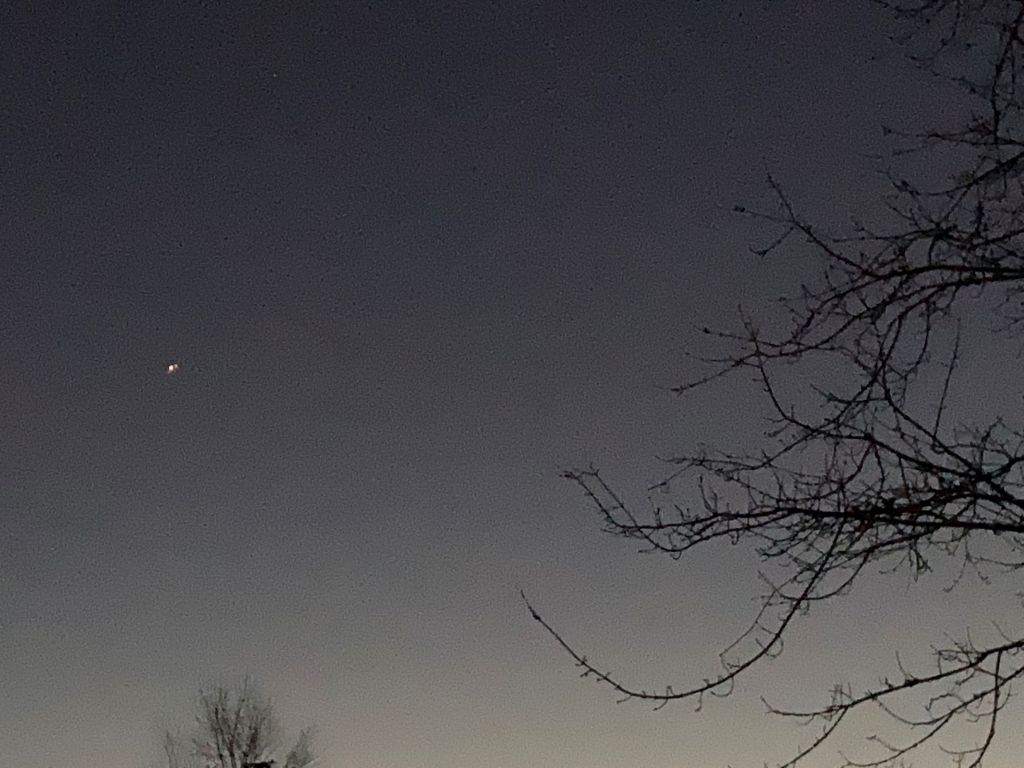
Conjunction of Jupiter and Saturn on the evening of the solstice.

A Naturalist Shrine

What is a shrine?  Whether a box, an alcove, or a demarcated spot, it is a sacred site dedicated to a person, deity, idea, or something else worth veneration or remembrance.  It could be a saint, or a town’s war dead; in a less formal sense, it may be a shrine to a beloved actor’s career or a sweetheart.  Those crosses on roadsides marking sites of tragedy qualify as shrines. 

Shrines may be simple and plain, or cluttered with memorabilia or objects of significance.  What they all have in common is that they are sacred space, in the sense that they are set apart from the normal (“setting apart” or “dedicating to” being among the translations of the Latin sacrare).  In this sense, even a non-religious or civic shrine is made sacred, for it is set apart and dedicated for some form of awe, respect, remembrance, or veneration.

What sort of shrine would a naturalist have?  I’ll tell you what this one has. 

A section of valuable bookshelf space has been set aside (literally made sacred) for a space to, not worship, but to make me aware of greater things; to remind me of moments I spent in wild places, and to center myself. 

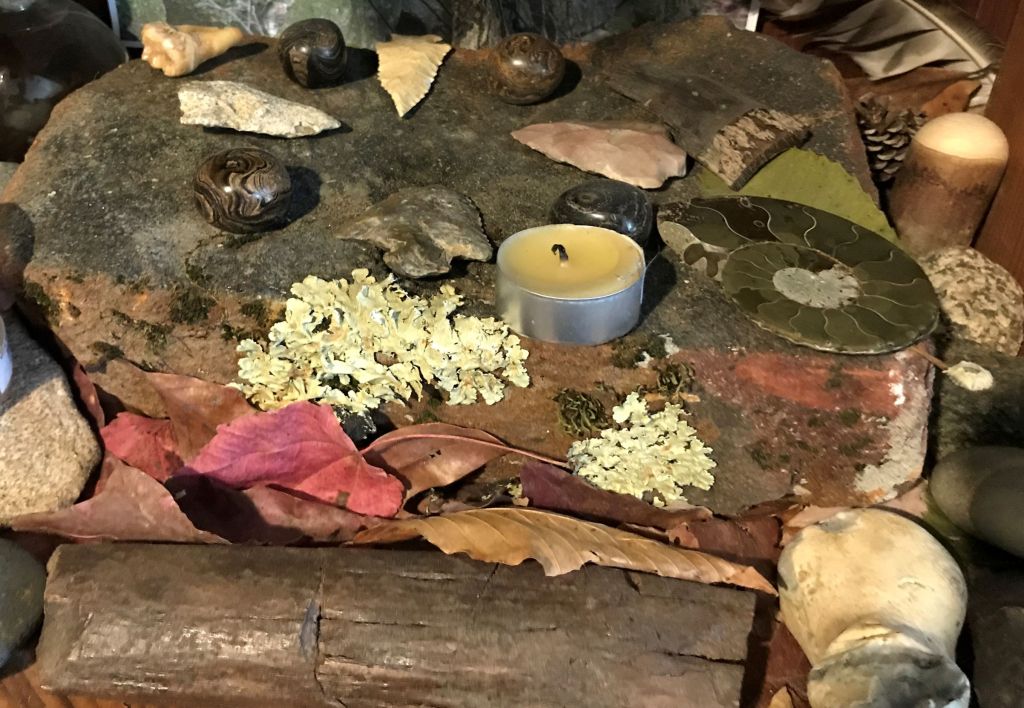
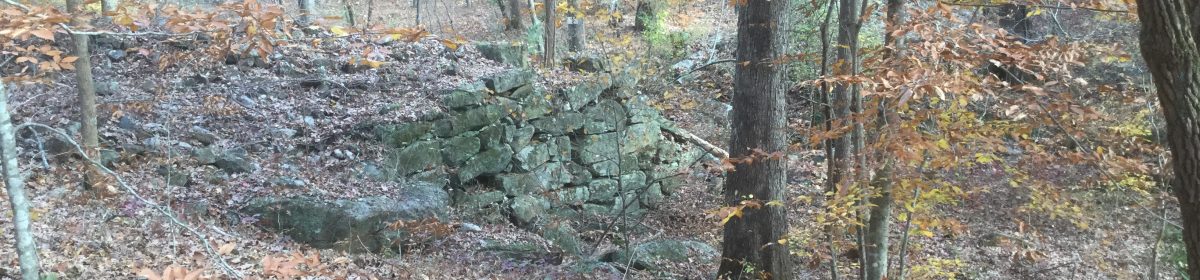
The large, flat stone that makes the central “altar” of my shrine is from a massive wall on my family farm – a structure I consider sacred in its own right.  A century or two ago it was a bridge or perhaps a mill dam. The lichen-spotted rock rests on a bed of leaves taken from the same location.  A number of objects lie on or about the stone, each with its own history.

First is a small dumbbell-shaped white rock, whose chipped surface reveals a dark gray interior.  This is a flint nodule of a sort common to southern England.  This particular one was collected on a hill overlooking an early Saxon settlement of the 6th or 7th century.  Both the flint and the stone on which it sits likely felt a horse’s hoof at some point, for that form of powered transport changed little in the intervening 11 or so centuries.  That only began to change in my Grandfather’s lifetime. 

Also atop the of the altar are four projectile points, all found by me personally in my Coastal Plain wanderings.  My archeologist friend reckons the newest is from the Late Archaic cultural period – maybe 3,500 years old, give or take.  At that time, across the ocean, Egypt was pulling back together its fractured remains into a New Kingdom, while the Bronze Age Britons were putting their finishing touches on Stonehenge.

But wait, the oldest of these points is from the Early Archaic, which puts it at having been shaped by a hunter-gatherer 9,000 years ago.  To view the sea, the maker would have had a longer walk in his day than I in mine, for the sea levels were a fair bit lower.  In Europe, Mesolithic hunters roamed lands that have long since drowned in what is now the North Sea. The first farms were already established in the Fertile Crescent, the Nile, and the Indus Valley; the peoples of Mesoamerica had begun cultivating squash, but domestication of maize was still a millennium or so in the future. 

The most powerful technology humanity has ever produced did not exist in the Early Archaic.  Before alphabet, before ideogram, before any known proto-writing, a young hunter learned the vital skill of knapping points at the knee of an elder.  In time, the youth would gain finesse and wisdom at this craft and would in turn teach others with few alterations in form. 

Take a moment to think about the span of time.  Four artifacts, variants of the same technology, collected in a radius of 50 miles, and spanning half a dozen millennia. Why, the device I write this on largely functions on technology younger than I am, powered by technology that was only commercially available in my great grandfather’s time. For that matter, the earliest known writing was developed some 6,000 years ago – the timespan covered by those four spear points.

But let’s move on to the next temporal talisman: a molar from a cave bear, gifted to me by a friend.  The provenance is unknown beyond Europe or Asia, but the species probably died out around 24,000 years ago.  Perhaps the owner of this tooth cast a wary eye at early humans, or Neanderthals; it is possible it never scented a two-legged rival in all its life. 

Across the stone lies a sliver of mammoth tusk, from the dwindling permafrost of the northern tundra of what is now Alaska.  These ancient elephants faltered and faded away as the ice drew back around 12,000 years ago; whether their demise was solely from a changing world or whether humans helped them along is a point of contention.

Now we take an accelerated leap back in time – several epochs, each measured in many millions of years.  I won’t ask the reader to imagine such a span of time as a million years; you truly can’t.  Instead, I will say to imagine that you can imagine, and that will have to suffice.  Leaning against the base stone is a permineralized bone, the fossilized rib of a Triceratops; this fragment of what would have been a 30-foot-long beast was also a gift to me.  The final days of the dinosaurs in which this second-most-famous species lived were still a long time indeed, for this genus arose some 2 million years before it (and most dinosaurians) died out.

And then there’s the spiraled shell of an ammonite.  This is the only one of the various items thus far that I bought (at a fundraiser, in my defense).  The varied orders of these cephalopods appeared on the scene in the Devonian Period and persisted until the general extinction at the end of the Cretaceous Period – a span of over 300 million years, half again as long as mammals have existed. 

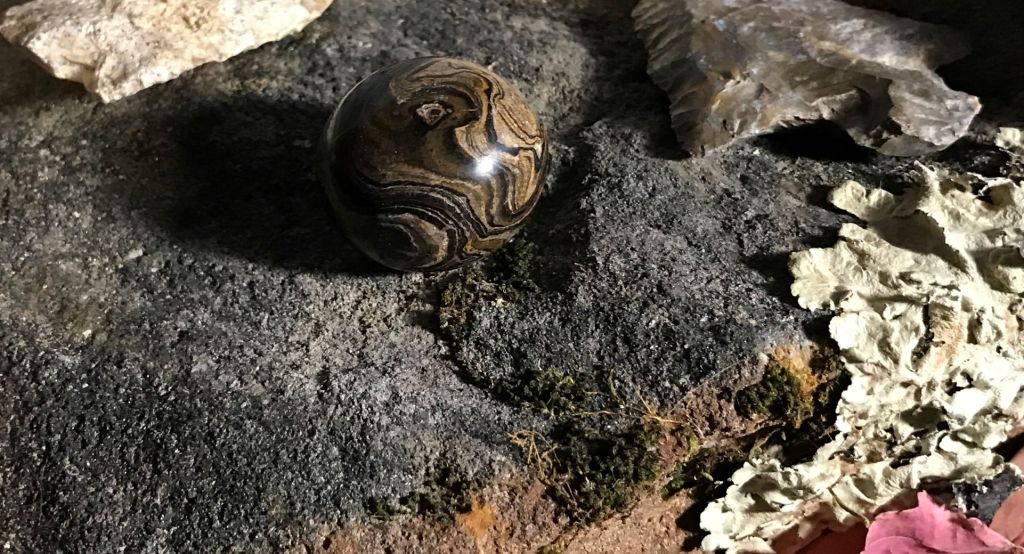
Remember the orders of magnitude between the flint and the spearheads, or between the mammoth and the dinosaur?  Here we go again, as close as I can track life to the earth’s beginning.  Four large, roughly rounded marbles with brown and black striations, represent those most ancient of times.  These are stromatolites, the fossilized remains of the silty structures left by colonies of cyanobacteria.   These microbes arose as far back as… are you ready?… 3.5 BILLION years ago.  Their peak was 1.25 billion years ago, after which they declined as the world grew more hospitable to things that would graze on cyanobacteria. It should astound you to realize that these microbes persist in hostile environments today, so you can find active stromatolites in Australia and South and Central America. I would have loved to have found these specimens in my wanderings, but I bought them among some rock collections in Cambridge, Massachusetts.

There are other history lessons in this shrine beyond the vastness of the span of life.  Here is a leaf from an American chestnut – a young sapling ensconced on a University campus and not in imminent danger of blight.  But this pressed leaf is a reminder of the billions of chestnut trees which succumbed, in less than half a century, to a fungus blight transported carelessly to our shores in nursery stock. It represents only one of many species we have negatively impacted in our time in this land and on this earth.

Two more palm-sized stones are worth noting.  One was smoothed by the milky waters of the Hoh River on the Olympic Peninsula of Washington State.  The other gained its rounded shape rubbing against a billion of its brothers under the waves on Jasper Beach, Maine.  With a stone in each hand I can bookend the Lower Forty-Eight States. 

This small sacred space is a place to remember moments spent in wild places, and the goodwill of friends.  It is a place to remind myself of the impermanence of lives but the tenacity and adaptability of Life. It is a focus for contemplation and meditation, reminding me to set myself apart from the modern world for a few moments to think about the larger world, both what is tangible and what is beyond human comprehension.

Consider what you have enshrined in your life, and why.

Summing Up with Uncle Ernie

One of the most memorable professors I had at UGA was Dr. Ernie Provost.  He was a tough, leathery S.O.B. who had scars from a katana blade wielded in anger.  He could identify any skull at a glance, feared no rattlesnake, and regularly won national and world skeet competitions until the hand-rolled cigarette habit of decades took his breath away.  He could recite poetry, discuss philosophy and history, and referred to Aldo Leopold as “Our Father who art in Heaven.”  His students called him Uncle Ernie (thought not usually within earshot).

I had the privilege of taking Natural History from Dr. Ernie Provost.  I think the year was 1989, and it was one of the last years he taught. I could tell a lot of stories about this colorful man and the difficult class that I was proud to have earned an A in.  But for now, allow me to share some of the man’s pearls of wisdom.

For the final lecture of the class, he walked in with a tape recorder, gave a brief introduction, and turned on the tape.  I was much impressed and pleaded to get a copy of the tape.  He said no, but after the final exam he relented and handed it over.  What follows is a transcript, first of his introduction, and then his tape.

Introduction (in class):

“I came back to work last night about eight o’clock, and it was about 11:30 before I got home.  And I was kind of tuckered, and I didn’t know what in the world to do with today’s class.  It’s frustrating as heck to get this far and have so much left undone.  So I did something I have done a few times in the past — sometimes it turns out alright, sometimes it doesn’t — but what I do is mix me a tall, cool one, roll a cigarette, put on a tape and start running my mouth off, and now you are stuck, ’cause you got to listen to me run my mouth off here for a little while.  So sit back and relax.”

The Tape:

“I’m all for the man who, having nothing to say, refrains from giving oral evidence of the fact.  In trying to decide what to do with this last lecture period, I’d about decided I had nothing to say, since none of the topics such as zoogeography, bioenergetics, population genetics, hibernation and reproduction, biology of extinction, rare and endangered species —  all of which and many more should be addressed —  none of them could really be approximated in one 50 – minute lecture.  It occurred to me, however, that I might presume to impinge on you for a few minutes with a few philosophies of that most ubiquitous of all vertebrates, Man.  This course, as with most taxonomic subjects, has been primarily factually oriented; and in such courses, there is little time (particularly in the span of the quarter system) to stimulate the imagination and perhaps even the intellectual curiosity of an inquiring mind.  This is regrettable, but I do not say it apologetically.  Our aims this quarter have been to learn to identify vertebrates, and hopefully we gained some insight into what a vertebrate is and how it got that way.  This I think we have accomplished.  But the lessons we’ve learned from the so-called lower animals are frequently applicable to ourselves if we exercise the common sense to apply them.

I make no claim as to the originality of any of the ideas that these ramblings may encompass.  We are all, after all, a product of whatever our particular sojourn in this great big beautiful blue-eyed world has exposed us to.  Some perspicacious character observed that no one can get more out of anything than their previous experience permits them to get.  I suppose this includes life, books, college courses, professors and students.  At this relatively late stage in my own life, I’ve long since lost track of where I picked up what particular thought or opinion I may now have salted away.  But though there may be a lot of plagiarism in what follows, maybe there’s a little bit of originality and perhaps you may find something worth keeping in the conglomerate.

It’s been said that no man’s opinion is any better than his background, his experience, and his general common sense.  Just because a person has a Ph.D. after his or her name doesn’t necessarily mean they’re worth listening to.  As human beings we all have a right to our opinion.   But opinions should be based on facts.  We even have a right to be wrong in our opinions, but we don’t have the right to be wrong in our facts.  This train of thought was prompted by a question that was posed to me a while back.  The question went something like, “What are snakes good for?”  Perhaps the most challenging and intriguing way to answer that question, especially when it is posed by one unversed in ecology and vertebrate zoology, is to answer it with another, much more difficult question: “What are human beings good for?”  That one has puzzled philosophers ever since the first cave man stopped beating the brains out of one of his fellow men long enough to look up at the sky and wonder the same thing.  Man consists of some seven octillion atoms (that’s 7 x 1027) grouped in about ten trillion cells (that’s 1013).  This conglomeration of cells and atoms has some astonishing properties:  It is alive, feels joy and sorrow, discriminates between beauty and ugliness, and distinguishes good from evil.  In many of these, and other things, Man differs from other animals, but is nonetheless a product of the same forces.  All animals, including Man, are adapted to a way of life, to specific habitats and ecological niches.  The ability to adapt resides in the individual, but only assumes importance when it becomes a population characteristic.  Whether or not an individual utilizes the ability depends on circumstances.  Survival or death of an individual is to some extent a matter of chance.  Some will adapt that are killed and vice-versa.  Adaptation leads to diversification, and make no mistake, failure to adapt leads to extinction.  This is a universal law of great big beautiful blue-eyed Mother Nature and it applies to Man as well as to the other critters.

If this course is worth anything — if I’ve been worth anything — it will occasionally have asked questions (and I will have asked questions) or caused you to ask yourself questions which are really big.  And I hope that in some of the biggest I will have had the good sense to have left them unanswered.  If you think about the material in which your training in ZOO 350 allows you to observe — and up to now you may have seen but I don’t know whether you’ve been observing or not — some of the things you learn and observe will provoke and inspire, and irritate, and I don’t know which will be the most advantageous to you.  But learning to ask the questions why, how, to gain an awareness — these are the things that really matter.

When I finally got discharged from the Marines Corps after World War II, I was a very mixed-up, bitter, and disenchanted young man.  Realizing that I had to get my head straightened out or I was going to end up in jail or the booby hatch, I headed for the hills and spent some time trying to sort things out.  I learned a lot in the few months about myself, about life, and some do’s and don’ts, one of which was ‘It’s not prudent to squat in front of a fire when the crotch of your jeans is sewed up with copper wire.’  Anyhow, years later, after belatedly getting my life back on track, I read something written by a man named James A. Mitchner, in which he summed things up perfectly for my own case as well as his, and it went something like this:  This tardy beginning (referring to his late start in life, and my own), one might say delinquency, stem from the fact that I spent a good deal of my early time knocking around the country trying to find out what I believed in, what values were large enough to enlist my sympathy during which I sensed would be a long and confused life.  Had I committed myself earlier, I would not even have known the parameters of the problem.  Any choice I might have made then would have had to be wrong.

Even though it took a lot of years’ work to figure out the real facts, I finally decided that the constructive work of the world is done by an appallingly-small percentage of the population; the rest simply don’t give a damn, or they fail to acquire, when young, the ideas that would vitalize them for the long decades ahead.  I’m not saying that such people don’t matter; they are among the most precious items on Earth.  But they cannot be depended upon either to generate necessary new ideas or to put them into operation if someone else generates them.  Therefore, those men and women who do have the energy to form new constructs and new ways to implement them must do the work of many.  I believe it to be an honorable aspiration to want to be among these creators.  Hence the necessity of education — that’s really what it’s all about.

Way back in 1958 a man named George Walls said that the great questions are those an intelligent child asks, and finding no answers, learns to stop asking.  That’s what’s known as “growing up;” it’s supposedly one of the fruits of education.  Heaven forbid!  Occasionally, a man such as, oh, Einstein asks a few such questions as a child and never gives up asking them.  That is genius.  The human mind is capable of solving every problem that it can formulate if it’s not distracted; but it longs to be distracted.  The great and difficult thing is to ask the right questions.  Their rightness is in their spaciousness; one can grow in them, and they grow as one grows, so they lead ever onward, ancient yet always new, always fresh,  always yielding but promising more than they have yielded.  One might suppose that all of us know some of these great questions and live with them.  This is not so.

In an almost universal habit of intellectual agoraphobia (and if you’re not familiar with that word, agoraphobia means morbid dread of crossing or being in the midst of open spaces) we grow up to avoid these questions.  We like to pin ourselves in with as close and cozy detail that we can manage and arrange.  Most of us are like men with sore eyes — we find the light which permits us to see things clearly, painful, and the darkness which clouds our vision is comforting and cozy.  I’m reminded of the story of Plato’s Cave. It’s been quite a while since I read it, I’ll probably bastardize it a bit, but it goes something like this just in case you don’t remember:  There was a race of people who lived in a cave.  They were chained to the wall; actually, they weren’t being tortured, they weren’t prisoners, it’s just the way they lived.  And, on the wall, they saw shadows moving back and forth, and of course these shadows were caused by the light coming through the mouth of the cave, and things and people passing back and forth across the mouth, casting shadows on the wall.  And these people that lived in the cave figured all this out, and they figured out what the shadows meant, the significance of it, what caused them and all that.  Of course, they didn’t have it right, but they had it figured out anyway.  But eventually, one of their number, a young man, was permitted to go to the outside.  Of course, it took him a while to adapt to the light, but little by little he was able to handle the bright sunlight and he began to see what the real poop, the straight scoop, the facts were.  He realized the real cause of the shadows they had watched on the wall and what it was all about.  And he wanted very much to get back into the cave and explain it to the rest of his people.  And he did, and he went in there and laid the straight scoop on them.  Now, did they hail him as a hero?  Not at all!  This guy was an iconoclast.  He was tearing down images and idols, and they didn’t like it; he was upsetting the apple cart.  So what did they do?  Well, they solved their problem, they killed him.  And they didn’t have to worry about this upstart anymore.

Sort of reminds me of another one of those little poems from Ogden Nash (I’ll bastardize this one, too) that goes something like: For things are frequently what they seem, and this is wisdom’s clown/ Only the game fish swims upstream; the rest of the fish swim down (actually, Ogden Nash said the “sensible” fish swim down, but I don’t like that, so as I said I switched it around).  In other words, when you’re right, you’re right, and even if you gotta pay the bill, you gotta stick to it.  After all, no one has the right to be a parasite on society.  But by the same token, one has to use your head.

I don’t know how many of you are familiar with Robert Ruark.  He is now dead, but Ruark was a wonderful author, he wrote a lot of wonderful books.  He grew up in South Carolina here in the Southeast.  One of his finest books, I think, is called The Old Man and The Boy, and the old man is the boy’s grandfather, and there’s a lot of nice interplay between these two, but there’s one particular passage that I find intriguing.  The kid is trying to train a goat, and he’s not having much luck training this goat.  The old man finally admonishes him and he tells him something like, “There are some things, some dogs, some goats, even some people that ain’t worth troubling over.  You can feed’em, and gentle’em, and worry over’em, and coax’em and try to teach them, but they’ll stay obstinate.  After a while, the only thing is to give up.  The hard thing is to know when to give up, not too early, and not too late.  If you give up too late, you’ve wasted a lot of time; if you give up too early, you may have lost a winner, and that, we really can’t afford to do.”   Ruark also pointed out that Man becomes immortal only in what he writes down on paper, or hacks into a rock, or slathers onto a canvas or pulls out of a piano.  But the thought, the feeling, the question precludes the immortal result; you’ve got to keep on trying to ask the right questions.  But I’m convinced that each of us should strive to find his or her niche in life whatever that may be, and that takes some doing sometimes.  You gotta thank your lucky stars if you do find it, but having found it, you’ve got to be smart enough to realize that you’ve had some good fortune and found your niche, and stay there; don’t try to be a ladder climber and promote yourself to the level of incompetence (as the saying goes).

This business about giving up reminds me of another old man and the boy, coming down out of some hills of the Northwest in the middle of July in a blizzard dressed only in thin summer clothes, riding obstinate horses, herding a string of granny mules that were absolutely impossible.  The old man rode back along the string, and he saw the young kid, soaking wet from all the snow coming down off the pine boughs all over him, Cold, wet, miserable, teeth clenched hard trying his best not to shiver and sob.  The old man knew the kid was in tough shape, and he said “Son, you may be give out, but you can’t give up.”  Well, the old man was usually right, it doesn’t pay to give up, at least not too early.  Once in a while, once in a great while, one has to give up, but the hard thing is to know when — not too soon, but then again, not too late either.  I guess it’s a matter of establishing your own sense of values and then sticking to them.  A short while ago a group of Georgia bigwigs along with a lot of lesser wights gathered on campus here to celebrate the ground breaking for a $32,000,000 biological sciences complex to be devoted to biotechnological research.  Of course, this building is just about complete now over behind Forest Resources and Ecology, but at the time, ex University president Fred Davidson (who I am pleased to call a friend and whose baby this project really is) was quoted as saying that, and I quote, “Nature will literally be reprogrammed to serve Man,” end of quote.  In view of Man’s record so far, the very population explosion alluded to by Davidson, and the result of Man’s dubious attempts to date to reprogram Nature, I am tempted to ask, along with Billy Shakespeare, “What meat is this our Caesar eats that he is grown so great?”  History records that Conquering Man has always known, in each of his various civilizations, what was important where in the particular artifact known as Society which he had erected at that particular moment.  But the failure of each civilization in turn suggests that, so far, he has been predominately wrong about the whats and the wheres.  So by what colossal bigotry then do we presume to have suddenly found all the right answers in ours, the latest of these artifacts?  As a dedicated doubter, a full-time skeptic and a part-time cynic, I question whether this highly-touted artifact we are pleased to call Society is evolving a better Man or is capable of doing a better job of reprogramming Nature.  With Aldo Leopold, I wonder if we are exchanging such things as two cars under the roof of our neo-colonial garage, multiple TV sets, and all the rest of it, for an awareness of some of the greater values in life.  To get technical for a minute, the Hardy-Wienberg Law, which deals with the relations between gene frequencies in random-mating populations of diploid  individuals, and the zygotic frequencies resulting from such matings, shows that there no intrinsic mechanisms in Mendelian inheritance leading to alterations in gene frequencies in populations.  In other words, there is no tenancy for one gene to replace another and hence no loss of variability in a population.  In other words, Man is a product of the same evolutionary principles as are other critters.  But modern man has a double heritage.  He is a product of biological and cultural evolution, and herein maybe’s a problem.  As I told you before, the concern of man in reality should be not whether his species survives but whether his population line will persist.  It could, if among successful lines, continue in existence, presumably 11,000,000 million years, at which time its representative species could, and undoubtedly would, be far different than that of the present day.  The problem lies in time and the nature of man, and the decisions that he is capable of making.  The bottom line here is, you people are the ones that are going to make the decisions.

I think it well to quote here from Aldo Leopold’s last chapter in his book, A Sand County Almanac and Sketches Here and There, when he quoted from Robinson’s injunction to Tristram, and it goes something like this:  ” Whether you will or not, you are a king, Tristram.  You are one of the time-tested few that leave the world, when they are gone, not the same place it was.  Mark what you leave.”

Well, now this is getting a little bit heavy, and you’re probably getting a little bit, shall we say, disenchanted with my ramblings.  In any event, before I leave you, I’d like to read something to you.  It’s a poem called “Evolution,” written by a guy named Smith.

When you were a tadpole, and I was a fish,

In the Paleozoic time,

And side by side on the ebbing tide

We sprawled through the ooze and slime,

Or skittered with many a caudal flip

Through the depths of the Cambrian fen,

My heart was rife with the joy of life,

For I loved you even then.

Mindless we lived and mindless we loved

And mindless at last we died;

And deep in a rift of the Caradoc drift,

We slumbered side by side.

The world turned on in the lathe of time,

The hot lands heaved amain,

Till we caught our breath from the womb of death

And crept into light again.

We were Amphibians, scaled and tailed,

And drab as a dead man’s hand;

We coiled at ease ‘neath the dripping trees.

Or trailed through the mud and sand,

Croaking and blind, with our three-clawed feet,

Writing a language dumb,

With never a spark in the empty dark

To hit at a life to come.

Yet happy we lived, and happy we loved,

And happy we died once more;

Our forms were rolled in the clinging mould

Of a Neocomian shore.

The Aeons came, and the Aeons fled,

And the sleep that wrapped us fast,

Was riven away in a newer day,

And the night of death was past.

Then light and swift through the jungle trees

We swung in our airy flights

Or breathed in the balm of the fronded palms

In the lush of the moonless nights

And oh! what beautiful years were these,

When our hearts clung each to each,

When life was filled and our senses thrilled

In the first faint dawn of speech.

Thus life by life and love by love,

We passed through the circle strange,

And breath by breath and death by death

We followed the chain of change

Till there came a time in the law of life

When over the nursing sod

The shadows broke, and the soul awoke

In a strange, dim dream of God.

I was thewed like an Aurock bull

And tusked like the great Cave Bear;

And you, my sweet from head to feet,

Were gowned in your glorious hair.

Deep in the gloom of a fireless cave,

When the night fell o’er the plain,

And the moon hung red o’er the river bed,

We mumbled the bones of the slain.

I flaked a flint to a cutting edge,

And shaped it with brutish craft;

I broke a shank from the woodland dank

And fitted it, head and haft.

Then I hid me close by the reedy tarn,

Where the Mammoth came to drink,

Through brawn and bone I drave the stone,

And slew him on the brink.

Loud I howled through the moonlit wastes,

Loud answered our kith and kin;

From west and east to the crimson feast,

The clan came trooping in.

O’er joint and gristle, and padded hoof,

We fought, and clawed, and tore,

And cheek by jowl, with many a growl

We talked the marvel o’er.

I carved that fight on a reindeer bone,

With rude and hairy hand,

I pictured his fall on the cavern wall

That men might understand,

For we lived by blood and the right of might,

Ere human laws were drawn,

And the Age of Sin did not begin

Till our brutal tusks were gone.

And that was a million years ago,

In a time that no one knows.

Yet here tonight in the mellow light,

We sit at Delmonico’s;

Your eyes are as deep as Devon springs,

Your hair as dark as jet,

Your years are few, your life is new,

Your soul untried, and yet,

Our trail is on the Kimmeridge clay,

And the scarp of Purbeck flags,

We have left our bones in the Bagshot stones,

And deep in the Coraline crags;

Our love is old, or life is old,

And death shall come amain;

Should it come today, what man may say

We shall not meet again,

Got wrought our souls from the Tremadoc beds

And furnished them wings to fly.

He sowed our spawn in the world’s dim dawn,

And I know that it shall not die,

Though cities have sprung above the graves

Where the crook-boned men made war,

And the ox-wain creaks o’er the buried caves,

Where the mummied mammoths are.

Then, as we linger at luncheon here,

O’er many a dainty dish,

Let us drink anew to the time when you

Were a Tadpole and I were a Fish.

And speaking of which, good luck with the tadpoles and the fish.”

Dr. Ernie Provost

I feel sorry for the students of today who will never know a teacher like this one.
A Moment’s Awareness

Walking down a woods road at the night end of twilight, l try to marshal my thoughts.  But my mind tugs away like a puppy unreconciled to the leash.  It chases old remembrances, worries at the cares of friends and family, and dashes towards tomorrow’s plans and future uncertainties.

Leaves rustle to my right.  In an instant,  wayward thoughts return, alert, on point.

I share awareness of this moment with a night-hidden, skittering creature, with no notion of its life on either side of this moment, nor it of mine.

The woods are quiet.  I walk on. Chastened, my mind heels for  a short span.

Pondering the Value of Life vs. Legacy

Some two years ago, I watched a video of some men taking sledgehammers to statues built by workers who were dust and forgotten millennia ago.  My first thought: These people need to be stopped.  My second thought: These souless people need tKellsFol292rIncipJohno be put down lest they destroy anything else.  And  my third thought: Why am I getting worked up over some statues and tablets when people are being slaughtered?  Good point.  Of course, I have been getting incensed at the executions, the torture, all the brutality done in the name of some version of God or another.  So then I ask myself how one hold the loss of an artifact and the loss of a human life as in any way equal in tragic value.

Here is what I came to.  Each unique human life is of immense importance so long as it continues. Life is finite, and when it ends, it’s gone.  Some lives leave a legacy.  This may be found in children, friends, or students that the person affected during life.  When a person has gone beyond memory, there are physical objects – objects of art, things crafted – a book, a bridge, a violin, a vase, a map – these are relics of legacy.  Time first steals our memory, then works to destroy other legacies.  Libraries burn; buildings decay or are torn down; moth and rust and misfortune tear away the heirlooms of the dead –the inheritance of the future.  Age and rarity makes these relics more valuable.  A paperback may be so worthless as to end up in the free book bin after one read.  But what is the worth of the first run of Walden? Or a book printed by Gutenberg?  Or an Anglo-Saxon letters scribbled on a scrap of velum?  Or lead sheets with Roman lettering, or Demotic on papyrus, or cuneiform on accidently-baked clay?  What about paintings on a cave wall?

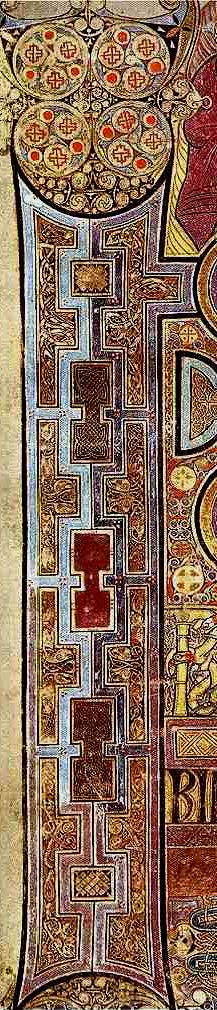
Such things, the legacies of the forgotten generations, are truly humanity’s heirlooms, and as valuable in their way as the more direct and tangible wealth of today – land, water, and so on.  Both the present lives and those legacies of past lives must be defended from those who see the value in neither.Vallon_Pont_d'Arc_banner

Images from Wikipedia Commons

The Country Mouse Replies

Around 15 years ago, I was conversing electronically with a friend who resides in southern California. Although we grew up  around the large town/small city of Athens, our paths took us in opposite directions – hers led westward into bright lights and urban sprawl, while mine headed south and east to more rural landscapes.  When I mentioned in passing the “perks of living in the boonies,” she admitted being stumped on what those could be.  Although she managed to come up with a few — such as being able to play the stereo as loud as one likes — they paled against ordering takeout at will or reliable and fast internet.

The following day, I had mused on the subject, waxing exceptionally poetic as I waited for birds to call in the chill pre-dawn air:

As I write (the majority of) this essay, the dawn’s light barely illuminates the page, which is further obscured by the wisps of my breath in the chill of mid November.  Overhead the larger drops of the Leonid meteor shower still burn despite the morning glow.  I was out before dawn to survey quail, but while I’m no morning person and have lacked a full night’s rest for a considerable number of days, this AM I don’t begrudge the sleep.

You bring up some fair points about life beyond the concrete Pale, and I’m favorably impressed that you spared considerably more than a passing thought in trying to understand why someone with a choice would live where the blacktop ends.  I’ve been mulling over the question, and my sleep-deprived brain has come up with this reply.

My house is about 11 miles from town (population 6000).  The city of Augusta is a good 45 minutes away (and that’s burning up the highway, not creeping through traffic).  The college town of Statesboro is an hour distant (The question of when distance became measured in units of time I’ll leave for another day).  This means that seeing a show at the multiplex is a fair trip in itself – and indie films are out of the question.  The closest bookstore is Amazon.com.  No specialty coffees can be had in this county, at least nothing more exotic than what BiLo carries.  In town, sit-down meal options consist of a diner, Mexican, country buffet, a sandwich shop, two Chinese restaurants and several BBQ joints.  McDonalds is here but BK hasn’t made it yet.  The farm equipment dealers outnumber auto lots.  And you already know the trials of TV and internet access. So by the City Mouse standard – the measure of manufactured conveniences – this haystack just doesn’t cut it.

Luckily, there are other measures and other standards.  You have thought of a few, though it is clear they pale by comparison to life on one pole of the LA-NYC-DC axis.  Still, I’ll list just a few of the conveniences and opportunities:

–Having neighbors close enough to summon in an emergency, but otherwise out of sight and out of mind.
–Letting your dogs bark themselves hoarse without being threatened with legal action (I speak from personal experience).
–Practicing katas in the yard with a real katana without being reported and arrested.  For that matter, walking around in public places with a knife on my hip and not being reported or arrested.
–Clean air.
–Being able to step outside at night and seeing more than the two dozen stars which are bright enough to punch through the haze of pollution and city lights.
–Hearing a car pull up and knowing they’re here to see you, because there’s nobody else around.
–Maintaining the yard at whatever level you want, not whatever the anal neighbors want.
–Don’t underestimate the mental health value of being able to blare the stereo while you’re working outside.
–Exchanging waves with strangers on the road.
–Driving above speed limit most anywhere because traffic is so light.
–Being able to cook over a hickory fire in the front yard.
–Having staring contests with a coyote, surprising a fox, stopping so wild turkeys can cross the road, and shooing spotted fawns out from under your truck.
–Hearing quail whistling to the north, barred owls hollering to the south, coyotes howling to the west, and wood duck wings whisper overhead.
–Anticipating what kinds of critters you’ll see on the way to work, whether deer or bobcats or hunting raptors, or maybe even otters.
–Having people react with interest rather than revulsion when you collect your steaks the old fashioned way.
–Having a job where I can feel the wind on my face outside almost as much as I spend basking in the glow of computer screens.

I know that there are many other ways of viewing the world.  While it is important to me that city folks have some understanding of the value of a rural life, by no means do I advocate they take it up.  The last thing I want is for urbanites to get a hankering for elbow room!  As crammed together as they are, by spreading out they’d take up the whole country. Already my heart sinks every time I visit my old stomping grounds, seeing fields once mantled in wheat now sprouting crops of three bedroom houses.  The Atlanta sprawl has metastasized and now Athens is growing beyond its charm.

I’ll end this reflection with a quote from Leopold:

“There are some who can live without wild things, and some who cannot. These essays are the delights and dilemmas of one who cannot. Like wind and sunsets, wild things were taken for granted until progress began to do away with them. Now we face the question whether a still higher ‘standard of living’ is worth the cost in things natural, wild, and free. For those of us in the minority, the opportunity to see geese is more important than television, and the chance to find a pasque-flower is a right as inalienable as free speech.

”These wild things, I admit, had little human value until mechanization assured us of a good breakfast, and until science disclosed the drama of where they come from and how they live. The whole conflict thus boils down to a question of degree. We of the minority see a law of diminishing returns in progress; our opponents do not.”

Here then is a partial answer to your honest inquiry.  I think it is safe to say that we both are more or less where we belong; were our locations reversed, you would go nuts with sensory and cultural deprivation, and my soul would wither.

Still, you’re welcome to visit anytime :-).

IMG_0148