The Richest Man in the World

I met Dr. Walter Cook over three decades ago.  In his Forest Engineering course, I learned how to (among other things) properly lay out a trail in the woods; in Forest Recreation, he taught me why these trails were important.  He was an important mentor for my Eagle project, which involved constructing a stretch of trail at Sandy Creek Park in Athens.

I reconnected with my professor at his 90th birthday celebration.  Fittingly, it was in a park pavilion.   During the gathering, nature-lovers lauded his tireless work in developing, coordinating, and building trails and paths on over 130 projects across both private and public lands.

Last week, I went to lunch with Dr. Cook to catch up.  He has read this blog, and agreed to share some of his thoughts here.  This is the first of his essays which I post with his permission.

The Richest Man in the World

By Dr. Walter Cook

Who among us has not occasionally wished to be rich?  As Tevye sang in Fiddler on the Roof, “If I were a Rich Man…” he would no longer have to work.  Some people have other reasons for wanting to be rich – to have a big car (or maybe two), to have a big house (or maybe two), to travel the world, to send their children to the best university, or merely not to worry about their monthly bills.  Many times in the literature of myth, characters who have unlimited riches are depicted as having large chests overflowing with jewels, surrounded by the utmost beauty of colorful paintings, with everything touched by gold.

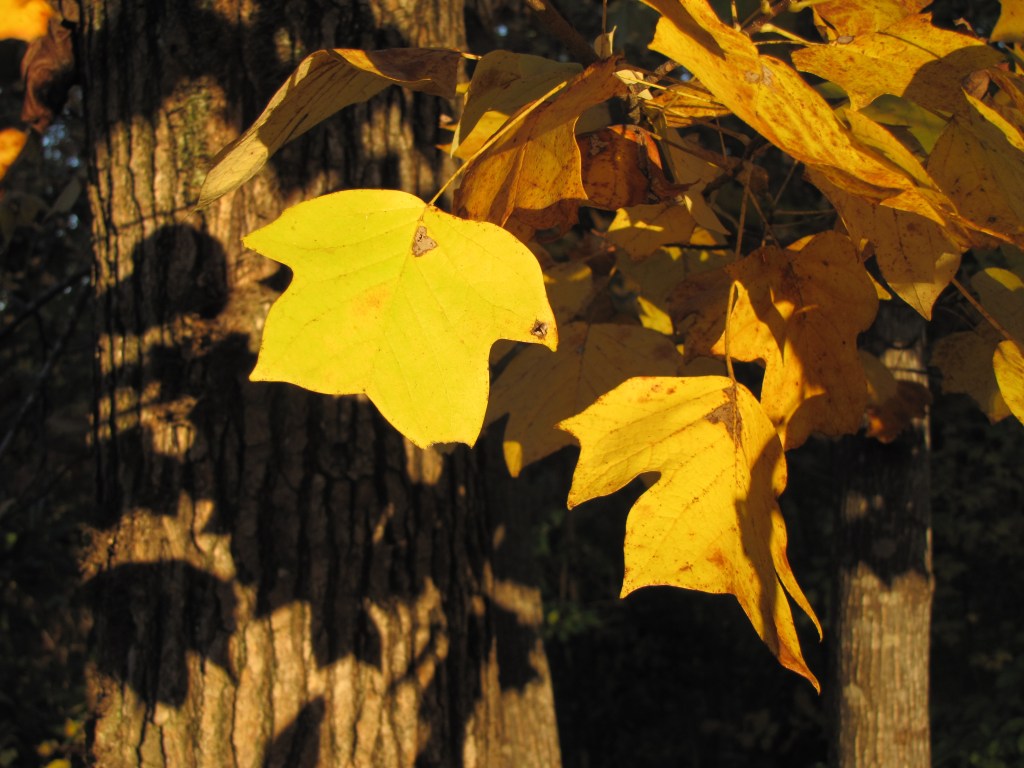
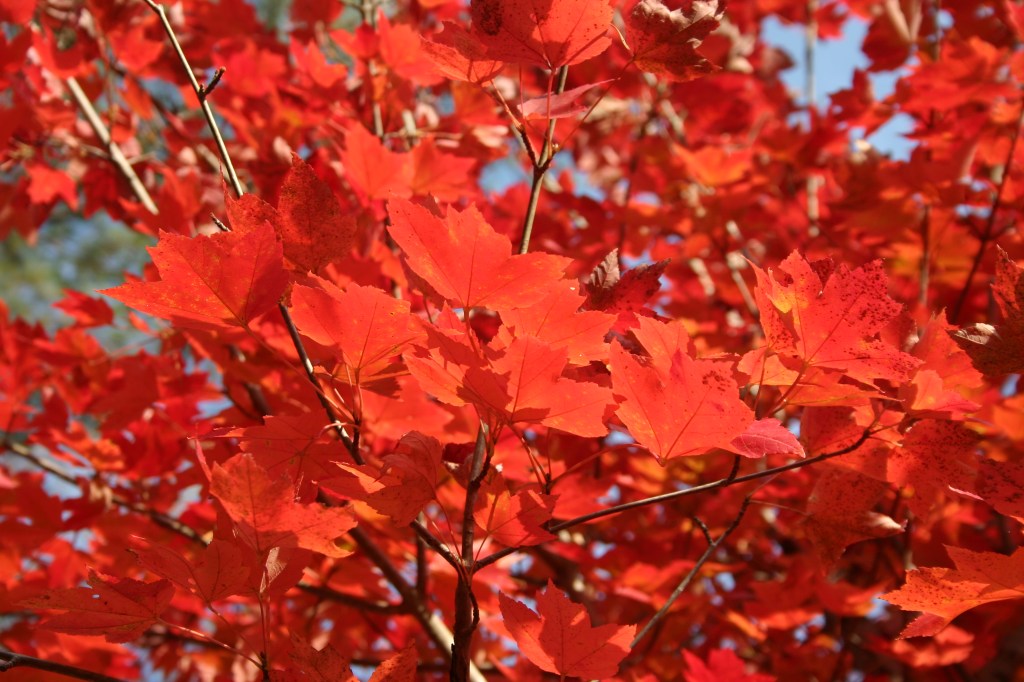
On a fall day several years ago, I discovered that I, too, was rich – not in the sense of Tevye’s longings, not in the sense of a carefree life, but rich in the sense of a mythical king.  As I was walking down the Middle Oconee River (near my hometown of Athens, Georgia) I enjoyed the many colorful red and sugar maples, dogwoods, blackgums, and poison ivy along the river’s levee.  Many leaves had fallen, and I recalled that when I was a young boy, I would gather a half dozen of the prettiest leaves as I walked home from school to bring home to share their beauty with my mother.  But as I looked at the leaves lying ankle-deep on the ground, I realized it would be impossible to choose the six best leaves – there were so many!  How could anyone make such a choice.  They were like jewels, even better than jewels, for no jewel could match the dazzling spectrum of colors in even one leaf, much less all the leaves.  And, as I looked up at the trees that had produced these super jewels, they were like paintings, only far surpassing any human-made work of art.

So, there I was, ankle-deep in the world’s most beautiful jewels, surrounded by superb works of art, and all the while being entertained by the music of songbirds.  What more could one possibly wish for?  I was a rich man, and I didn’t even have to work for it.  Tevye would have liked that.

[Since that long ago day in 1993, I have walked in a lot of forests, along many riverbanks, and in other interesting environments.  In the past few years, I have enjoyed exploring the back country while flagging new trails in the Jocassee Gorges in South Carolina.  Compared with the quiet beauty of the Oconee River in Georgia, the scenery in Jocassee is simply spectacular. The tremendous cliffs (not all cliffs are in state parks!), the numerous waterfalls, the natural gardens of wildflowers, and the views of endless mountains rolling to infinity, all certainly qualify as beautiful.]

But don’t be fooled!!  The nice thing about nature is you don’t have to wait until fall or go to a special place to enjoy its beauty. Nature is, almost by definition, beautiful.  We rightly enjoy the special shows of fall colors, spring and summer flowers, winter ice and snow, and the beautiful landscape of the Southern Appalachians.  But even without these spectaculars, nature – the undisturbed environment – is beautiful.  All we need to enjoy it is to open our minds to its presence.  Then we can all be as rich as a mythical king.

Article on Cook and Trails

The Fall and Rise of the Whitetail

A couple of months ago, I attended a prescribed fire conference at the National Infantry Museum in Fort Moore, just outside of Columbus, Georgia.  After finishing the official part of the meeting, we were allowed to wander through some of the exhibits.  Among the relics was a recruiting poster from the 1920s – back when the post was known as Camp Benning.  The spiel suggests an easy life, good weather, new barracks (“nearly completed”) and “Great fishing and hunting”.  But what caught my eye was the list of game species: raccoon, opossum, fox, rabbit, and squirrel.  One conspicuous omission: white-tailed deer.  Why wouldn’t they advertise a game animal that is so plentiful today?

Deer were plentiful all across the Southeast when the first Europeans arrived.  As the colonies established and spread, hunting for food and for trade items (deerskin was a premium leather for exportation to Europe) decimated the population.  In the 19th century, the growing cities demanded meat of all kinds, and market hunters were happy to add venison to the menu. The loss of forests to logging and agricultural expansion made the problem that much worse. Laws to protect deer, such as a hunting season enacted in 1840, were largely ineffectual.   By the first decade of the 20th century, fewer than a third of the counties in Georgia claimed to have any deer left.  I presume Muscogee and Chattahoochee counties, where Camp Benning stood, were not among the fortunate third. 

The return of whitetails to Georgia comes down to three things.  First, the reforesting of Georgia: in many places, old fields were abandoned, and old cutovers regrew. Governments acquired land for wildlife protection, especially after the Pittman-Robertson Act in 1937. 

The second factor was the restocking effort.  A U.S. Forest Service ranger named Arthur Woody began the process by himself with half a dozen deer released in the mountains in the late 1920s. Federal funds in the ‘30s allowed for a more systematic approach. For some six decades, deer were brought in from a number of other states (including Texas, Wisconsin, Kentucky, and Maryland), and coastal islands of Georgia to be released around the state.     

The third factor in the recovery was protection.  More regulation, coupled with more rigorous enforcement and public education, allowed the deer herd to expand.  Once the state reopened a hunting season, scientific monitoring allowed biologists to assess and adjust management of the deer population.

When I was a child in the early 1970s, seeing a deer was a pretty big deal.  Coming home this evening, I saw half a dozen does feeding on the shoulder of the road. This season I’ve put four deer in the freezer.  We now have a million, give or take, white-tailed deer in Georgia, and the most liberal harvest opportunities of my life.

I heard tell they can even hunt deer on Fort Moore.

Additional Resources:

Deer Restocking Program in Georgia: 1928-1974

Deer’s Spring Break

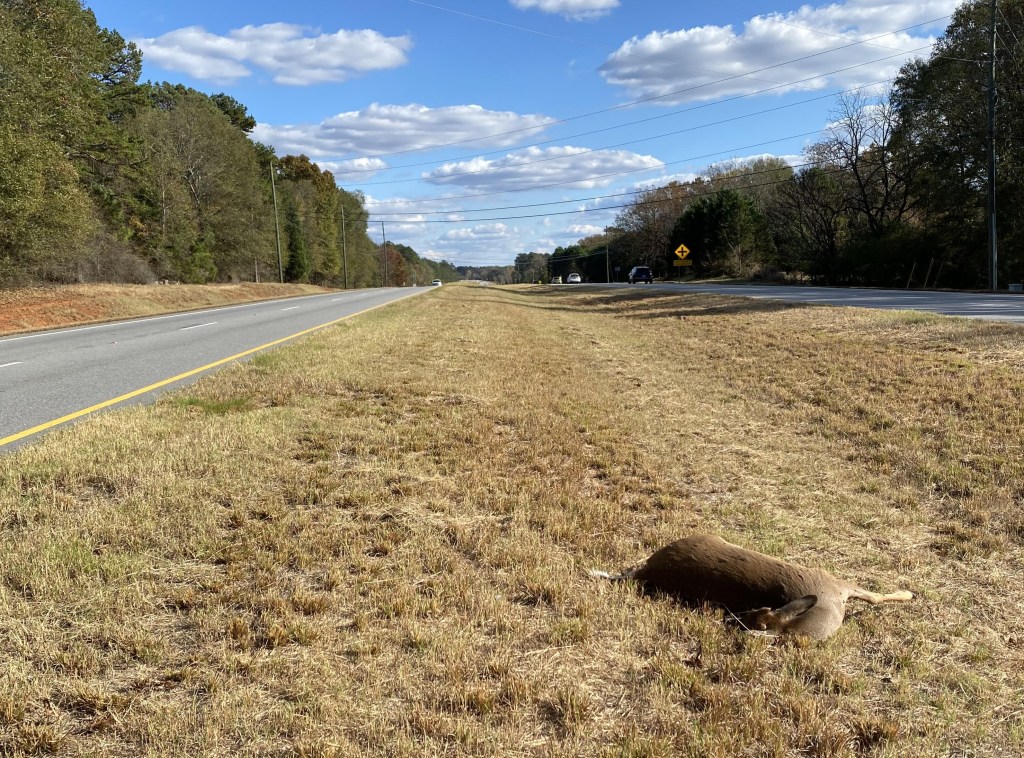
Have you ever hit a deer?  Depending on the circumstances, the results can range from inconvenient to catastrophic for the driver — and usually worse for the animal. 

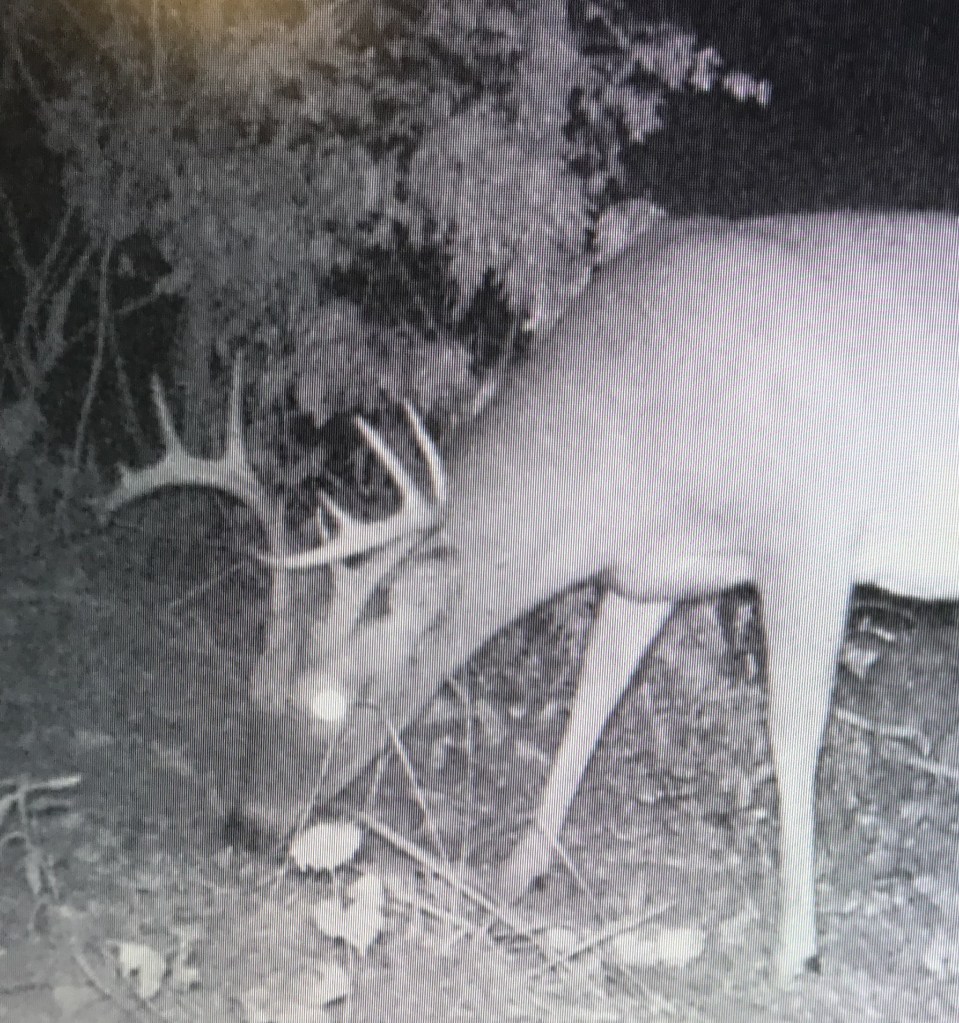
For most of the summer, I’ve seen does and fawns serenely nibbling greenery on the wide road shoulders and ignoring passing vehicles.  These aren’t the critters to worry about; rather, it is the travelers – those deer with somewhere to be, that aren’t paying attention to where they’re going, that are panicked by the searing bright headlights and the roar of engines – that are imperiled when crossing the asphalt.  And while victims of these vehicle-animal intersections are common enough on the sides of highways and back roads, the frequency peaks in the autumn. Why is that?  More reckless driving?  The time change?  Young deer club initiation ritual?  Actually, the reason is most likely hormonal.

I’m near a university town, so let’s look at a familiar example. Take some individually-(reasonably)-responsible college kids and put them together in the noisy, alcohol-soaked hormonal haze that is beachfront Florida during spring break. Imagine all the delights the still-developing frontal lobes are tempted with, unchecked by wiser authority figures. Imagine the skyrocketing level of YOLO stupidity that propagates like a runaway nuclear reaction. Now imagine you are a 200-pound male deer whose entire decision-making process has been reduced to the choices of “chase the girls” and “fight the boys.”

Yes, Fall is the white-tailed deer’s spring break, and normal impulses (like looking for food and watching for danger) are offline. Canny bucks that normally sneak like ghosts through dense underbrush are now barreling across roads. The does you normally see serenely nibbling on the roadsides are likewise dashing over pavement. As a result, unfortunate deer-car interactions spike at this time of year.

The peak of the breeding season coincides with the peak of collisions. If you live in Georgia, you can look to the rut map, based on a UGA study of deer/car collisions, to see when the danger is highest in your county.  As the rut fades away, bucks will return to their gray-ghost sneakiness, and does will have fewer reasons to run headlong into roadways.

Always be mindful of deer, but extra vigilance is required during the deer’s spring break.

Falling Acorns

Although summer has continued its fierce rearguard action well past a reasonable concession date, autumn is here.  True to the colloquial name, “fall”, the trees are divesting themselves. But I’m not talking about leaves; there is still a lot of green in the trees at the moment.  I’m looking at acorns, specifically white oak acorns.

The white oak (Quercus alba) is an all-around excellent tree.  Large, long-lived, and handsome, much can be said about this species and its lumber (including being crucial for bourbon barrels and earning USS Constitution its “Old Ironsides” nickname).  But on this October day I want to talk about the nut of the oak. 

White oaks are the flagship of a cluster of species known as the white oak group (which include English oak, burr oak, post oak, overcup oak, and scores of others), as opposed to the red oak group (locally represented by the southern red oak, northern red oak, water oak, pin oak, and others). White oaks produce acorns on a one-year cycle – that is, spring blooms will develop into acorns in the early autumn, while red oaks take two years to produce.  Red oak acorns tend to drop later in the season, and are much more bitter due to the higher tannin content.  On the plus side, red oak acorns will be available to deer during the hungry months before green-up, while white oak acorns germinate soon after hitting the forest floor.

White oak acorns have been falling in prodigious quantities for a couple of weeks now.  The tree which stands closer to the house than the deer like to venture has carpeted the ground with the leathery brown nuts. This is definitely a good mast year (“mast” is the collective term for nuts, berries and seeds from trees that are eaten by wildlife) for white oaks.  You see, oak mast production is hit-and-miss; several years may go by before there is a bumper acorn crop for a given locale and species.  Acorns are sought after by a great many birds and mammals, so on an average year few if any acorns will actually make it to germination.  Periodically, a super-abundant crop of acorns will flood the market as it were, providing more nuts than wildlife can consume or stockpile, and increasing the chance that a tree’s attempt at reproducing will be successful.  Naturally, the extra food is welcomed by turkeys, deer, squirrels, jays, and other hungry critters.  It’s good for wildlife when there are several oak species in the local forest – if the northern red oak is a bust this fall, perhaps the scarlet oak will be a boom. 

This is a good year for the critters to fatten up on white oak acorns.  We’ll soon see if the red oaks will call, raise, or fold.

The Bone Eaters

“You can’t eat the antlers.” It’s a way of saying to hunters that obsess over taking the buck with the largest rack that a doe will probably be tastier, and certainly more worthwhile to the meat hunter.  But while the phrase is true for you and me, there are exceptions.

Bucks shed their antlers every winter and start growing a new set the following spring.  With well over half a million male white-tailed deer in Georgia, there are bound to be considerable numbers of shed antlers on the ground by spring green-up. Those that escape shed hunters threaten to pop the tires of tractors and ATVs.  Year after year, more pairs of antlers hit the ground.  So why aren’t fields and forests carpeted by pointy bone caltrops? Critters, that’s why. 

Like all bones, antlers contain a lot of calcium, phosphorus, and other minerals – which are scarce or lacking in the local vegetation.  Ingested bits of bone are like mineral supplements, providing raw materials to build bone and muscle.

Squirrels, mice, and other rodents are some of the big culprits at bone eating.  This makes sense when you consider that the teeth of rodents and lagomorphs (rabbits and hares) never stop growing.  Gnawing hard bone wears down teeth, which if left to grow too long cause serious health issues.  At the same time, ingesting the powdered antler provides the rodents with the minerals for rebuilding the teeth!

Grooves from rodent incisors

Non-rodents can join in; coyotes, raccoons, and even deer have been seen chewing on antlers and other bones.  As most adult mammals don’t have regenerating teeth, this practice is not as beneficial for the fox as for the squirrel.

Bone-gnawing is not reserved for antlers.  Each animal that dies above ground leaves bones that will likely be chewed on before the remains weather away.

Nibbled-on raccoon skull

The next time you find a bone in the woods, take a moment; look to see if some forest creature has snacked on them. You’re looking at natural recycling made manifest.

Weathered antler, missed by osteophages

Windthrown

How is a climax forest renewed?  How does it go from dense overstory canopy to grasses, forbs, and tree seedlings?  Nowadays, the chainsaw is the chief instrument of change.  Beyond human actions, the likely sources for canopy-opening are fire (from lightning) and wind.  My corner of the Piedmont met the latter last week.

It was likely a straight-line wind barreling ahead of a thunderstorm, although a small tornado was possible. It came with freight train roar and the snap and crash of century-old trees. A morning’s survey of the damage revealed windthrows and snapped tops, in singles and groups.  A few widowmakers will merit wary observation in the weeks to come. 

Here, the red oaks were more likely to be thrown, while white oaks usually snapped.  I suspect this is in part due to the root systems – while all oaks spread lateral roots beyond their canopy driplines, white oaks delve deeper into the soil, chasing water and anchoring themselves more firmly that their red kin.

Below is the most impressive root ball I found today.  Look closely on the right side.  That two-tone walking stick with the black cap on top is five feet tall.  Using that for scale, the web of roots hold a block of soil over 20 feet wide!  It’s clear that the roots extended 10 or 15 feet beyond that.

The windthrows give us an opportunity to look at the soil profile.  The leaf litter and decayed organic material mixes with mineral soil to create a rather thin topsoil layer; here, litter and topsoil measure around four inches. Below that is the clay-rich loam common to this area – stripped of rich topsoil by a century or two of poor land management.  After decades of rest, this spot has recovered a scant few inches of organic soil.

The logs will do their part, as insects and fungi convert wood to soil.  However, the falling giants create a more immediate change.  The new gaps in the canopy break the sunlight blockade which the dominant trees impose upon everything below them.  Unbroken canopy is not a hospitable place for shade-intolerant plants; apart from the hardy muscadines, there is little green to be found on our forest floor. Yearly, pine seedlings rise and die in short order, starved of the sun’s energy.  Even oak, hickory, and beech seedlings struggle to subsist on whatever only dappled or filtered light reaches them.  These hardwoods may spend many years in a shrubby state, if they don’t succumb to solar neglect.  But things change when a gap opens in the canopy.  Sun-fed trees get a sudden boost of energy and growth, reaching towards the sky. 

Where there is a gap vacated by two or three trees,  and a dozen or more seedlings pushing through the leaf litter, there will eventually be competition for that space.  Assuming no more disturbances, a decade or so will find the trees trying to outgrow each other – overtopping their neighbors and claiming the underground real estate until the victorious few take their place in the canopy.

I won’t be here to see the outcome, but I’m betting on the oak. Regardless, so long as people leave this forest alone, the gradual renewal of the climax forest will continue on every acre.

Greensted Church (or, Walls Can Talk)

In a land of grand cathedrals, the Church of St Andrew, in the village of Greensted-juxta-Ongar in Essex, UK, is a modest church – smaller than some country chapels I’ve seen in back country Georgia.  Greensted Church has that eclectic mix of architectural styles common to buildings that have seen centuries of fashions come and go.  Some of the brickwork is Victorian, while the clapboard tower rose in the early 1600s. Bricklayers constructed the chancel in the 16th century.

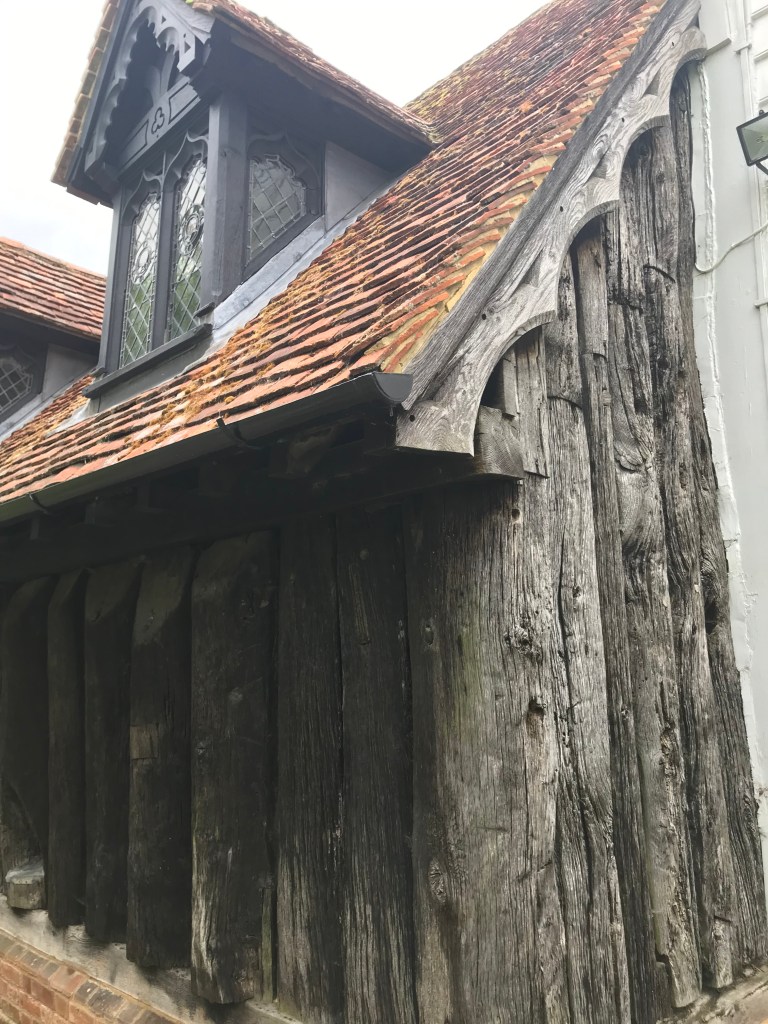
But none of those antiquarian details drew me down narrow country lanes in the remnants of Epping Forest; it was the nave that brought me here. Originally constructed of split tree trunks, each standing on end, Greensted Church is classified as a palisade church — an early version of a construction technique which evolved into the stave churches still found in Scandinavia.  Sections of these ancient walls remain in Greensted. These logs can be aged based on dendrochronology. 

Old oak log

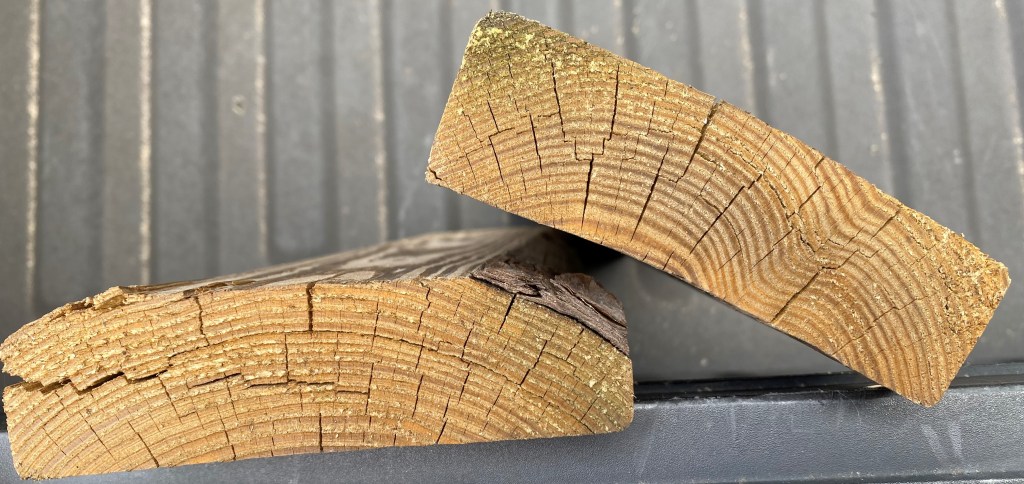
Dendrochronology? Yes, scientists love their Greek and Latin, and in Greek this technical term means “Study of Tree-Time”.  Dendrochronology is a way to determine when a log was a living tree, and this works pretty well in temperate zones with distinct growing seasons.  Trees grow new wood just beneath the bark, so the trunk gradually expands in diameter.  This growth is more rapid early in the growing season, resulting in larger cells. Later in the summer, growth slows and the new wood is denser.  Thus, each year’s growth consists of two rings – one pale, one darker.  You can count the years of a tree by ticking off the number of dark rings counted on a tree stump. Oak is especially consistent in laying on rings, but other species can be used for dating.

In years where there is favorable moisture and temperatures, trees will put on more wood and the rings will be wider.  In dry or cold years, the rings will be narrower.  And these climatic variations affect all the trees in a region.  Did a given county have a wet year in 1523, followed by several drought years?  The wood will show a wide ring, followed by several narrow ones.  In some cases, such as when a volcanic event causes planet-wide cooling, forests on several continents mark the event. 

How can this be used to determine dates?  Humans have built things out of wood for millennia.  When you have enough samples, you begin to see overlapping patterns.  Imagine a wood panel from a manor house.  It was harvested from a 180-year-old oak that was twenty years old when, say, a decade of good weather allowed it to put on wide rings.  Elsewhere in the county is a bridge plank that came from a tree already growing for a hundred years when that same weather phenomenon occurred, and then was cut almost immediately.  Noting where those ten unusually-wide rings occur on the boards will give you a good idea of when the trees were growing, and when they were cut.  In this example, if you have records showing the mansion’s paneling was installed in 1750, you can use that information to estimate when the bridge plank was cut a little after 1590. 

This is a simplified example and leaves out some of the obstacles to precise dating. You only know for certain how old the tree was when cut by looking at a complete section of heartwood and sapwood from near the base of the tree (which includes the very oldest wood).  Most sawn boards do not include the whole radius of the log, so you don’t know that the last ring you see is the last one the tree put on. Further, one can’t always be sure the wood hasn’t been reused from some other structure – the mantlepiece in my new house was originally part of a barn built in the 1850s. Still, having some of the wood is useful, and by overlapping the recognizable patterns on existing wood samples, scientists can date structures going back hundreds or thousands of years.

Rings in old pine boards. The final tree ring is beneath bark on the lower board

 Dendrochronological analysis of the old wood on the Greensted Church suggests a minimum date of 1053, with an allowance of 10-to-55 years added for sapwood that has worn away in the intervening centuries.  It may well be that the nave stood before the Norman Conquest; at any rate, the church is a contender for the title of oldest wooden church in the world, and the oldest wooden building in Europe.

Evidence points to a much older building, as is often the case on holy sites; excavations in the 1960s revealed timber structures dating to the 6th and 7th centuries — in the years when the East Saxons were newly-converted.

In a trip that saw structures both grander and far older, why spend time in an out-of-the-way little church? Because I have a historical interest in the Anglo Saxon period of Britain; I wanted to rest my hands on this timber that was likely felled and worked by Saxon craftsmen.  It was coup-counting, pure and simple.  But what historical enthusiast would not do the same, given the chance?

Additional Resources:

Dendrochronology from Historic Britain (a pdf)

Too Blue To Fly

As I greeted the rising moon before going to bed a few nights ago, I heard birdsong far off in the woods.  It triggered a distinct memory of sitting in a pickup truck on a red-dirt gravel road, late on a warm summer night. I was supposed to be snoozing while my Dad listened in vain for running foxhounds.  All I heard was the distant, rolling song of a whip-poor-will. 

A couple of nights later, the whip-poor-will’s repetitive cry had been supplanted by the closer and more staccato call of the Chuck-will’s-widow. 

Onomatopoetically-named, both the whip-poor-will and its larger cousin are member of a group of birds called nightjars (reportedly because their call at night is “jarring”).  As far back as ancient Greece, nightjars were called “goatsuckers” for the erroneous belief that they would sneak into barns and steal milk from the livestock.  An odd belief to be sure, but when one sees the small beak pop open to reveal a disproportionately large mouth, it might not be as far a stretch for an ancient pastoralist with a wild imagination. The myth may never be forgotten; the scientific Order of these birds, Caprimulgiformes, is from the Latin Caprimulgus, or “goat sucker”.

Nightjars don’t in fact drink milk.  Their diet consists of insects taken on the wing, supplemented with worms and other ground crawlies.  When swooping on a moth, the whip-poor-will’s deceptively minute beak snaps open, revealing a horror-show mouth that seems to split the bird’s skull wide.  Their maws are edged with whiskers that prompt the birds to snap their beaks shut when their prey brushes them.

Not that you are likely to see a nightjar.  From twilight until full dark – and longer if the moon cooperates – these birds haunt the woodlines and fields.  They are ground nesters, but with such complete camouflage that you are likely to pass right by the unassuming pile of leaves unless your light happens to catch the bright red reflection of their eyes.

Eastern whip-poor-wills lay their eggs in phase with the lunar cycle, so that they hatch, on average, 10 days before a full moon. Perhaps this allows them more hunting light to feed their chicks.

Folks have attached quite a bit of lore to the whip-poor-will.  To some, the monotonous call portended imminent death or approaching danger.  For others, it foretold marriage prospects.  Whip-poor-wills were nature spirits, ghosts of children, or the traveling form for shapeshifters.

Poets and singers laud or curse the calls, including Hank Williams: “Hear that lonesome whippoorwill/ he sounds too blue to fly. / The midnight train is whining low/ I’m so lonesome I could cry”

I’d be blue too if someone called me a goat sucker.

Such melancholy connotations are undeserved, as there is nothing mournful in the bird’s rapid flute-like tattoo.  I suspect all the feelings of sorrow and loneliness ascribed to these night birds are merely unhappy poets projecting their own misery onto unsuspecting avians.

 For many country folk, the distant lulling call is pleasant night music, while a nearby maddening shrilling banishes all hope of sleep.  However you perceive the songs of nightjars, you won’t hear them as frequently as in decades past.  We can probably lay the lion’s share of the blame for this on the alarming decline of insects over the last century. Less food means less night song.

 Last night, I heard the dueling calls of the nightjar cousins.  The whip-poor-will’s infinite loop swallowed up the Chuck-will’s-widow’s more discrete song, but with concentration I could just make out the larger bird’s contribution to the night sounds.  I hope I will never have a spring or summer without these two nightjars to accompany the evenings.

Additional Resources:

Whip-poor-will song

Chuck-will’s-widow song

Pages for the Eastern Whip-poor-will and Chuck-will’s-widow on the Cornell Lab’s All About Birds

Moon Rhythms 1: Why is a Month?

I committed a small paperwork error a couple of months ago.  Having neither looked at a paper calendar nor run through that old rhyme (you know, “Thirty days hath September…”), I scheduled a trip into the woods for a day when I should have been filling out timesheets.  No big deal.  But it did spur the question of why the months vary when the original astronomical timer – the lunar cycle – does not.

I quickly realized that the history of calendars is a rabbit hole I don’t wish to go too far down.  A couple of links led me to more queries, and more links.  Just going to the Wikipedia article on calendars showed a slew of hyperlinks waiting to keep me up until dawn.  But I’m not writing a book on the subject, so if I can provide enough information to whet your thirst for knowledge, that will suffice.

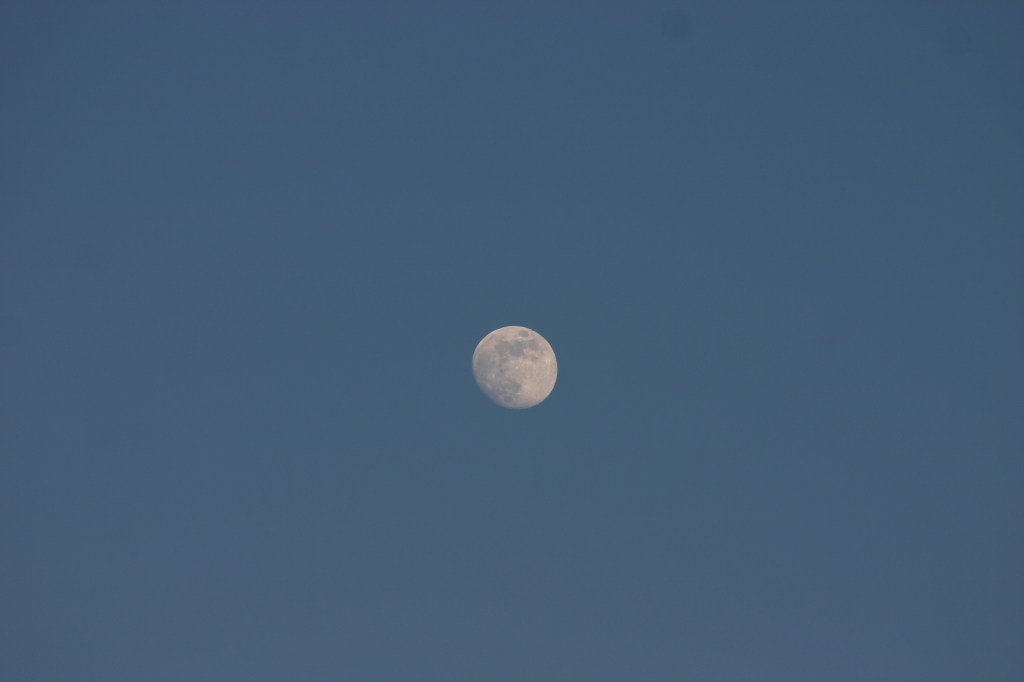
The lunar month, when measured from new moon to new moon, is around 29.5 days long (there are at least 4 other ways to measure a lunar month, but I think this is probably the most relevant for most people).  The cycle of moon phases as it waxes and wanes in the sky is both consistent and spans a useful length of time, making the cycle a natural point of reference for measuring time.  Not surprisingly, the word for “moon” and “month” are closely related or even identical in a number of language groups; in English, “month” derives from Old English monað, which is cognate to mōna, “moon.”

A lunar-based calendar has the benefit of being applicable to anybody with eyes—you see where you are in a cycle and know how long until you reach a different moon phase.  When measuring longer spans such as seasons or years, however, there are disparities.

The solar year…okay, there are a couple of different ways to measure this, too. You will likely be familiar with the Gregorian calendar – the modern western standard – which uses the tropical solar calendar.  By this measure, the solar year is roughly 365.24 days long.  Twelve lunar months fit within a solar year with 11 days to spare.  The discrepancy of a few days per year adds up, so that after a decade, a given lunar cycle in a 12-month year has crept into another season.  The lunar cycles and solar cycles take some 33 years to match up.

Natural cycles don’t care about conforming to our need for whole numbers. 

People across the world have developed different ways of organizing a year.  Going beyond the lunar calendar, we’ve developed several versions of a lunisolar calendar, which marries the lunar and solar timekeeping systems.  Months still follow the lunar cycle.  Generally speaking, some years have 12 months and others have 13. Determining when to apply these “leap months” requires some calculation to determine and a certain level of education to understand.   

Finally, the solar calendar follows the sun’s apparent cycle through the heavens with no concern for lunar position.  There are several, but the aforementioned Gregorian calendar should be most familiar to you. It still uses months, and the months are similar in length to a lunar month, but lunar cycles drift through our Gregorian months with no real connection.  Well, with one exception: Christian churches overlay a lunar algorithm to determine the dates of certain movable feasts – Easter chief among them.

 There are probably over a dozen calendars – solar, lunar, and lunisolar — in use today, and many, many more during the course of human history.  But I’d wager that the basis for each of them lay in one or both of our most prominent celestial bodies: the moon and the sun.

Lighter Wood

Lighter wood.  Fatwood.  Fat lighter’d.  Heart pine. The woodsman’s friend, a natural fire starter.  Burns hot, even when wet. 

What is it? 

There are a number of pine species under the umbrella of “southern yellow pine.”  They tend to be more resinous than other pines, and much more than most hardwoods.  This quality was of great value in the 18th-19th centuries and was used to produce oils, pitches, and resins for caulking planks and waterproofing ropes and canvas. So valuable were these products that they were termed “naval stores” and considered a strategic resource critical for maintaining ships of war in the Age of Sail. While wooden navies are a thing of the past, these pine-based compounds are still used in a variety of products from cleaning oils to varnish.

Log of solid fatwood

As pines grow, they add sapwood beneath the bark, expanding the girth of the tree.  The cells in the interior die, forming the heartwood of the tree.  In yellow pines, the heartwood is impregnated with the resin, making it very hard, rot-resistant, and highly flammable.  When a mature pine dies, the sapwood will decay over time, leaving the gray bones of the heartwood.  Often, the base of early limbs will remain as pine knots or “lighter knots.”  Slice open the scabrous surface, and you’ll see golds and reds of tree rings soaked in resin.  Smell the cut – that’s the scent of turpentine, and very distinctive.

Longleaf pine log– the darker wood is the heartwood

Here in Georgia, longleaf and slash pines were the best producers of lighter wood; they were largely found in the Coastal Plain.  In the Piedmont, shortleaf, while not as prolific of a sap producer, also creates fatwood.  And loblolly can now be found all over the state, although rarely is it left to grow long enough to develop lighter except in its stump.

Lighter log split into sticks

Fatwood burns hot — hot enough to set larger logs on fire.  That’s what makes it a prime kindling wood, even when damp. However, use it with caution and sparingly.  Shavings from a piece of lighter wood will be set alight by tinder and in turn burn other kindling. Larger pieces will light larger branches directly.  Fatwood is commercially available in small sticks, maybe ½” on a side.  You do not want to toss a large chunk on the fire.  You certainly don’t want to put large pieces in a wood stove – seriously, the intense heat could damage the stove.  Also, the pine resins exude thick, oily smoke when burned, so you don’t want to cook over a fire until all the lighter has burned away – unless you like using turpentine and soot for seasoning.

“Feathering” the wood to make it catch fire faster.

Lighter wood has been part of the fire kit since I was old enough to be trusted with matches.  But not everyone is familiar with it (otherwise, why would I write this?).  I’ll close out with a story from the time my Dad took some students on a field trip.  He asked one of them to find some lighter wood to start the fire.  The young man returned with an armload of punky old branches.  “Couldn’t you find any lighter wood?” he asked the student; newbie hefted the dry, rotten sticks and replied, “Well, I couldn’t find wood any lighter than this!”

Shortleaf stump